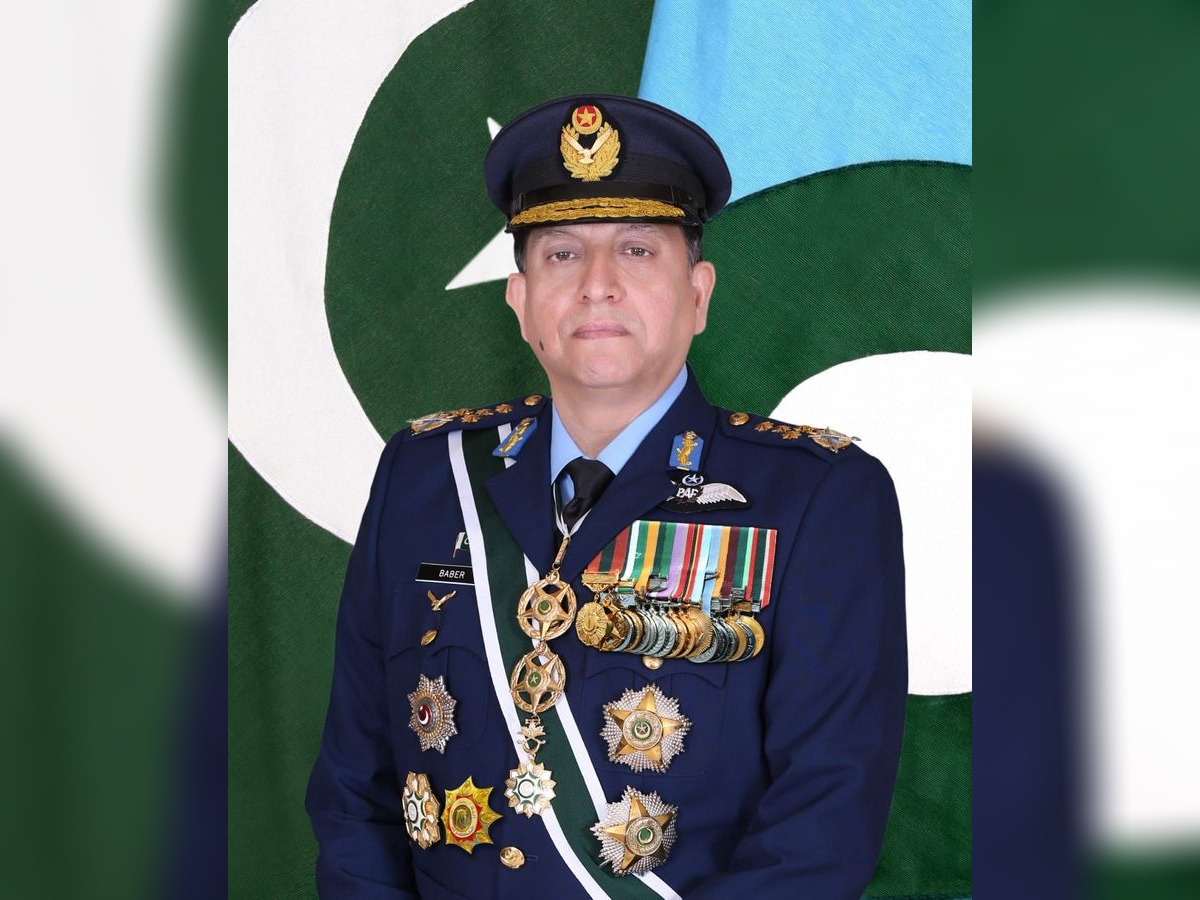
When Pakistan Air Force Academy Asghar Khan hosted its recent graduation parade, the event was far more than a ceremonial rite of passage. It was, in many ways, a national reckoning—a moment where tradition, triumph and transformation converged on a single parade square. Air Chief Marshal Zaheer Ahmed Baber Sidhu’s address to the young graduating cadets carried the gravity of a Force that has not merely defended national airspace, but has reshaped the modern understanding of Air Operations in South Asia.
At its core, his speech was not simply an address—it was a summation of an era-defining conflict, a reinforcement of Pakistan’s emerging strategic posture and a clear-eyed declaration of intent. Most importantly, it offered a rare public window into PAF’s operational evolution, the unprecedented success of Marka-e-Haq (Bunyanum Marsoos) and the pivotal leadership role played by Field Marshal Syed Asim Munir, whose decisive resolve underpinned the nation’s unified defence response. To the untrained observer, the crisp drill movements and glittering swords may have appeared typical of a graduation ceremony. But to those who understand Pakistan’s current security climate, the parade symbolized continuity—an institution producing warriors who have proven their mettle in the crucible of modern, contested airspace. For the graduating cadets, ACM Sidhu’s message was direct: “They are entering a Force on the rise—battle-tested, technologically resurgent and globally acknowledged.”
The presence of Royal Saudi Air Force cadets added strategic depth to the moment. Their participation—now a longstanding feature of the Academy—underscored a deep and durable defence partnership with Kingdom of Saudi Arabia. It signalled regional alignment, shared strategic aspirations and a mutual trust that extends beyond diplomacy into the realm of operational collaboration.
Much of the world continues to study the events of 06–07 May, when a numerically superior adversary sought to impose its will across Pakistan’s airspace, only to confront a force operating with a level of speed, precision, and doctrinal clarity unprecedented in the region. Air Chief Marshal Sidhu’s account of the conflict was measured rather than boastful, delivered with the clinical assurance of a commander whose service has been validated in battle. During the decisive night engagement, the Pakistan Air Force conducted what many Western defence analysts have characterised as one of the longest and most intense beyond-visual-range air battles of the 21st century, engaging, outmanoeuvring and in several critical instances shooting down the adversary’s most advanced platforms, including Rafale, Su-30MKI, MiG-29 and Mirage-2000 aircraft. The outcome was not the product of chance, but the culmination of a transformed PAF Kill Chain, enabled by Indigenous Unmanned Systems, Dominance in the Electromagnetic Spectrum, Space-Based Situational Awareness, precision Long-Range Strike capabilities, newly integrated Cyber Layers, and seamless Multi-Domain Coordination.
For the first time in its history, PAF employed full-spectrum Multi-Domain Warfare, weaving together Kinetic and Non-Kinetic effects. What unfolded was a Modern Warfare demonstration that stunned foreign observers and forced several Air Forces to reassess their doctrinal assumptions. Perhaps the most strategically consequential action was Pakistan’s successful neutralization of the adversary’s S-400 system—long touted as a “Game-Changer” in the region. Its paralysis during the conflict was a revelation that sent ripples through military study circles worldwide. It revealed two hard realities: that technological arrogance can never substitute for genuine operational mastery and that the integrated, indigenous employment of Electronic Warfare, Cyber Capabilities and Low-Observable Platforms can overcome even the most widely publicised and ostensibly advanced Air Defence Systems.
This single episode alone elevated the global perception of Pakistan’s strategic deterrent depth. What made PAF’s performance exceptional was not merely the battlefield outcome—it was the speed and ingenuity with which these capabilities had been assembled in the years leading up to the crisis. With fiscal constraints limiting conventional procurement, PAF adopted a Smart Induction Program, shifting from Traditional Platform-Centric Acquisitions to Capability-Centric Modernization. The approach rebalanced investments towards: Drones and Loitering Munitions, Indigenous EW Suites, Space-Based ISR Nodes, AI-Enabled Decision Tools, Long-Range Precision Vectors, Integrated C2 Networks and Cyber Warfare Infrastructure. The genius of the program was its practicality. PAF did not wait for perfect solutions.
It built, adapted, integrated and operationalized emerging technologies at a pace unmatched in the region. Central to this transformation is National Aerospace Science & Technology Park (NASTP), a national-level endeavour that has ignited Pakistan’s aerospace innovation ecosystem. The Air Chief highlighted how NASTP has enabled rapid prototyping, system integration and the deployment of indigenous Kill Chain components. NASTP has effectively repositioned Pakistan from a conventional importer to a fast-growing developer of Next-Generation aerospace solutions, with projects unfolding at “unprecedented speed”. This is a structural gain, one that will endure long after the memory of the May conflict fades. A key theme of the Air Chief Marshal Zaheer Ahmed Baber Sidhu’s address was strategic maturity. Despite achieving decisive superiority in the air and striking deep into hostile territory—from the northern sectors down to the southern industrial corridors—PAF calibrated its responses. This restraint, he emphasized, was rooted in Pakistan’s ethos: Strength does not equate to escalation. Power does not necessitate humiliation of the adversary.
Pakistan could have extended the conflict. It chose instead to restore deterrence, demonstrate capability and then stabilize the environment—all in sync with national leadership’s objectives. The balance between aggressiveness in combat and restraint in victory is the hallmark of professional militaries. It is also the precise characteristic that now reinforces Pakistan’s position as a net regional stabilizer. No modern conflict is fought by the military alone. ACM Sidhu made a pointed acknowledgement of Field Marshal Syed Asim Munir, whose leadership created the strategic envelope within which PAF operated.
The address implicitly outlined Field Marshal Asim Munir’s multifaceted role, which encompassed four key dimensions. He provided strategic clarity by maintaining a cohesive national security stance at a time when the adversary sought to exploit misconceptions. His capacity for rapid decision-making ensured seamless political and military coordination, preventing hesitation during joint operational responses. Through effective leadership, he fostered Tri-service synergy, enabling the Armed Forces of Pakistan to operate with a rare unity of action in the region’s military history. Above all, his composed demeanor during moments of uncertainty instilled confidence and resolve within the nation, reinforcing a sense of collective assurance and strength. ACM Sidhu’s tribute was not ceremonial—it was professional acknowledgment. In military conflicts, leadership at the highest level is often the difference between strategic success and strategic paralysis. Pakistan had the former. Another subtle yet powerful theme of the speech was the contrast between professional militaries that operate on evidence and adversaries that rely on post-conflict propaganda.
ACM Sidhu reaffirmed that: Every PAF claim is backed by data, Every engagement is documented and Every operational announcement is validated In the age of information warfare, credibility itself is a strategic asset. PAF has understood and capitalized on this. Air Chief Marshal Zaheer Ahmed Baber Sidhu was clear-eyed about the evolving nature of threats: Hybrid Operations, Precision Long-Range Warfare, Cyber and EMS Dominance, AI-Accelerated Targeting, Cognitive Warfare and Contested Aerospace Environments. For the graduating cadets, the message was unmistakable: “They are stepping into a battlespace where adaptability and intellect will matter as much as courage. The transformation in training—fusing leadership, technology, character and resilience—is intended to produce Officers capable not only of adapting to future wars, but shaping them.”
One of the most thought-provoking aspects of the speech was Air Chief Marshal Zaheer Ahmed Baber Sidhu’s reference to Pakistan’s growing international stature in the aftermath of Marka-e-Haq. As a responsible nuclear power, Pakistan’s strategic posture has come to be recognized as a cornerstone of regional stability. Key global partners have taken discreet note of several factors: the professionalism demonstrated during moments of crisis, the effectiveness and reliability of Pakistan’s indigenous defence systems, the disciplined exercise of force and the maturity displayed in the process of de-escalation. Together, these qualities have reinforced Pakistan’s reputation as a stabilizing and responsible actor in an increasingly complex strategic environment.
In strategic terms, Pakistan’s deterrent credibility has strengthened, not through rhetoric, but through performance. ACM Sidhu concluded his address by reminding the graduating Officers that the trust Pakistan places in its Armed Forces is unparalleled and earned. It is forged through decades of sacrifice, professionalism and devotion to duty. He further assured that PAF will always remain: “Second to None… and a Symbol of Pride for the Nation.” The graduation parade at Asghar Khan Academy did more than mark the commissioning of a new batch of cadets.
It declared that Pakistan’s airpower has entered a decisive new era—operationally, technologically and strategically. Marka-eHaq was not an accident of circumstance. It was the culmination of Forward-Thinking Leadership, Precise Doctrinal Recalibration, Indigenous Capability Development and Unified National Resolve Above all, it reflected a Force that has understood the character of 21st-century warfare and moved ahead of its adversary in both mindset and capability.
As new wings gleamed in the sunlight and the cadets marched into their future roles, a quiet truth echoed across the parade square: PAF is no longer the Air Force it once was— it is now the Air Force the region must reckon with.