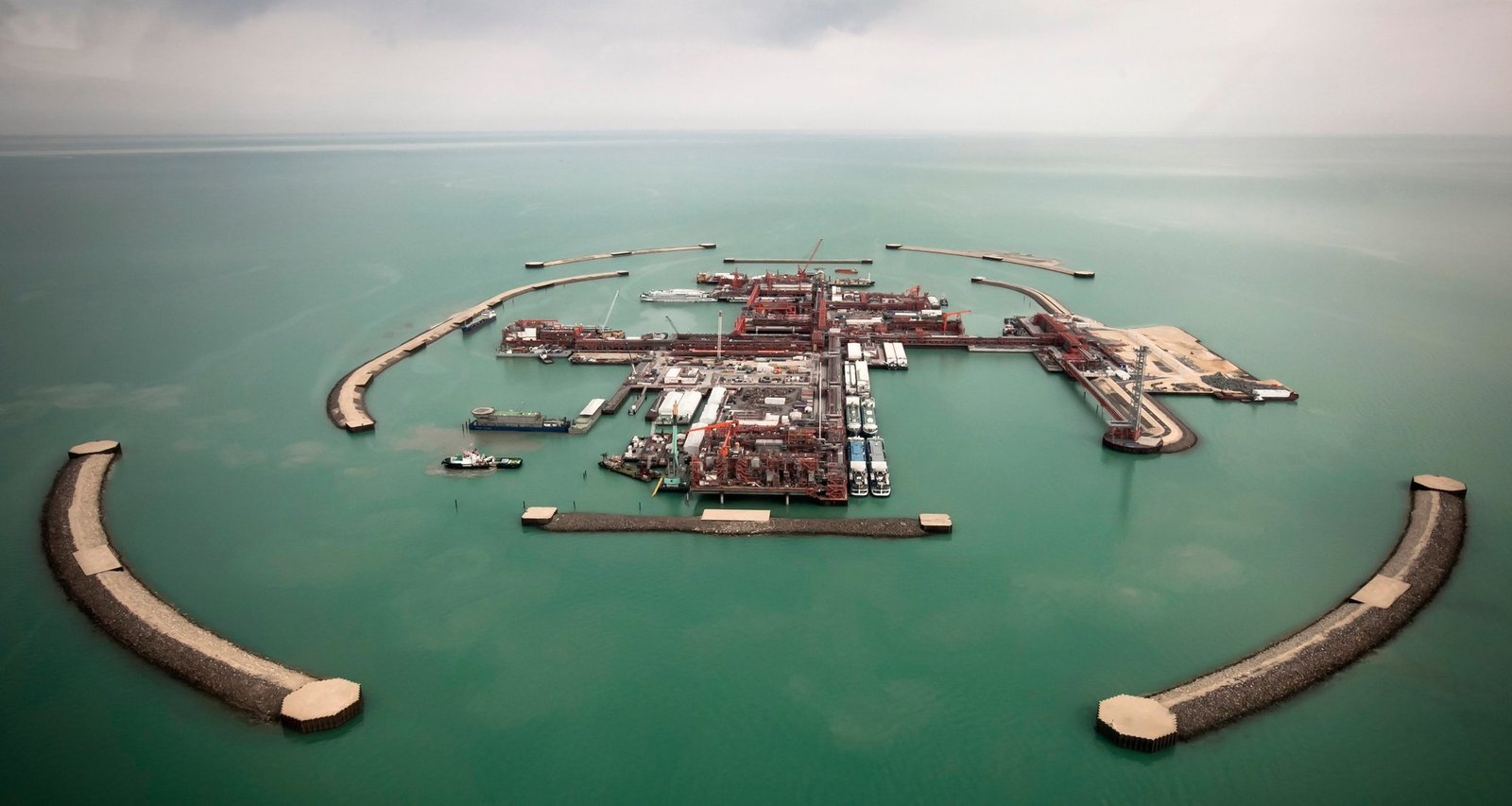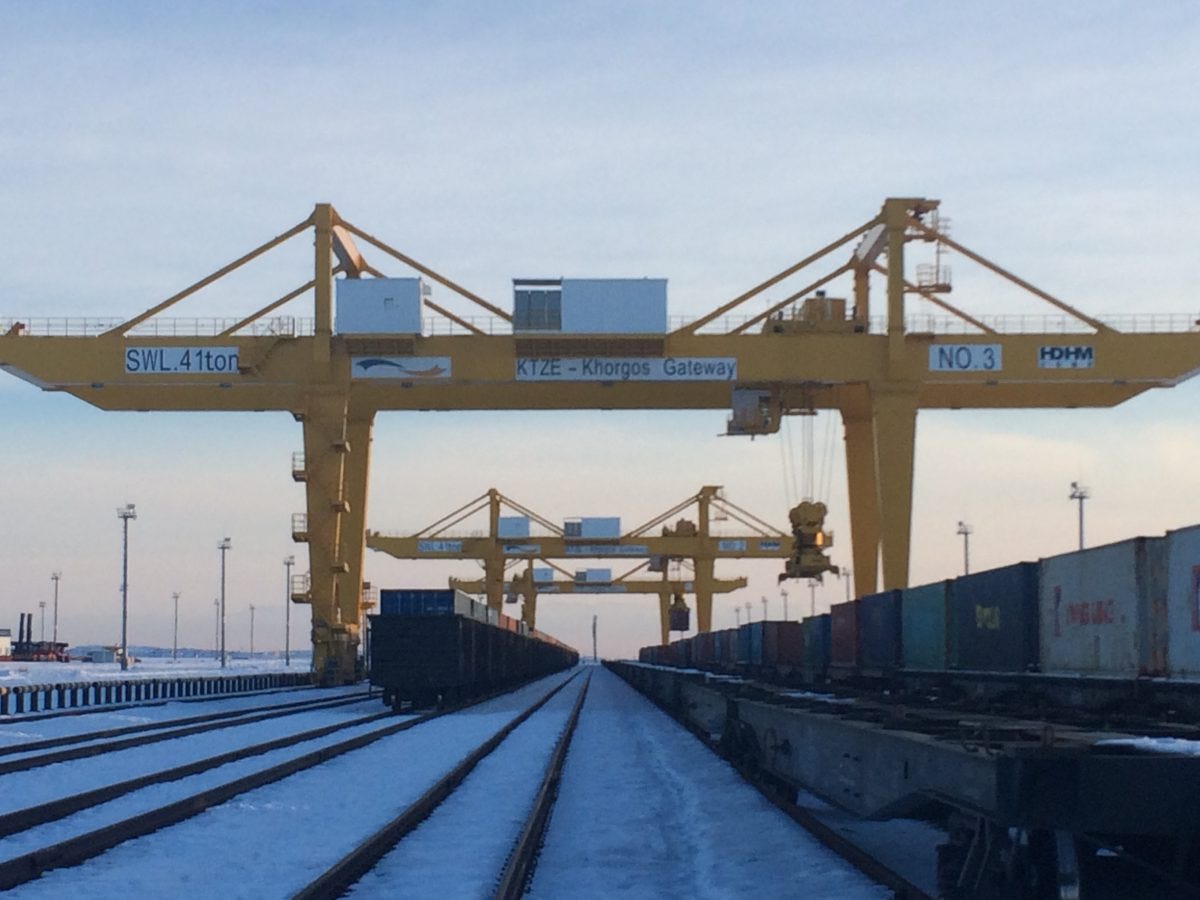
The to and fro movements of ‘Caravans of Merchandise’ between East and West were the hallmark of Eurasian history since 130 BC. The Silk Route (sometime road) was renowned pathway of trade that started during the period of Chinese Han dynasty. Emerging from Chinese inner lands, crossing into Central Asian steppe, passing through Eurasian mass land and ending up at European continent proper, Silk route was indeed a unique land based network of trade. This trade link had no equivalent, and was the only proper trans-continental network of the world. The link, however, started to fade during the late 17th Century, as parts of Caucasia and Central Asian landscape was taken over by Russian imperialism under Tsarist rule. Lost for some 200 years, the Silk route has got rebirth in the recent times. This pause to trade never got truly revived, until President Xi Jinping of China, came up with an idea of Belt and Road Initiative commonly known as BRI. Amongst many flagship projects under BRI, the Khorgos Gateway lying at China-Kazakhstan border acts as the largest Dry-Port of the World. The Gateway existed but was dysfunctional due to outdated facilities for many decades. The modernization done to this gateway under BRI, has transformed it from merely a border connectivity point to a fast track transit center for rail-freights between Europe and China.
The Geographical Uniqueness
Location of the Khorgos Gateway, at China-Kazakhstan border, compliments two major policy framework of Chinese government of the recent past. One being the development of Western China that is underway for almost decade and half, other being linking China with Central Asia and reviving the ancient Silk route. China being the second largest and the fastest growing economy is set to overtake USA, as largest economy of the world by 2035, as per many estimates. However, despite this development, there exist infrastructural disparities among some Chinese regions. The Western parts of Chinese mass land still lag behind than more advance and sophisticated Eastern region. Hence, the development in the Western region has become a priority and necessity for China, if it wishes to exploit full potential of trade with its neighbors. On the other hand, the demise of the Soviet Union, almost three and half decades ago, brought Central Asian region into limelight. The region being newly independent regions, marred by its landlocked feature is hindering its full potential to grow economically. The land based connectivity is the lifeline for Central Asia. Therefore, the Khorgos Gateway initiative acts as cornerstone for chasing the Central Asian dream. Moreover, this East-West corridor can also get connected with North-South corridor planned to enhance linkages between Russia and Middle East, as well as, between Russia, Central Asia and South Asia.
Khorgos, the Economic Khanate
The term Khanate used to refer political entity ruled by Turkic tribes especially during ‘Pax Mongolica’ during 13th century AD. The contemporary Central Asian politics revolves around the economic development of these states by finding an opportunity to get connected with near abroad and outside world. As the only available route is land based, the Khorgos Gateway is acting as one major project that links China with Europe through Central Asia. The Khorgos Gateway has been developed into a fast track rail network that interestingly links two different standard of railway track gauges. The Chinese railway gauge is standard gauge that is 1435mm wide, whereas Central Asia railway tracks network follow Russian gauge of 1524 mm. The situation requires, a rail freight to unload its merchandise at the Chinese side of the Gateway and reload it on the Kazakh side. However, the infrastructure has been advanced and modernize with heavy load handling and supporting cranes. It can now handle more weightage of cargo with less time consumed, while the rail track has also been modernize to support fast track movement of containers between continents. This has been estimated that a cargo freight of around 40 containers from Chinese city of Yiwu of its central region can reach London in around 18 days, while the same merchandise would have taken 40 days through ship (sea). The reduction of time will incentivize traders to opt this safer and faster route for trade. The Khorgos Gateway has thus become much more popular than ever before. Another consignment of 88 containers completed journey in 20 days, which was expected to complete in 40 days via sea route. This means that this rail link network cuts the transit period to half for international trade. This facilitate Chinese trading volumes but also makes Central Asia as hub of East-West trading system.
Predicting the future
As the time progresses, BRI is passing through consolidation phase. Almost 12 years since its inception, BRI related projects are either getting completed or at near completion. These projects are expected to give full returns in the coming years. The Khorgos Gateway is likely to become hub of trade between China and Europe. Moreover, close ties between Russia and China means, the former’s initiative of establishing North-South Corridor of trade will get complemented by this Khorgos Gateway and New Silk route. However, the existent nuances of geo-politics, wars and spoilers like non-state actors and militant groups can threaten the materialization of the full potential.

Participant of ICSF-UoS Fellowship Program 2025-26 at University of Sargodha.