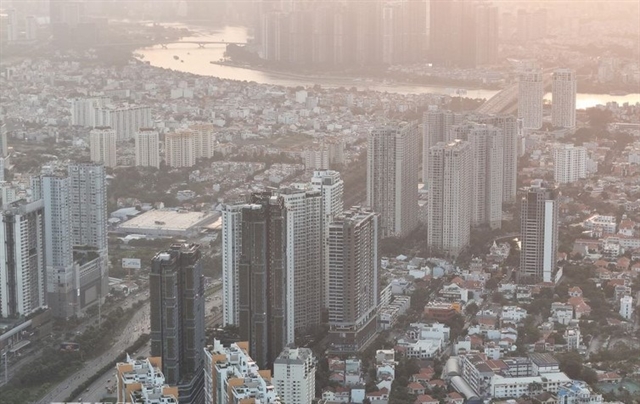
Ho Chi Minh City, December 5, 2025 – The Europe Today: Authorities in Ho Chi Minh City are urgently exploring stronger solutions to combat worsening air pollution as emissions from traffic, construction, industry and waste treatment continue to push air quality into unhealthy ranges, officials said on Wednesday.
Recent monitoring shows a sharp rise in the number of days with poor air quality, particularly in the early morning when dust and pollutants accumulate before dispersing later in the day.
According to the city’s Department of Agriculture and Environment, fine particulate matter (PM2.5) remains the most dangerous pollutant, frequently exceeding both national standards and World Health Organization (WHO) guidelines. High traffic density is the leading contributor to the problem.
Millions of vehicles enter and exit the city every day, including a significant number from neighbouring provinces, placing considerable pressure on the environment. The transport sector alone now accounts for over 50 percent of total air pollutants.
Đặng Nguyễn Phương Trinh, Deputy Director of the department, said the city has taken steps such as improving pollution-source monitoring, enhancing forecasting systems, and coordinating with districts to manage emissions from traffic and industrial operations. However, she acknowledged that current solutions remain fragmented and insufficiently strict.
To tackle vehicle-related emissions, HCM City aims to transition 100 percent of its bus fleet to electric or green energy by 2030 and gradually phase out old, high-emission vehicles. Several electric bus routes operated by Vinbus are already in service, with more expected to launch next year.
Transport experts emphasise that the shift to electric vehicles must be accompanied by an expansion of public transit options. Currently, the city has only one metro line in trial operation, and the bus network meets less than 10 percent of total travel demand.
Without significant improvements in public transportation, experts warn that private vehicle use will continue to rise, further increasing pressure on the city’s environment.