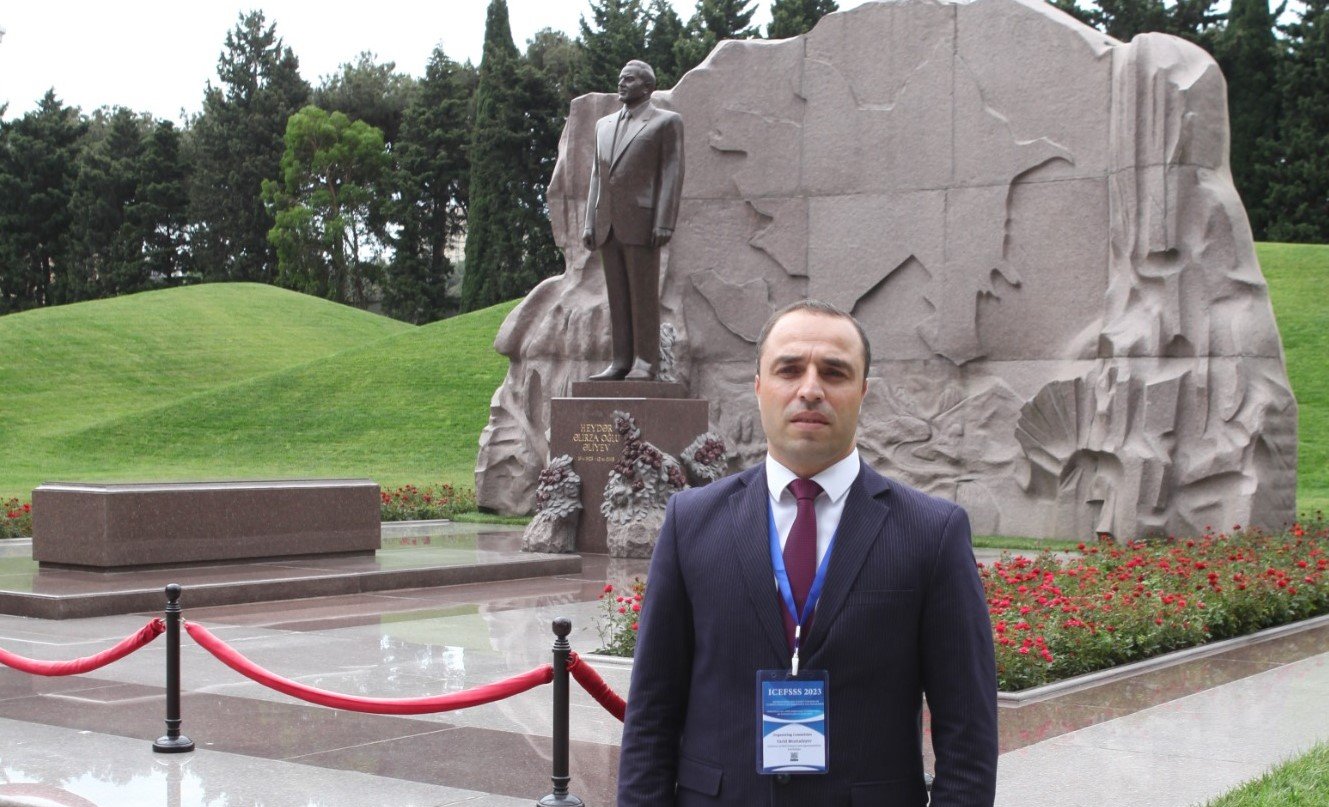
The statehood philosophy of Heydar Aliyev encompassed a comprehensive strategy based on the centuries-old political experience of the Azerbaijani people, their national and moral values, historical memory, and the country’s geopolitical position. He viewed state governance not only as a set of legal and political mechanisms but also as a profound cultural, ideological, and social system. As a leader who prepared Azerbaijan for a new epoch and defined its historical trajectory, Heydar Aliyev grounded his philosophy of statehood on the principles of continuity, sustainability, the primacy of national interests, and the construction of a legal state. He understood clearly that independence is not merely a term written in legal documents; true independence must be strengthened by the political will of the people, economic power, social solidarity, and international reputation. All of his activity was devoted to the realization of these strategic ideas. One of the most important pillars of Heydar Aliyev’s statehood philosophy was the rule of law. He stated that the modern development of the state must rely on a strong and transparent legal system. Under his leadership, indispensable reforms were carried out in the formation of state institutions, the renewal of the judiciary, the strengthening of security structures, and the improvement of governance culture. Another essential part of his statehood philosophy was the protection of national identity. Heydar Aliyev believed that national ideology is an integral component of real politics and that the strength of a state depends on its citizens’ attachment to national values. For this reason, he strengthened the process of national self-awareness in Azerbaijan and elevated the ideology of Azerbaijanism to the level of state policy. Today, this ideology remains one of the unifying pillars of Azerbaijani society.
Heydar Aliyev’s philosophy of governance shaped not only internal state structures but also Azerbaijan’s international position. Taking into account the geopolitical realities of the nation, he formulated the principal contours of the country’s foreign policy in such a way that Azerbaijan would become a regional leader, be recognized globally as a reliable partner, and assert its voice in the system of international relations. This philosophy remains relevant today and finds its continued expression in the policies of President Ilham Aliyev. A strong state, firm trust between the people and the government, a sustainable security system, economic modernization, and the preservation of national ideals—all these constitute the fundamental pillars of the statehood model built by Heydar Aliyev. At the center of Heydar Aliyev’s policies stood the national interests of the Azerbaijani state. He established a unique strategic model that ensured the resolute and consistent defense of national interests both domestically and abroad. Under his leadership, Azerbaijan’s role in the region and globally changed dramatically. In the early 1990s, the country faced deep political crises, military threats, and economic collapse. Protecting national interests under such circumstances was extremely challenging, but Heydar Aliyev pursued consistent political, diplomatic, and economic measures to ensure their preservation. One of his principal strategic priorities was the protection and consolidation of Azerbaijan’s independence. He knew that safeguarding independence required strong political will, professional governance, and an effective security system. With this in mind, he improved the national security structure and advanced the development of the national army as a key component of national interests. In foreign policy, Heydar Aliyev adopted a balanced and multi-vector approach. This allowed Azerbaijan to establish reliable cooperation relationships with both regional powers and global international organizations. He defined unique diplomatic directions to strengthen Azerbaijan’s international recognition and support. Energy policy was one of the most strategic instruments for protecting national interests. Through the “Contract of the Century,” he transformed Azerbaijan’s energy resources into a pillar of the country’s political and economic security. This agreement turned Azerbaijan into a major actor on the global energy map, increased foreign investment, and stabilized the economic system. The wisdom of Heydar Aliyev in protecting national interests was reflected in his preference for long-term strategic goals over short-term tactical steps. He did not define Azerbaijan’s future within the confines of ongoing political processes; rather, he shaped it according to strategic concepts calculated for decades. Today, President Ilham Aliyev continues and further develops Heydar Aliyev’s strategy based on national interests. Azerbaijan’s strengthened political, economic, and security leadership in the region, its participation in global projects, and its rising international influence demonstrate that Heydar Aliyev’s ideological line remains vibrant and enduring.
Heydar Aliyev’s economic policy aimed to pull Azerbaijan out of a period of severe crisis and to form a long-term development strategy. In the early 1990s, Azerbaijan stood at the edge of economic collapse: industry had stalled, agriculture had crumbled, the energy system had collapsed, and unemployment and social problems had intensified. The economic reforms implemented under Heydar Aliyev became a turning point for the country’s development. His economic policy was based on the transition to a market economy, the encouragement of the private sector, the protection of investments, and the liberalization of the economic system. These reforms increased the confidence of international investors in Azerbaijan and attracted billions of dollars in foreign investment. The foundation of his economic achievements was the “Contract of the Century,” which transformed Azerbaijan into the energy center of the region, accelerated the development of the oil-gas industry, and laid the groundwork for future economic stability. As a result, strategic projects such as the Baku-Tbilisi-Ceyhan and Baku-Tbilisi-Erzurum pipelines were realized. In the social sphere, Heydar Aliyev introduced important reforms aimed at improving the welfare of the population, strengthening the social protection system, and developing the education and healthcare sectors. He turned the principle of social justice into an inseparable part of state policy. According to this principle, economic development should not be measured by statistics alone but must also be reflected in tangible improvements in people’s lives. His social projects ensured the reconstruction of schools, hospitals, kindergartens, and social infrastructure.
Heydar Aliyev’s economic and social policies remain among the key pillars of Azerbaijani statehood today. President Ilham Aliyev has expanded these policies on a larger scale, transforming the country into the strongest economy of the South Caucasus.
Heydar Aliyev’s work is of exceptional importance for strengthening national unity. In the early 1990s, Azerbaijani society was fragmented; social-political relations were disrupted, and internal conflicts heightened the threat of state collapse. At such a time, the arrival of Heydar Aliyev to power ushered in an entirely new political phase. His primary goal was to establish unity, solidarity, and stability within Azerbaijani society. He understood that a state cannot survive solely through strong leadership; it must also rely on the unity and trust of its citizens. He built the foundation of state–people relations on trust, transparency, and mutual responsibility. Heydar Aliyev made social harmony a core component of national ideology. He unified all regions, ethnic and religious communities, and social groups of Azerbaijan under a common system of national values. As a result, after years of tension, Azerbaijan entered a new era of stability and development. He successfully mobilized the energy of the people toward state-building, strengthened national identity, and enabled citizens to participate more actively in state processes. Today, national unity, civic solidarity, and social stability in Azerbaijan rest on the ideological foundations laid by Heydar Aliyev. Under President Ilham Aliyev, this policy has been further reinforced, turning Azerbaijan into one of the most stable and secure countries in the world. Heydar Aliyev’s political course is successfully continued today by President Ilham Aliyev in accordance with new historical realities. The strategic development line defined by the National Leader is now implemented on a much broader scale, turning Azerbaijan’s state model into a unique example in the region. As a result of President Ilham Aliyev’s purposeful policies, Azerbaijan has become a regional leader, an active participant in international processes, a contributor to global energy security, and a reliable partner. His modernization strategy is built upon Heydar Aliyev’s ideas and elevates them to a higher level in the modern era. This leadership model has enabled Azerbaijan to achieve major successes in the political, economic, and security spheres. Notably, the victory over Armenia in 2020 and the restoration of our territorial integrity stand as a direct result of the strong statehood line established by Heydar Aliyev. In the economic sector, President Ilham Aliyev has accelerated the development of the non-oil sector, the socio-economic advancement of the regions, and processes of innovation and digital transformation. These policies ensure sustainable development and pave the way for Azerbaijan to enter a new economic era. All these demonstrate that the legacy of Heydar Aliyev is not merely a historical heritage—it forms the ideological, legal, and strategic foundation of Azerbaijan’s modern statehood model and serves as a roadmap for future generations.
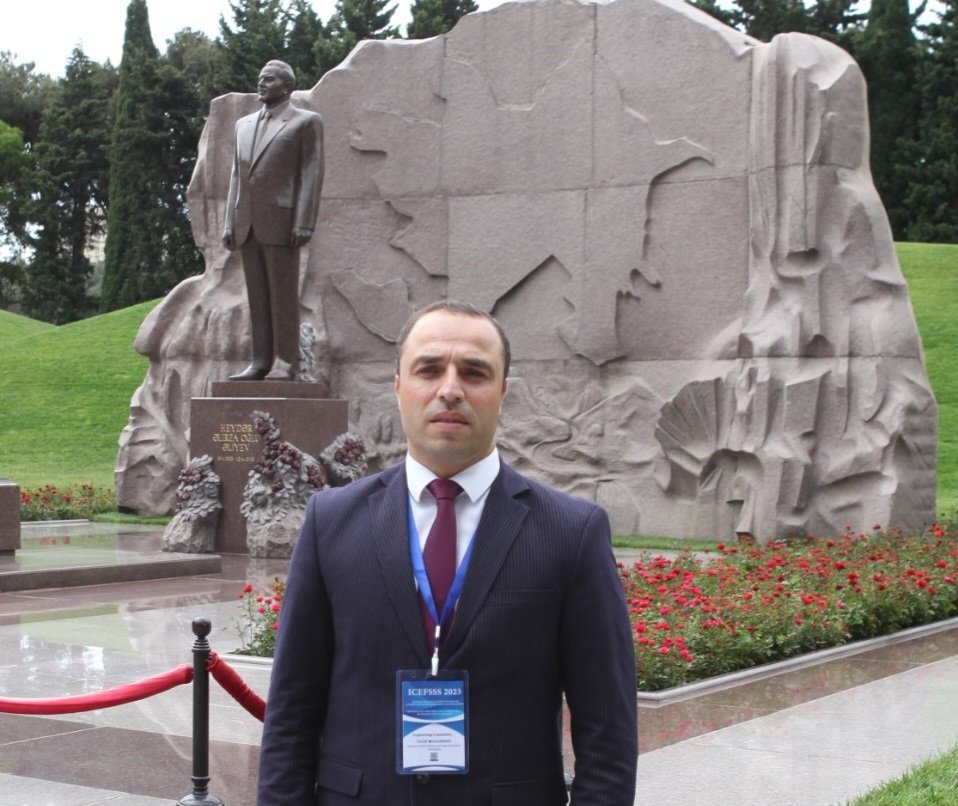
Deputy Chairman of the Territorial Party Organization of YAP Yasamal District under the Ministry of Science and Education at the Institute of Soil Science and Agrochemistry, Member of the Western Azerbaijan Community.