The Belt and Road Initiative (BRI) is frequently referred to as the “New Silk Road”. It is introduced by his excellency President Xi Jinping in 2013. BRI is an ambitious plan to reshape global economic landscape through the new networks of trade, transport and infrastructure.The Maritime Silk Road and the Overland Silk Road Economic Belt are two components of this ambitious plan. Initially known as the One Belt and One Road Initiatives, both eventually becomes the Belt and Road Initiative. It is an attempt to strengthen the economic cooperation between the world through six major economic corridors connecting Asia, Europe, and Africa.Over the past twelve years, the BRI is being developed into one of the most extensive development programs in contemporary history.
The BRI was started to be implemented in different stages. In 2013, China initiated an extensive geopolitical and geo-economic strategy (BRI) that facilitated its peaceful rise. This strategy resulted in an indirect response to US strategic initiatives in the Asia Pacific. It was commonly known as the “21st Century Maritime Silk Road (MRS) and One Belt One Road (OBOR) comprising six land corridors”.
In 2013, the China–Pakistan Economic Corridor (CPEC) stands as the flagship of the BRI, is planned in three different phases. First and short-term phase (2015–2022) focuses on power generation, port expansion, and road infrastructure. Second and medium-term phase (2021–2025) emphasizes industrialization through the development of Special Economic Zones. The final and long-term phase (2026–2030) aims to promote socioeconomic integration and regional connectivity. In 2015 to 2022, it opens 14 energy projects with a total capacity of more than 8,200 MW, and work on transit routes and industrial zones is still ongoing to help in integrating the economy in the long term.
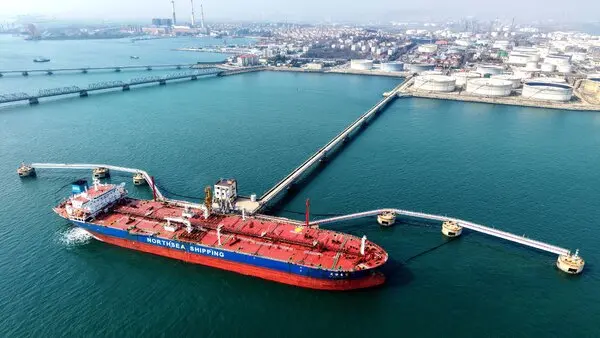
The 2013 oil and gas pipeline that provided China with the much-needed access to the Indian Ocean was also a key milestone to the Bangladesh-China-India-Myanmar Corridor which was later to be renamed the China-Myanmar Economic Corridor (CMEC).
The New Eurasian Land Bridge (NELBL) has also established direct rail services between Lianyungang and St. Petersburg with the help of the Lianyungang logistics hub like the Khorgos Dry Port (2015) and the proposed Nezhinsk mine (2025) in Belarus. Similarly, the China-Mongolia-Russia Corridor (CMREC) has started its cross-border railway construction in 2022 as part of an effort to increase capacity of the region in terms of freight capacity.
The China-Central Asia-West Asia Economic Corridor (CCAWA) has promoted the industrial collaboration in the Central and West Asia. This collaboration has covered the accomplishment of four significant gas pipelines between China and Central Asia, and the creation of Chinese cars in Uzbekistan in 2022.
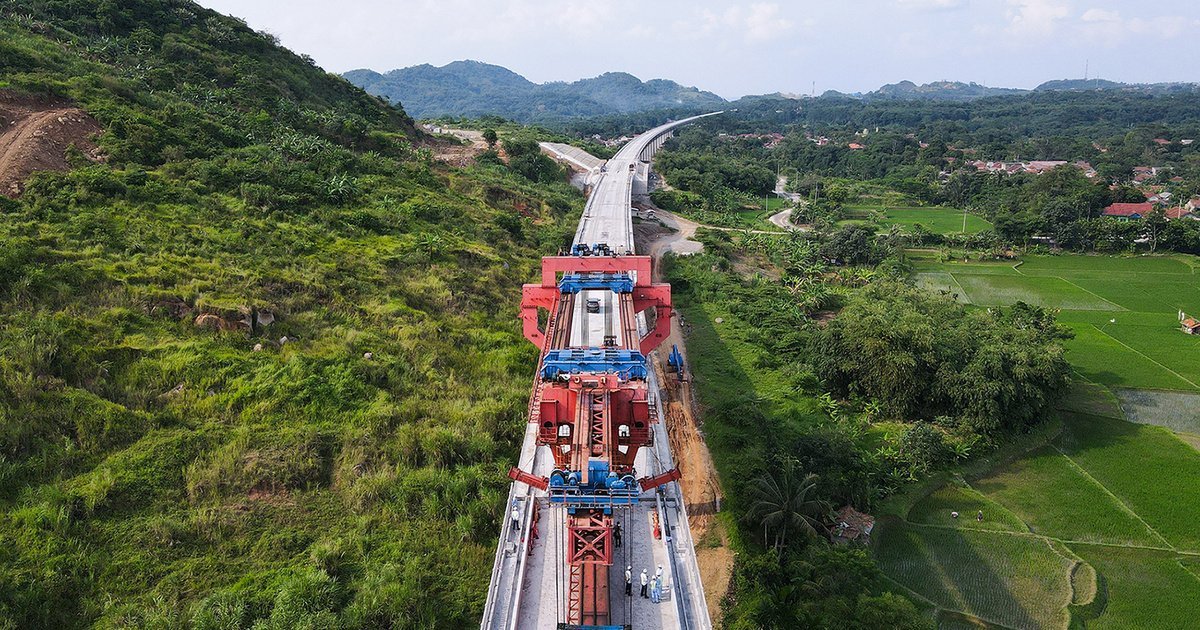
The China–Indochina Peninsula Corridor (CICPEC) has achieved major milestones, such as Indonesia’s Jakarta–Bandung High-Speed Railway (2023) and Malaysia’s East Coast Rail Link, resuming for completion in 2026.
By July 2025, there are total 150 nations that have agreed to cooperate with China under the framework of the Belt and Road Initiatives. Construction contracts and investments have now been incorporated by the BRI; in H1 2025, total engagement reached around US $124 billion over 176 deals.
When viewed as a whole, these corridors demonstrate how China has in its quest to become a global player has developed a massive infrastructure of operational, physical structures, thus defining the idea of connectivity in the 21st century. In addition, China has increased its investment in data centers, smart city platforms, fiber-optic lines, and 5G alliances with partner nations.
Probably the Belt and Road Initiative will not be brought up as a real-life success story. The initiative is openly criticized in that it puts debt on the developing states that are unable to pay them, which has raised fears of the possibility of losing sovereign control over local resources. Geo-politically it is now facing stiff competition by the western countries who are able to provide alternative development models. The projects on the ground are constantly protested by community groups since they cause environmental degradation and force them to relocate without proper procedural protection.
The Belt and Road Initiative, which was launched twelve years ago, is an informative case study in the field of sustainable infrastructure development and, at the same time, represents the global ambitions of China. However, despite the massive infrastructural investment that has increased trade and connectivity over time, sustainable achievement depends on systematic environmental management, increased transparency and the material benefits that are transferred to the partner economic systems at the local level.

Participant of ICSF-UoS Fellowship Program 2025-26 at University of Sargodha.