Jakarta, December 15, 2025 – The Europe Today: The Ministry of Marine Affairs and Fisheries (MMAF) is enhancing blue carbon measurement standards for seagrass meadows to improve data credibility, advance coastal conservation, support carbon trading, and reinforce Indonesia’s contribution to global climate change mitigation.
Koswara, an official from the ministry, announced in Jakarta on Sunday that a seagrass blue carbon measurement manual has been launched as a national technical guideline. The manual aims to strengthen data reliability, enhance conservation effectiveness, and provide a solid basis for Indonesia’s climate action initiatives.
“The manual is the first national reference for measuring carbon stocks in seagrass ecosystems across Indonesia’s coastal areas,” Koswara said, emphasizing its role in promoting credible, science-based blue carbon governance.
He noted, “We need measurable, valid, and accountable data so that Indonesia can play a greater role in climate mitigation and global carbon trading. This manual lays the foundation for evidence-based conservation actions.”
Koswara also highlighted the dual benefits of blue carbon utilization. “The use of blue carbon must ensure ecosystem sustainability while generating economic benefits for coastal communities,” he said.
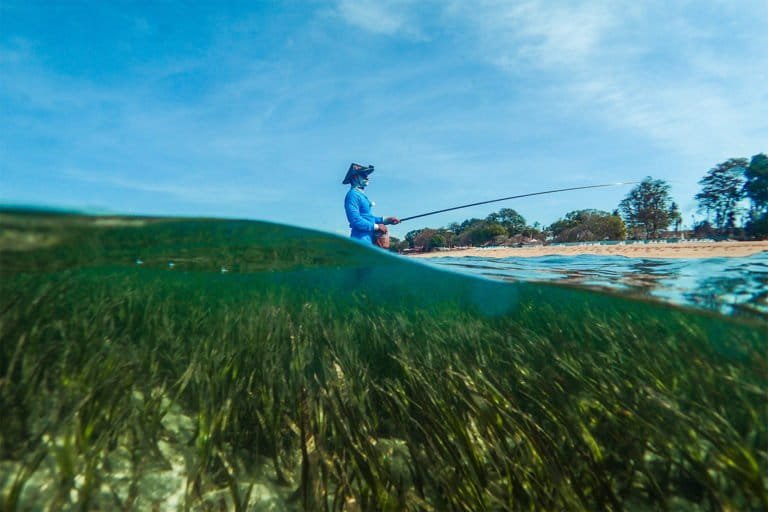
Indonesia is home to significant seagrass diversity, with 15 of the approximately 60 species worldwide found in its waters. Common species include Enhalus acoroides, Thalassia hemprichii, Cymodocea rotundata, and Cymodocea serrulata. Seagrass ecosystems are recognized as highly efficient carbon sinks, especially in sediments, capable of storing carbon for thousands of years if preserved.
“Globally, seagrass meadows contribute 10–18 percent of shallow marine carbon stocks despite covering less than 0.2 percent of the seabed,” Koswara explained, citing Duarte et al., 2013.
However, many Indonesian seagrass meadows are under threat from coastal conversion, pollution, destructive fishing, and climate change impacts. Such damage not only undermines ecological functions but can also release sedimentary carbon into the atmosphere, complicating greenhouse gas reduction efforts.
The government has issued several strategic regulations to safeguard seagrass ecosystems, including Presidential Regulation No. 110 of 2025, Ministerial Regulation No. 1 of 2025, and Ministerial Decree No. 52 of 2024, positioning seagrass as a key asset in conservation- and restoration-based carbon trading frameworks.
Firdaus Agung, another ministry official, explained that the seagrass blue carbon measurement manual provides comprehensive guidance, from survey preparation and field sampling to laboratory analysis, carbon stock calculation, and data management. The manual has been developed with input from researchers, academics, and conservation practitioners.
“The implementation of this manual is expected to improve the quality of blue carbon inventories, enhance the efficiency of conservation programs, and strengthen Indonesia’s position in international carbon trading mechanisms,” Firdaus said.