Over seventy years, Pakistan China relations are known to be one of the most consistent and permanent unions in the world politics. This relationship has been termed as an all-weather friendship and has always been based on strategic trust, political alignment and long term collaboration, in different aspects of diplomacy, economics and security. Since regular diplomatic favors to massive projects of connectivity like the China-Pakistan Economic Corridor (CPEC), bilateral relations have been largely developed by formalized processes at the state level. But with the profound change of the international system under the influence of globalization, digitalization, climate change and demographic changes, the classical premises of diplomacy are being re-established. In this dynamic environment, governments are no longer the only agents of the future of Pakistan-China relations, but people more so the youth.
This Transition is an indicator of the next chapter of Pakistan-China relations where youth diplomacy is becoming the order of the day. Young people have become not passive consumers of the results of foreign policy, but active agents, creating both their perceptions, exchanging their ideas, forming networks, and bringing bilateral relationships into new social, technological, and environmental dimensions. Since the present problems are more complex and intertwined internationally, the aspect of youth as informal diplomats, innovators, and problem- solvers takes the centre-stage in ensuring the long-term partnerships are maintained.
From State-Centric to People-Centered Diplomacy
Conventionally, the relations of Pakistan and China were motivated by the top-level political interaction and the coordination of strategies. In the previous decades, the interaction was based on security cooperation, alignment in the international stage, and subsequently connected economically through development of infrastructure. Although these dimensions continue to play a vital role in the bilateral relationship, they no longer reflect the richness and orientation of the relationship. People-to-people interaction has become a characteristic of the Pakistan-China relations in recent years, but this is indicative of a larger change in the essence of the overall diplomacy as such.
The education, cultural exchange, academic collaboration and youth targeted forums have led to new modes of interaction, which work outside of the official diplomatic frameworks. Now every year thousands of Pakistani students study in Chinese universities, accumulating academic education in addition to cultural experience. At the same time, the teaching and cultural programs of Chinese language in Pakistan have grown, and there has been an increase in familiarity to the society. Such interactions help in building of trust at the grass-root level which cannot be done through official agreements. The more the field of diplomacy turns into a social phenomenon, the more people-centered is no longer an additional feature, but is a principal ingredient.
Pakistan’s Youth as a Strategic Asset
The demographic profile of Pakistan is significant in this bid of changing diplomatic landscape. Pakistan is one of the youngest states in the world with almost two-thirds of its population below the age of thirty as well. This wave of young population is a big opportunity and a burden. The future generations of the population will determine the economic efficiency, technological capability, the world image, and the diplomatic extent of Pakistan in the next several decades.
Young Pakistani people are becoming more and more prominent in global universities, global innovation hubs, climate movements and the internet economies. They are able to represent the state informally because of their exposure to international norms, skills and networks. Regarding that, the concept of youth diplomacy is not a symbol but a strategic requirement. Such a high number of youth population in a state makes it incapable of having long-term foreign affairs without involving the youth in the diplomatic ecosystem.
Universities as Engines of Youth Diplomacy
One of the best tools of youth diplomacy between China and Pakistan has been defined as academic cooperation. Through the CPEC, the formation of the CPEC Consortium of Universities has institutionalized educational cooperation on a level never attempted before. Academic exchange is now systematic and sustainable as dozens of universities in both states are now connected using this platform.
Universities have successfully been used as a diplomatic space through joint research projects, co-authored publications, mobility of students and faculty, innovation centers, and international conferences. Professional relationships and common intellectual agendas are established by young scholars and researchers before even they have a chance to enter the formal sphere of policymaking. Academic partnerships provide continuity and long-term trust between societies unlike political agreements that might change with changes in leadership. In this regard, universities can be regarded as silent yet heavy-handed diplomatic actors that influence the future direction of the Pakistan-China relationship.
Digital and Innovative Diplomacy
The other main aspect of youth diplomacy is digital and technological cooperation. With the growing reliance of global power on technological capability, innovation systems, and digital literacy, Pak-China partnership in the strategic areas of ICT, artificial intelligence, cybersecurity, and new technologies has become a strategic issue. Pakistani youth are becoming exposed to the latest technological skills and international online markets through mass training programs and business-academic collaborations.
These changes have redefined the youth as major players in digital diplomacy. Bilateral cooperation in the areas of innovation is now represented by engineers, software developers, and technology entrepreneurs instead of diplomatic halls. This is a low profile but effective form of diplomacy which is dictated by cooperation, trial and error as well as solving problems together. It represents a transition to the view of diplomacy as a process of co-creation rather than the negotiation process.
Youth in CPEC Phase-II
The second stage of CPEC is a qualitative change in the economic cooperation between Pakistan and China. Whereas the initial one aims at infrastructural and energy initiatives, Phase-II prioritizes the industry, technological advancement in agriculture, green energy, electric vehicles, logistics, and online trade. This has established new arenas in which the youth can participate and especially through Special Economic Zones and industrial education.
The young Pakistanis have started joining the industrial ecosystems as trainees, interns and businessmen. Their involvement connects economic cooperation to the development of skills and creation of jobs directly. This development makes youth diplomacy stronger as it accommodates youth in the economic framework of bilateral relations. Young people no longer remain the far-off spectators of development, but they become participants in geo-economic repositioning and long-term development in Pakistan.
The Missing Link: Youth and Climate Cooperation
Although the young diplomacy has expanded in the field of education, technology and economic cooperation, there is one sphere that has not been developed enough, which consists in joint youth-led climate cooperation of Pakistan and China. The two states are considered as some of the most climate-influenced states in Asia, but in dissimilar aspects. Pakistan is highly vulnerable to climate variation in the form of floods, melting glaciers, drought, and heat waves, whereas China has to deal with the environmental pressures associated with the fast industrialization and extreme weather conditions.
Even though the states are engaged in the national and international climate activities, the youth climate programs are predominantly domestic or multilateral based. No stable bilateral platform exists, where Pakistani and Chinese young people interact to take joint climate action. This fact is conspicuous, especially considering the extent of the collaboration in other sectors. Climate change is not just an environmental issue, but it is also a Human Security challenge that has a straightforward impact on livelihood, food security, migration, and social stability. The exclusion of youth in organized bilateral climate collaboration poses a threat to undermine the humanistic basis of the future diplomacy.
A Vision for the Future: The Pak-China Youth Climate Corps
To address this gap, Pak-China Youth Climate Corps is a progressive and realistic vision. This project would provide a systematic space where Pakistani and Chinese young people could work together on feasible climate-related issues, including disaster preparedness and flood resilience to monitoring glacial, renewable energy awareness, and ecosystem protection issues. Instead of replicating the already existing government programs, the Corps would bridge them on a human level, and this would mean that the cooperation between the state levels would translate into the impact on the community level.
This vision can be implemented due to the presence of educational and technical exchanges. Climate resilience is already being prepared with thousands of Pakistani students being trained in Chinese universities in engineering, environmental science, and urban planning programs. Climate diplomacy can no longer rely on policy frameworks but can be embedded in the society by directing this expertise into joint youth initiative. This would be very consistent with the aims of Green CPEC, but also with the wider goals of the Chinese in the context of ecological sustainability, and it would enhance the resilience of the Pakistani climate on a more local scale.
Why Youth Are the Next Chapter of Pakistan-China Relations
The future Pakistan-China relations have the form of youth diplomacy. Pakistan is a source of demographic power, creativity, and human resource whereas China provides technological knowhow, research capability, and international connectivity. The two will create a partnership that is well placed to face the twenty-first century challenges.
Young people are involved in the process, unlike the practice of traditional diplomacy which tends to rely on political cycles. The future of the Pakistan-China relationships is becoming more and more classroom-based, research-based, innovative, cultural and climate-impacted communities. These areas build trust, collaboration and identity, which is not easily mirrored in formal agreement.
Conclusion
Relations between Pakistan and China are gradually at a new stage. People, and those, in particular, who belong to the younger generation, are currently carrying forward what up to now depended almost entirely upon political trust and strategic cooperation. The young people are making this relationship more human and lived by providing education, technology, industry, cultural exchange and climate engagement. Youth diplomacy does not denigrate established diplomacy; it enhances it by basing the cooperation in day-to-day communication and experience. With the increasing uncertainty and global problems and challenges, the power of Pakistan-China relationship will be more reliant on the capabilities, thought, and networks of individuals, and no longer on agreements only. The future of such a cooperation, then, will be determined not only in the official papers, but also in the conquests, hopes and destinations of the young people of these two states.
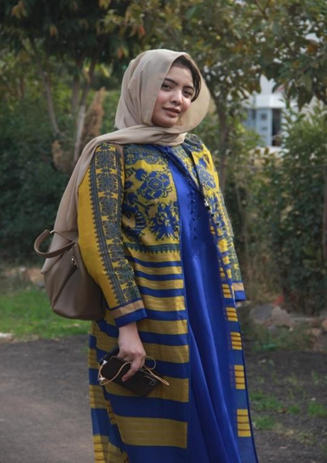
Winner of article writing competition organized under the theme “Bridging Horizons: Celebrating Pakistan-China Deep Rooted Friendship” in Dec, 2025.