Introduction
Pakistan-China friendship is among the longest and most intricate friendships in modern international relations. Such constant characterizations include the poetic description higher than the Himalayas, deeper than the oceans, and sweeter than honey , which reflects not merely affection but deep strategic understanding built over decades. Unlike most other transitory interest- or ideology-driven bilateral friendships, the China-Pakistan relationship has remained inexplicably steady and robust. It has braved the changes in the balance of international power, succession of leaders, and regional tensions and gotten stronger with each trial. This is a relationship based on shared values of sovereignty, respect, and non-interference
From the early years of diplomatic recognition in 1950 to the twenty-first century’s Belt and Road Initiative (BRI), both nations have expanded their cooperation across the fields of politics, economics, defense, and culture. Pakistan has been a tried and tested friend of China, a model of rapid development, and partner in its quest for modernization and regional stability. For China, Pakistan provides a strategic gateway to South Asia, the Middle East, and the Arabian Sea — all regions at the heart of Beijing’s economic and geo-strategic plans.
On a broader canvas, the alliance is an embodiment of a bridge between civilizations — one built on Asia’s ancient tradition of solidarityand cooperation. As global power dynamics shift toward Asia, the Pakistan–China partnership continues to play a pivotal role in regional peace, connectivity, and sustainable growth. This essay explores the evolution, political foundations, defense cooperation, and enduring relevance of this deeprooted friendship, emphasizing how it serves as a model for inter-state trust in an era of uncertainty.
Historical Background: The Genesis of a Strategic Friendship
Pakistan was one of the first nations to have diplomatic relations with the People’s Republic of China (PRC) in 1950 when various states postponed due to Cold War polarization. Diplomatic relations were made official in 1951, and from there a relationship evolved gradually from reserved diplomacy to a solid strategic partnership. Although it was aligned with Western alliances such as SEATO and CENTO during the Cold War, Pakistan practiced a pragmatic policy of wanting to have equal relations with China.
After the Sino-Indian War of 1962 , the two countries discovered a commonality of interests: China saw Pakistan as a friendly neighboring country which would serve as a balancer of Indian influence in South Asia, and Pakistan saw China as a firm friend in its security calculus. Their signing of the Sino-Pakistan Boundary Agreement (1963) also strengthened their confidence by settling border disputes peacefully — a rare achievement in a region plagued by border disputes all too often.
The alliance became more robust in 1971 when Pakistan facilitated secret diplomacy between America and China by hosting American Secretary of State Henry Kissinger’s secret visit to Beijing. Not only did this bring Pakistan’s image as an imperative diplomatic bridge to the center (Small, 2015), but it also opened the door to the normalization of US–China relations. Since then, the two countries have stayed to build ties on mutual interest, respect, and shared strategic vision.
Political and Diplomatic Cooperation
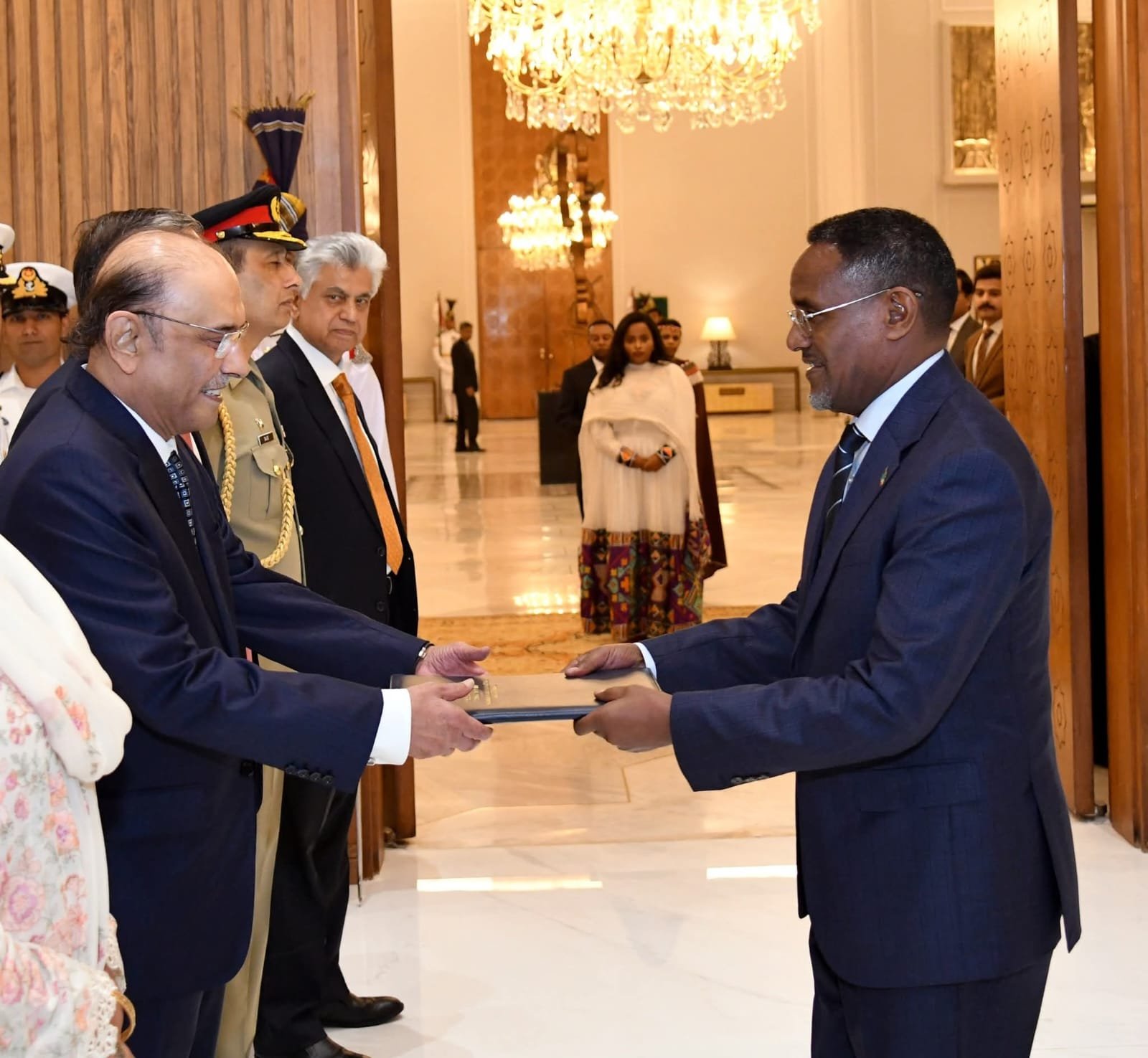
Pakistan–China relations are based on mutual trust, non-interference, and shared strategic interests .Over the decades, both nations have been long-standing backers of each other’s core interests at international forums, beyond changes in government or ideology. China has been a helpful ally to Pakistan on the Kashmir issue , advocating for settlement through dialogue and opposition against external interference in South Asia’s affairs. As a quid pro quo, Pakistan has remained committed to its support for China’s One-China policy and Beijing’s positions on Taiwan, Tibet, Xinjiang, and Hong Kong (Malik, 2017). State-to-state visits have formed the foundation of this political engagement.
Leaders of successive generations of the two countries — from Premier Zhou Enlai and President Ayub Khan to President Xi Jinping and Prime Minister Shehbaz Sharif — have made inter-state tours that promote bilateral understanding. Each tour has brought new agreements and fresh mutual strategic visions. The establishment of the China–Pakistan Joint Committee on Economic, Trade, Scientific, and Technical Cooperation (1982) and later the China–Pakistan Joint Cooperation Committee (JCC) under the Belt and Road Initiative (BRI) institutionalized such interaction with continuity and policy coordination. Pakistan-China collaboration extends beyond bilateral relations to regional and international diplomacy.
The two countries are also members of the Shanghai Cooperation Organization (SCO) where they are keen supporters of regional stability, counterterrorism, and economic integration. Their diplomatic friendship also supports multilateral institutions such as the United Nations (UN), Asian Infrastructure Investment Bank (AIIB), and Economic Cooperation Organization (ECO). Their cooperation demonstrates their co-shared vision for a multipolar world order, where regional sovereignty and mutual respect are highly prioritized over hegemonic dominance. An important aspect of their diplomatic connection is crisis cooperation.
China has repeatedly bailed out Pakistan during times of crises — the earthquake in 2005 to the pandemic of COVID-19 — with economic and humanitarian aid. In turn, Pakistan has come to China’s aid in countering Western criticism of its internal affairs. Such conduct enhances public goodwill and attests that their friendship is not reserved for policy elites but addresses the broader societies of the two nations. Lastly, Pakistan–China diplomatic relations are the result of a mix of strategic realism and emotional warmth . This fascinating balance has seen the relationship weather regional political changes and global realignments and continue to be the backbone of Pakistan’s foreign policy and the central element in China’s South Asian strategy.
Economic Partnership and the China–Pakistan Economic Corridor (CPEC)
Economic cooperation remains paramount to Pakistan–China relations, with the China–Pakistan Economic Corridor (CPEC)— flagship project of the Belt and Road Initiative (BRI).
In 2015, initiated CPEC is an investment of more than $60 billion, intended to advance connectivity, energy production, and industrial expansion (Wolf, 2019). The corridor links China’s Xinjiang province to Gwadar Port on the coast of Pakistan in the Arabian Sea, providing Beijing with a shorter, safer trade route to the Middle East and Africa. CPEC’s composition includes four pillars: power infrastructure, transport connectivity, industrial collaboration, and construction of Gwadar Port. CPEC’s power generation projects have added over 8,000 megawatts to Pakistan’s national grid, squarely addressing recurring power shortages. Meanwhile, highways such as the Karakoram Highway (KKH) and Lahore–Karachi Motorway are strengthening Pakistan’s internal connectivity and regional trade potential.
However, the project is not without challenges including bureaucratic inefficiencies, local grievances, and debt sustainability concerns .Others assert that unless there is greater transparency and inclusive development policies, the gains of CPEC might be unequally dispersed (Zeb, 2021). Nonetheless, its value as a transformation is indisputable — transforming Pakistan into a hub of regional trade and investment and opening up a secure outlet to the Indian Ocean for China.
Defense and Strategic Cooperation
Defense cooperation is the cornerstone of Pakistan–China strategic relations , based on confidence, mutual benefit, and convergence of vision for regional security. Their defense collaboration over time has graduated from simple arms sales to more concerted cooperation in terms of joint production, exchange of intelligence, and strategic coordination. China is Pakistan’s single-largest defense supplier, exporting all kinds of military equipment, including tanks, aircraft, submarines, and missile systems (Tellis, 2018).
One of its most important achievements is the joint production of the JF-17 Thunder multirole combat aircraft with the Pakistan Aeronautical Complex (PAC) and the Chengdu Aircraft Corporation (CAC).
The project not only enhanced Pakistan’s air capabilities but also marked its enhanced defense technology independence. Joint ventures have been extended further to naval modernization, where China is assisting Pakistan in constructing frigates and submarines in a bid to improve its naval security, particularly in the Gwadar and Arabian Sea sectors. In 1991, the two countries formalized defense cooperation through agreements that expanded to include military training, defense technology transfer, and counterterrorism coordination. Periodic bilateral exercises such as Shaheen (Air Force) and “Warrior” (Army) reflect operational interoperability and each other’s readiness to confront emerging threats. The exercises also reflect the enthusiasm of both nations to engage in regional peacekeeping and counterterrorism under mechanisms such as the SCO.
Strategically, the defense relationship plays a balancing role for South Asia. When India modernized the military and aligned with the United States, China’s defense relationship with Pakistan acts as a source of deterrence stability. China, on the other hand, considers Pakistan a key ally to secure its strategic depth as well as defend its western borders. Their cooperation encompasses peaceful energy application nuclear technology, showing trust and technical coordination between them.
Geopolitically speaking, Pakistan-China’s defense partnership is in line with their long-term objective of regional stability and multipolarity. Both nations advocate peaceful coexistence but maintain the power to deter an attack. In an age of so-called fluid alliances and ratcheting tensions within the Indo-Pacific, such a defense cooperation reflects a pragmatic vision for shared security interests — one that transcends traditional military cooperation and extends into cooperative strategic planning and technology development.
Cultural, Educational, and People-to-People Exchanges
Cultural diplomacy forms the human face of the Pakistan–China partnership. Educational exchange, media, and cultural exchange programs have been employed by both nations to strengthen social ties. Establishment of Confucius Institutes in major Pakistani universities promotes Chinese language and culture study, while establishment of Urdu departments in Chinese universities enhances cross-cultural literacy (Abid & Ashfaq, 2015).
Pakistani students numbering thousands study in China on generous scholarships under the CPEC and BRI schemes. As a return gift, Chinese engineers and experts in Pakistan help transfer knowledge and build local capacity. Initiatives like the China–Pakistan Cultural Corridor and celebrating the 70th anniversary of diplomatic relations in 2021 have enhanced understanding through culture, literature, and film.
Cultural exchanges help to offset stereotypes and create emotional affinities between the peoples of the two nations. The warmth of popular sentiment — as expressed in social media, educational exchanges, and tourism — helps to propagate the message of an “iron brotherhood.”
Mutual Benefits and Strategic Importance
The China–Pakistan amity is a comprehensive strategic partnership through which the two nations reap extensive economic, political, and security dividends. For China, Pakistan offers a land-based access point to world markets through Gwadar, bypassing exposed ocean chokepoints like the Strait of Malacca. For Pakistan, Chinese investment is a critical spur to modernization and economic renewal.
At the regional level, their cooperation functions as a counterbalance to Indo-U.S. alignment , ensuring stability in South Asia. Moreover, through cooperation such as BRI–Vision 2025 integration , both nations demonstrate coordination of national development priorities. Their cooperation even extends to climate resilience, renewable energy, and space technology , showcasing the evolving dynamics of this multidimensional relationship.
Challenges and Critiques
Although robust, their relationship is not free of issues. There are fears in Pakistan of overdependence on Chinese loans and limited local participation in the projects of CPEC. Security threats in Balochistan, where the majority of the Chinese projects reside, have raised more fears regarding the safety of investors and workers. Political instability and inconsistency in the policy of Pakistan can impede long-term strategy from the Chinese side.
Externally, the alliance is traditionally criticized by Western and Indian commentators as a strategic containment device, rather than an instrument of cooperation. For equilibrium to be attained, both nations must increase transparency, promote local employment, and ensure that economic growth translates into social equity.
The Future of Pakistan–China Friendship
As the world tends towards multipolarity, the future trajectory of Pakistan–China relations looks auspicious and increasingly multilayered. The Second Phase of CPEC is focused on industrial cooperation, agriculture, digitalization, and socio-economic development (Hussain, 2022). Further, new areas of cooperation — like artificial intelligence, climate resilience, and e-trade — are in the pipeline as priorities.
China’s Global Development Initiative (GDI) and Global Security Initiative (GSI) are also closely aligned with Pakistan’s national interests, offering platforms for cooperation extending beyond infrastructure. The friendship, founded on deep trust and mutual vision, can continue to be a source of stability in South Asia and a model for South–South cooperation.
Conclusion
The Pak-China friendship is not an ordinary diplomacy relationship; it is a symbol of strength, faith, and shared fate. The tie which began at the break of dawn of recognition in 1950 has evolved into an All-Weather Strategic Cooperative Partnership which covers politics, economy, defense, and culture. The two nations have stood by each other in hard times, ushering in a relationship that has become the backbone of regional peace and a symbol of shared progress.
As the globe confronts multifaceted challenges — from geopolitical competition to global warming — Pakistan and China persist in bridging horizons ,building cooperation that is not only strategic but humnely deep. Their friendship, based on history and cemented by common aspirations, remains a lasting model of international relations based on respect, solidarity, and peace.
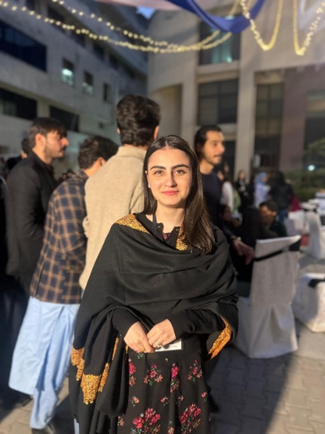
Winner of article writing competition organized under the theme “Bridging Horizons: Celebrating Pakistan-China Deep Rooted Friendship” in Dec, 2025.