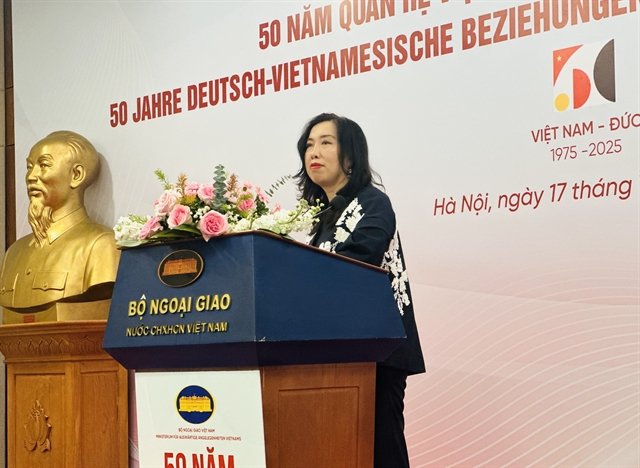
Hanoi, December 18, 2025 – The Europe Today: The Ministry of Foreign Affairs of Vietnam hosted a seminar in Hanoi on Wednesday to commemorate the 50th anniversary of diplomatic relations between Vietnam and Germany. The event reviewed five decades of friendship and cooperation while discussing orientations and measures to further strengthen bilateral ties in the coming period.
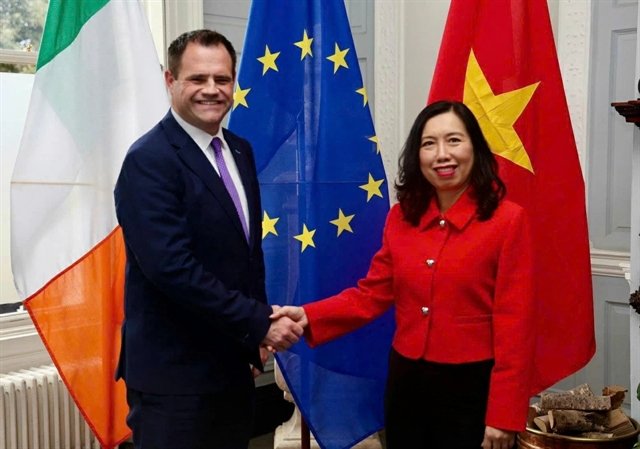
In her opening remarks, Deputy Minister of Foreign Affairs Lê Thị Thu Hằng highlighted that relations between the two countries have become increasingly solid, stable, and substantive, with notable achievements across politics and diplomacy, investment, development cooperation, education and training, labor, energy, and climate change response. She emphasized that these partnerships have contributed to each country’s development and to addressing shared global challenges, expressing confidence that bilateral relations would continue to deepen and consolidate.
German Ambassador to Vietnam, Helga Margarete Barth, noted that bilateral cooperation has steadily strengthened over the years, with a significant milestone reached in 2011 when leaders of both countries established a Strategic Partnership. She stressed the importance of closer coordination at multilateral forums on regional and international issues of mutual concern, as well as in advancing initiatives supported by either side. Ambassador Barth added that the strong foundation of political trust and increasingly intertwined interests provides ample scope to expand cooperation and contribute positively to peace, stability, and sustainable development regionally and globally.
The seminar featured more than 20 presentations and exchanges by policymakers, experts, scholars, business representatives, and organisations from both countries. Participants highlighted key achievements, shared practical cooperation experiences, and proposed concrete solutions and initiatives to further strengthen and deepen the strategic partnership.
In her closing remarks, Deputy Minister Hằng emphasized that trade, investment, and economic cooperation remain key pillars of bilateral relations and should be promoted in a stable, balanced, and sustainable manner, with particular attention to the quality and effectiveness of joint projects. She highlighted that the implementation of the EU–Vietnam Free Trade Agreement (EVFTA) and the upcoming EU–Vietnam Investment Protection Agreement (EVIPA) would create additional opportunities for expanding collaboration.
Hằng also underscored the importance of strengthening locality-to-locality and business-to-business connectivity, as well as linking grassroots-level initiatives to central-level cooperation, in order to develop concrete programmes and projects delivering tangible benefits. She further stressed the need to prioritize joint work in research, science, and technology, including collaborative studies, enhanced linkages between universities, institutes, and enterprises, and promotion of technology transfer as a key component of mutually beneficial bilateral relations.