INTRODUCTION:
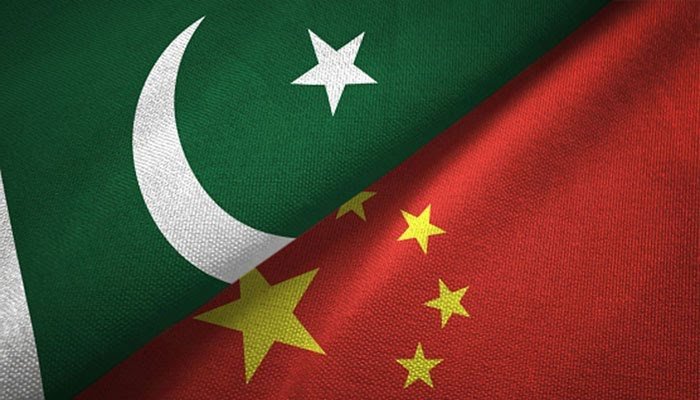
The partnership between China and Pakistan in terms of diplomacy is one of the most ancient and strategically important alliances in Asia. Both countries have developed their relations from a friendly one into a completely strategic alliance through the decades; the initial relationship was established when the two countries began formal diplomatic relations in 1951. The newly created alliance not only redefined but also reshaped the political realities both regionally and internationally. Positioned at the junction of South and Central Asia, Pakistan is bound to play an important role in the region while China’s rapid rise as a world power has given it a major role in global affairs. Their developing relationship is indicative of the changing trends in thegeopolitics of South Asia and the reconfiguration of the global power structure.
The very first day of their partnership was marked by the principles of respect and non-interference. Mutual security interests and the desire to keep India’s regional dominance in check were the main driving factors for the two nations in their early decades. This cooperation, as it was derived from such strong economic and political ties, eventually covered the fields of economics, infrastructure, and technology investments—especially after the launch of the China- Pakistan Economic Corridor (CPEC) in 2015, which is considered the flagship project of the One Belt One Road (OBOR) initiative. Today, the Pakistan-China relationship is a multidimensional strategic partnership encompassing defense, trade, and regional connectivity.
The current study aims at a comparative inquiry of the evolution of the Pakistan-China alliance from being a friendly relationship to an institutionalized strategic partnership during the period of 1950 to 2025. The final and more general research question is: What was the impact of historical, economic, and strategic factors on the development of Pakistan-China relations from a friendly relationship to a long-term strategic partnership?
The paper is organized as follows:
The first section outlines the theoretical and analytical framework used to interpret the alliance. The second section traces the evolution of bilateral relations through key historical phases. The subsequent sections analyze political, economic, and defense cooperation in depth. The final section summarizes the main findings and offers projections for the future trajectory of the Pakistan–China strategic relationship.
Theoretical / Approach:
This research interprets the changes in Pakistan-China relations through the application of the Realist paradigm, particularly the Neorealism or Structural Realism school of thought. Realism maintains that states operate in an anarchic international system where there is no higher authority, thus, they must prioritize survival, power, and security above all else. In this case, alliances are made not on the basis of moral or ideological principles but through the pragmatic calculations of national interest and power equilibrium.
Looking at the situation from a Neorealist perspective, it can be said that both Pakistan and China have, in the past, acted according to their respective security and strategic needs. Right after the partition of the Indian subcontinent, Pakistan aimed fortifying itself through external alliances in order to counter India’s hold over South Asia. At the same time, China recognized
Pakistan as an important ally to keep Indian influence in check and also to provide stability in the region. The convergence of these strategic interests was further supported by the Sino-Indian War of 1962 and the Indo-Pakistani War of 1965 which resulted in a stronger acknowledgment of shared geopolitical goals between the two countries.
Neorealism also answers the question why the Pakistan–China relationship has endured through changes in government, ideologies, and even global shifts. During the Cold War, for instance, Pakistan sided with the US while China went down a communist path, but the two countries still managed to cooperate due to a common strategic reasoning rather than ideological alignment.
The China-Pakistan Economic Corridor (CPEC), a crucial part of China’s Belt and Road Initiative (BRI), can be seen as a strategic geopolitical tactics maneuver if one adopts the realist viewpoint. For China, CPEC means getting to the Arabian Sea and securing the most important energy and trade routes.
Chinese Foreign Policy Towards Pakistan:
The foreign policy of China towards Pakistan has changed and adapted over time according to the regional and global dynamics, but the main policy priorities which are stability, security, and the connection in South Asia have remained the same. The relations between the two countries have been very much influenced by China’s strategical goals since the very beginning with the signing of the diplomatic relations agreement back in 1951: to make India’s impact less strong, to have a larger footprint in South Asia and, finally, to have a safe and easy way to transport goods and oil through the Arabian Sea. What has started as a very limited diplomatic communication between the two countries has now converted into a full-fledged partnership that is interconnected with defense cooperation, economic collaboration, and political trust.
At the beginning of the relationship, both countries were more or less cut off from the rest of the world. China, which was still in the process of revolution, was unable to win the recognition of many Western powers and thus practically got banned from the diplomatic scene. On the other hand, Pakistan was a young state trying to survive in a region full of discontent and looking for partners that could be trusted. One of the first Muslim-majority countries to officially acknowledge the People’s Republic of China was Pakistan in 1951 and, that was the very first step in a long-term relationship based on the two countries’ mutual respect and common geographical interests.
The year 1962 is remembered as a turning point in the history of Sino-Indian relations. The war between China and India left both countries, India and Pakistan, at the same side of the fence, hence they became closer and more cooperative politically. Over the years the trust between the two countries has been increased, so China’s position in Pakistan was strengthened through Pakistan’s support in international forums. Then cooperation started with the 1970s, when Islamabad played a significant role in background of U.S.-China talks—the diplomatic breakthrough that won China global respect while keeping Pakistan critical to Beijing.
Core interests:
These interests can be broadly categorized into three levels: security, economic, and geopolitical aspects.
Security: Pakistan is a strategic counterweight to India, which is China’s main regional rival. It has close military relations with Islamabad, enabling Beijing to make sure stability on the western border cuts India’s regional weight.
Financial: Pakistan gives China the shortest route to the Arabian Sea through Gwadar Port, reducing transport routes of energy from the Middle East and Africa.
Geopolitical: Empowerment of Pakistan furthers the Chinese cause for influence in the Global South and for a world order where China is less circumvented by the United States.
Key Strategies, Policies, and Activities:
The political attitude of China towards Pakistan has been marked by coherence, pragmatism, and gradual expansion of cooperation. In military terms, Beijing has been the most consistent defense partner of Islamabad since the 1970s: in terms of equipment, joint production facilities (e.g., JF- 17 Thunder fighter jet) and peaceful atomic technology. Politically, China has consistently backed Pakistan on sensitive issues before the UN about Kashmir, while Islamabad has reciprocated by adhering to the “One China” policy and supporting Beijing’s positions on Taiwan, Xinjiang, and Tibet.
China’s engagement economically entered a new phase when the China-Pakistan Economic Corridor, popularly known as CPEC, a flagship project of the BRI, was launched in 2015. It was an over $60 billion infrastructure, energy, and transportation projects to enhance connectivity between western China and the Arabian Sea. It reflects China’s wider economic strategy for development-driven diplomacy to secure trade and energy routes.
Illustrative Examples:
Several agreements and partnerships manifest this strategic partnership, including:
- The 1963 Border Agreement, resolving territorial disputes peacefully, set a precedent for trust.
- The diplomatic mediation by Pakistan in 1971, which led to the opening of U.S.–China relations, underlined Beijing’s confidence in Islamabad.
- The CPEC Framework Agreement (2015) institutionalized long-term cooperation in trade and infrastructure.
- Regular joint military exercises, such as “Warrior” and “Sea Guardians” drills, illustrate defense interdependence.
Overall, China’s foreign policy toward Pakistan reflects a combination of realpolitik and economic pragmatism. Fait accompli based on mutual respect and strategic imperatives thus has continued to anchor Beijing’s presence in South Asia and has spurred its ambition toward regional stability and global connectivity.
Foreign Policy of Pakistan:
Pakistan’s foreign policy towards China has been one of the few stable and successful dimensions of its external relations. Since the early years of independence down to the present, Pakistan has perceived China as a dependable allay that complements both its strategic security and economic imperatives while balancing regional challenges, especially from India. The evolution of this relationship mirrors Islamabad’s overall grand strategy of survival, balancing, and development in a complex international environment.
Background History:
The early years of foreign policy in Pakistan, subsequent to the independence of the country in 1947, were oriented toward reliance upon the Western bloc because of its dependence on the West economically and for reasons of security vis-à-vis India. In the late 1950s and early 1960s, however, Islamabad began to diversify its relationships. The watershed was the Sino–Indian War of 1962, where Pakistan immediately perceived an opportunity to cement relations with a fellow sceptic about India’s regional ambitions-the People’s Republic of China. Diplomatic traffic rose, and by 1963, the two signed a landmark border agreement-the bedrock for their enduring mutual trust. During the Cold War, Pakistan played an important role in facilitating communication between China and the United States-a role illustrative of its importance to Beijing’s global diplomacy.
Core interests:
Security, economic development, and diplomatic leverage are the key interests in Pakistan’s China policy.
Security: Advanced military technology is provided, including defense cooperation to enable Pakistan to keep a credible deterrent posture India.
Economic: Pakistan has received different volumes of economic engagements through trade, loans, and large projects from CPEC to develop infrastructure, reduce energy shortage, and industrialize.
Diplomatic: Close relations with China improve Pakistan’s standing in international forums and diversify its alliances with respect to the West for strategic autonomy.
Key Activities, Policies and Strategies:
Alignment and engagement are combined in Pakistan’s approach toward China. Successive
governments, irrespective of political ideology or military leadership, have pursued a policy of continuity concerning China. Islamabad has sided with China on the sensitive issues of Taiwan, Tibet, and Xinjiang, besides avoiding participation in any anti-China alliance. Vision East Policy of Pakistan reinforces its intent to integrate with East and Southeast Asian economies, for which China becomes the central partner.
It finds its backbone in defense and security cooperation. Joint production of the JF-17 Thunder, the Karakoram Highway, and ongoing collaborations in missile and naval technologies illustrate deep military ties. Politically, too, Pakistan has time and again referred to China as an “all- weather friend,” reflecting trust and mutual respect.
Economically, it has been a path-breaking initiative since the CPEC launched Pakistan’s largest ever foreign investment for energy generation, road networks, and port connectivity. Through the CPEC, Pakistan aspires to its role as a regional trade hub linking South, Central, and West Asia.
It is a platform to reposition Pakistan as an interregional trade hub, bridging Central Asia, the Middle East, and Western China. At the same time, it does expose Islamabad to other challenges of economic dependence and vulnerability to debt. Although CPEC has hastened infrastructure growth, there is growing unease over the future long-term financial sustainability of Pakistan and about handling the asymmetric nature of the relationship.
Examples of Sustainable Cooperation:
- 1963 Boundary Agreement: Established peaceful borders and eternal confidence.
- 1970s Sino–U.S. Mediation: Increased the diplomats’ role for Pakistan in acting as an intermediary between Beijing and Washington.
- 2005 FTA: allowed for the development of bilateral trade and investment flows.
- CPEC 2015-Present: Transformed the relationship into a perpetual economic partnership.
- Joint Military Projects: Sharper defense production and operational coordination.
Comparative Analysis:
Pakistan-China relations from 1950 to 2025 epitomize the vacillating strategic interests of both countries and their different foreign policy styles in the new international situation. While shared interests in security, economic development, and regional cooperation brought them together, incentives, capabilities, and the foreign policy behavior of China and Pakistan have been shaped by their distinct roles in international politics and domestic situations.
Goals and Convergences Shared:
The defining characteristic of the intentions of both nations’ foreign policies has to do with mutual interest in the regional stability and strategic equilibrium of South Asia. Both states look toward India as the biggest rival, with China seeing it as a regional competitor and Pakistan viewing it as a survival threat. This perception has been the very foundation upon which their collaboration in defense and security affairs has been based, promoting intelligence cooperation, technological collaborations, and shared military programs for deterrence and balance of power.
Economically, they have shared a common vision for regional connectivity and industrialisation. CPEC is the pragmatic manifestation of these common aspirations given that it brings together China’s push for global infrastructure building with Pakistan’s desire for foreign investment and modernization. It means that with CPEC, Pakistan gains energy and infrastructure improvement, while China acquires stable land and sea routes from its western provinces to the Arabian Sea.
Diplomatically, both countries have been wonderfully consistent in support of the essential interests of the other. Pakistan has continued to support the One-China Policy right through its beginning and sides with Beijing on sensitive issues such as Taiwan, Tibet, and Xinjiang. China, in turn, has supported the stance of Pakistan vis-à-vis Kashmir and given the latter political
support in multilateral forums. This mutualism has sailed through leadership changes across both states, with deep roots of trust and sound strategic logic for their alliance.
Difference in Strategic Orientation:
While these common objectives exist, they have different approaches to and motivations regarding the alliance. The Realpolitik and a great-power status drive China’s involvement with Pakistan. As an international power, Beijing views Pakistan as a strategic outpost in South Asia- that partner which undergirds its BRI, balances U.S. influence, and strengthens China’s presence in the Indian Ocean region. Its foreign policy is long-term, state-led, and directed to project stability and power beyond its borders.
The foreign policy of Pakistan, thus, is one of defense and dependence on China. Chronic domestic turmoil, security concerns, and strained relations with India compel Islamabad to seek support from Beijing’s diplomacy and economy. While China’s approach is proactive and on a global level, Pakistan’s foreign policy is dictated by its own short-term need for survival, external balancing, and internal growth. Ideologically, both countries depict their alliance in very different terms. China talks of the relationship in terms of mutual development and non-interference and highlights its functional and cooperative nature. In contrast, Pakistan describes it in the language of friendship and brotherhood, testifying to its desire for reliability and equality in an unequal partnership. The official Chinese “win-win cooperation” discourse has been juxtaposed with Pakistan’s “all- weather friendship” catchphrase—only a metaphorical expression of their two different views on the same relationship.
Regional and Global Implications:
This has consolidated the Pakistan-China strategic axis, in the process reshaping both regional politics and international alignments. Regionally, this arrangement has further deepened strategic rivalry with India, prompting New Delhi to deepen relations with the United States, Japan, and Australia via platforms such as the Quad Alliance. This newfangled bipolarity is a different moment within Asian geopolitics-in which the China-Pakistan axis is juxtaposed against an emerging US-India partnership.
On the economic level, it can turn Pakistan into the very center of interregional trade by connecting Central Asia, the Middle East, and Western China. However, it simultaneously opens Islamabad to threats of economic dependency and debt risk. Although CPEC has fostered infrastructure development, there are still issues about Pakistan’s long-term fiscal sustainability and capacity to deal with the imbalanced character of the relationship.
Conclusion:
The metamorphosis of Pakistan–China relations from 1950 to 2025 embodies how strategic alliances can take root and live through the winds of change at the regional and international levels. From the initial mutual diplomatic goodwill and common security interests, this has come a long way and today represents a wide-ranging, multidimensional relationship on matters pertaining to defense, infrastructure, trade, and regional integration. This shyly begun friendship has grown into a realistic, institutionally developed relationship based on unflinching strategic logic.
These are Realist-guided objectives of national interest, balance of power, and survival in the unreliability of the international system. Given the core research question of this thesis–How have economic, strategic, and historical factors influenced the development of the relationship between Pakistan and China from one of friendship to a strategic alliance?–this can be answered by three key findings:
Converging Security Interests
Both have been firmly cooperating to offset the regional influence of India and to attain strategic parity in South Asia. Acquired defense cooperation, intelligence sharing, and joint technological endeavors kept the partnership alive despite ideological divides across the globe.
Growing Economic Interdependence:
Starting the China-Pakistan Economic Corridor in 2015 marked a stride of gravitas toward economic institutionalization away from political alignment. CPEC has hooked up theinfrastructure and energy economies of Pakistan with China’s regional development model for mutual gain and high interdependence in the long run.
Resilient Political Trust Notwithstanding the change in leadership, internal turmoil, and change in global order, the alliance has been sustained because of the unwavering diplomatic understanding, reciprocator help on basic worldwide issues, and realization of pragmatic significance to one another. But even though it is mutual, it is not necessarily balanced. China’s enhanced status in the world is pitted against the low economic and political strength of Pakistan, hence an asymmetric but feasible relationship. Pakistan wants economic and security assurances, while to China, Pakistan is used as a key artery for commerce and influence into the Indian Ocean region. The relationship therefore demonstrates how lopsided allies can keep the status quo stable and in cooperation so long as interests remain complementary and flexible. In a broader geopolitical context, the Pakistan-China partnership is indeed exemplary of pragmatic cooperation under multipolarity. Not led by any kind of ideological or emotional binding but by strategic, calculated interest-based decision-making, which coincides with the long-term strategic interests for both nations, the alliance keeps molding the power balance in South Asia and beyond, setting a model for durable state-to-state involvement in the phase of global transformation. In a nutshell, the Pakistan-China relationship represents one of the most resilient strategic partnerships in modern international politics. It underlines the ability of two states with different power and size to achieve durable cooperation based on mutual interests, respect, and pragmatic adjustment to changing regional realities. Confronting future challenges, their joint partnership will continue to serve soon as a cornerstone of regional stability and a fundamental characteristic of the new Asian strategic landscape.

Winner of article writing competition organized under the theme “Bridging Horizons: Celebrating Pakistan-China Deep Rooted Friendship” in Dec, 2025.