Islamabad, December 19, 2025 – The Europe Today: President Asif Ali Zardari on Thursday underscored the deep historical and cultural ties between Pakistan and Tajikistan, describing them as brotherly nations linked for centuries through the ancient Silk Route and a shared Persian linguistic and cultural heritage.
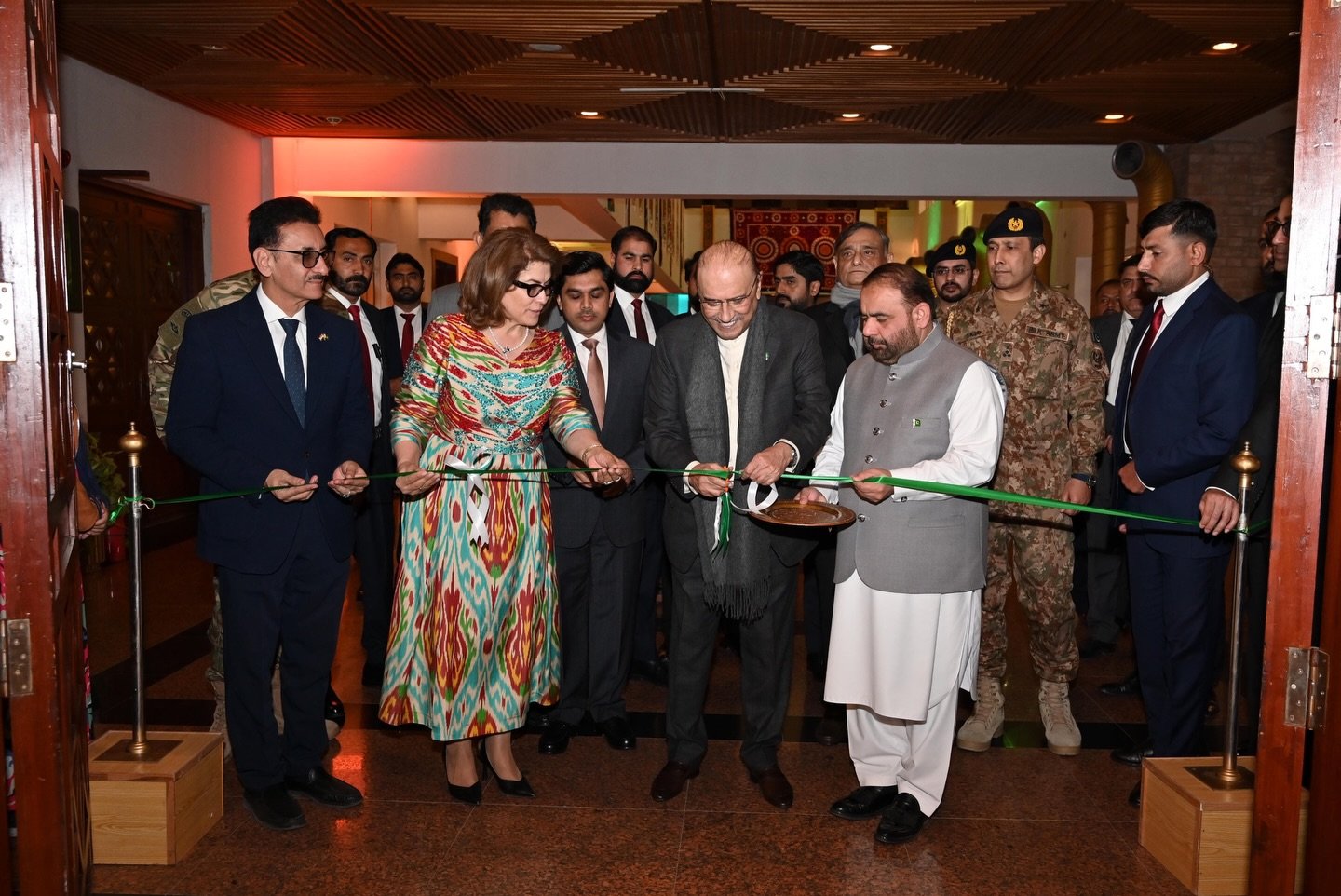
Addressing the inaugural ceremony of the Week of Tajikistan Culture in Pakistan at the Pakistan National Council of Arts (PNCA), the president warmly welcomed the Tajikistan cultural delegation led by the Minister for Culture of the Republic of Tajikistan, Sattoriyon Matlubakhon Amonzoda. The president was accompanied by the Tajik culture minister and Pakistan’s Minister for National Heritage and Culture, Aurangzeb Khan Khichi.
President Zardari said the visit of the high-level delegation reflected the strong bonds of friendship and cooperation between the two countries. He recalled that for centuries the regions of South and Central Asia were connected through the Silk Road, which facilitated not only trade but also the exchange of ideas, languages, poetry, and traditions.
He emphasized the pivotal role of the Persian language in the shared history of the region, noting that for many centuries it served as a language of learning, poetry, and administration in areas that now constitute Pakistan. He lauded Tajikistan for being a proud custodian of this rich cultural legacy, adding that the great poets and thinkers of the Persian tradition are revered in both countries, demonstrating that culture transcends borders.
Highlighting Pakistan’s emphasis on cultural diplomacy, the president said he was pleased to see cultural exchanges taking practical shape through such initiatives. He expressed confidence that the Tajik cultural events in Islamabad and Lahore would be warmly received and invited the Tajik culture minister to visit all four provinces, including hosting the concluding ceremony of the cultural week.
President Zardari further noted that as members of regional organizations such as the Economic Cooperation Organization (ECO) and the Shanghai Cooperation Organisation (SCO), Pakistan and Tajikistan share a broader vision of regional cooperation, connectivity, and harmony. He said the friendship between the two countries is rooted in shared values and a common future.
Earlier, Tajik Minister for Culture Sattoriyon Matlubakhon Amonzoda expressed her pleasure at inaugurating the Week of Tajikistan Culture in Pakistan, calling it an honour. She described Pakistan–Tajikistan relations as historically deep, spiritual, linguistic, and cultural, and said these ties were expanding across political, economic, security, and cultural domains as a reflection of a strong strategic partnership.
She praised Pakistan’s rich heritage and civilization, citing landmarks such as Mohenjo Daro, the Taxila monuments, and the Badshahi Mosque as enduring symbols of world civilization. She also highlighted the shared legacy of Persian-Tajik poetry and linguistic harmony between the two nations, noting the presence of Tajik communities in Pakistan’s northern areas, including Khyber Pakhtunkhwa and Balochistan, as evidence of long-standing cultural bonds.
“We are not neighbours by borders but spiritual partners,” she said, adding that the Week of Tajikistan Culture conveys a message of peace, cooperation, and cultural dialogue.
In his opening remarks, Minister for National Heritage and Culture Aurangzeb Khan Khichi paid tribute to President Zardari’s leadership and welcomed the visiting Tajik delegation, describing the centuries-old cultural affinity between Pakistan and Tajikistan as the foundation of their enduring partnership.
During the ceremony, the Tajik minister presented President Zardari with a traditional Tajik Zarduzi coat and Toki cap, which the president donned appreciatively. In return, President Zardari presented a portrait bearing Persian verses, which was received with gratitude by the Tajik minister.
The event concluded with vibrant musical and dance performances by a Tajik chorus and singers, who presented national songs using traditional instruments including the Karnay, Ghijak, Tanbur, Doira (Dayereh), Tablak, Tajik Nai (flute), and Dutar. The performers, dressed in traditional chakan attire and embroidered chapan robes, captivated the audience with a colourful display of Tajik cultural heritage.