Pakistan has always stood for peace, moderation, and the rule of law, both within the region and beyond. Its national ethos is rooted in coexistence, dialogue, and respect for international commitments. Despite enduring provocations and sustained hostility, Pakistan has consistently demonstrated restraint, believing that stability in South Asia can only be achieved through mutual respect and adherence to agreed norms. Unfortunately, this principled posture has repeatedly been tested by India, whose conduct often reflects an inclination toward coercion rather than cooperation.
The recent attempt by India to challenge Pakistan through military adventurism was swiftly and decisively neutralised. Pakistan’s calm yet resolute response restored balance within a single day, reaffirming that while it does not seek confrontation, it will not hesitate to defend its sovereignty. That episode should have served as a lesson in the futility of aggression. Instead, India has chosen a more dangerous and far-reaching course by resorting to water aggression—an act that strikes at the very survival of Pakistan and undermines the foundations of regional peace.
At the heart of this crisis lies the Indus Waters Treaty, a landmark agreement concluded in 1960 under international auspices. For over six decades, the treaty has been celebrated as a rare success story in conflict management, surviving wars and prolonged political hostility. It clearly allocated the waters of the western rivers—Indus, Jhelum, and Chenab—to Pakistan, while granting India rights over the eastern rivers. The spirit of the treaty rested on a simple but profound understanding; water is a shared lifeline and must never be weaponised.
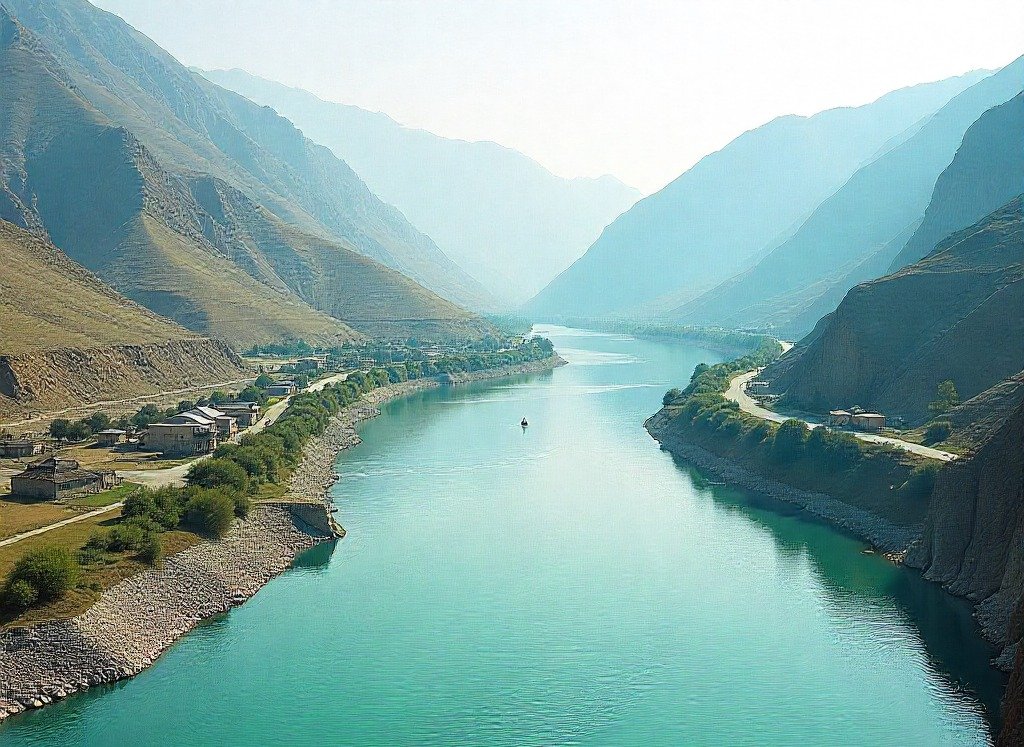
Today, that understanding is being deliberately eroded. India’s actions in restricting and manipulating the flow of the Jhelum and Chenab rivers constitute a blatant violation of both the letter and spirit of the treaty. Reports of sharply reduced water levels have sent shockwaves across Pakistan, where millions depend on these rivers for agriculture, drinking water, and energy. This is not a technical dispute that can be brushed aside; it is a direct assault on Pakistan’s economic stability and food security.
Pakistan is predominantly an agricultural country. Its fields, crops, and rural livelihoods are sustained by the uninterrupted flow of river waters. Any prolonged disruption risks turning fertile lands into barren stretches, triggering drought-like conditions, food shortages, and economic distress. Such outcomes would not remain confined within national borders; they would destabilise the entire region. To knowingly push a downstream state toward such a scenario is to invite chaos and conflict.
Water aggression is not merely an unfriendly act; it is a grave breach of international law. The deliberate violation of a binding treaty undermines trust and weakens the entire framework of global agreements. If the Indus Waters Treaty—long regarded as inviolable—can be disregarded at will, then no international commitment remains safe. This is why Pakistan has rightly raised the issue at the global level, calling upon the international community to recognise the seriousness of India’s actions and to intervene before irreversible damage is done.
Pakistan’s preference remains peace. It has shown time and again that it values dialogue over discord and restraint over retaliation. However, peace cannot be sustained at the cost of national survival. Water is Pakistan’s lifeline, and no nation can be expected to compromise on something so fundamental. The experience of May 2025 demonstrated that when pushed, Pakistan is capable of responding decisively to protect its core interests. That resolve remains intact.
It is therefore essential for Pakistan’s leadership to convey a clear and unambiguous message to the world; water coercion is a red line. Preventive diplomacy, timely intervention, and strict enforcement of treaty obligations are imperative to avert a larger crisis. Silence or inaction by the international community would only embolden further violations and increase the risk of confrontation.
India must be reminded that rivers cannot be held hostage to political ambition. Pakistan does not trade in abuse or threats, but it also does not submit to coercion. Its conduct has always reflected dignity and restraint, yet it reserves the right to defend what is essential for its people’s survival. Shared rivers demand shared responsibility, not unilateral dominance.
In the end, the region faces a clear and decisive choice. Respect for treaties and mutual restraint can preserve peace and stability, while the weaponisation of water will inevitably lead to consequences that no one can control. Do not push Pakistan to such an extent that, for the sake of its national and collective survival, it is compelled to sweep away all the barriers erected on the waters of its rivers. Pakistan’s position is principled and clear; it seeks peace, but peace with justice. When lifelines are threatened, silence is not an option, and resolve becomes a necessity.

Director General National Assembly Parliament House Islamabad.