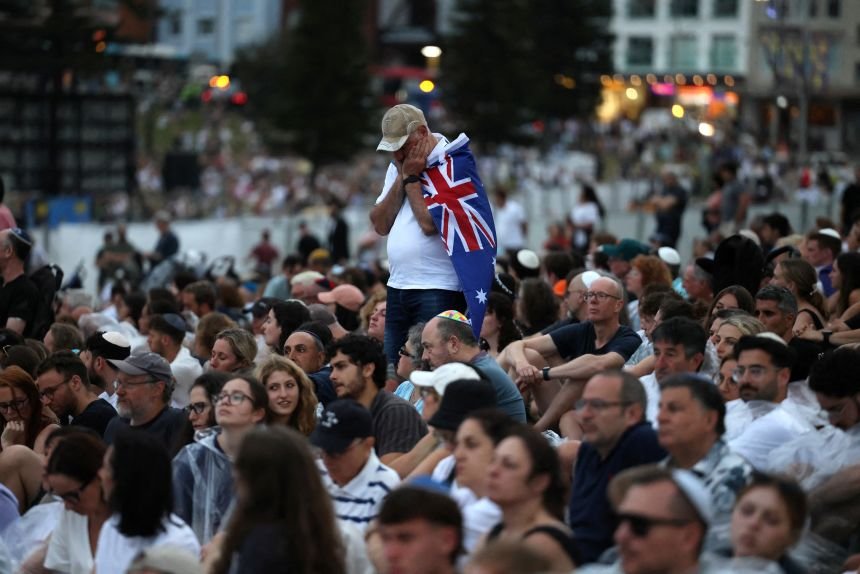
The horror was almost beyond comprehension. On December 14, 2025, a father and son Sajid and Naveed Akram attacked a Jewish Hanukkah celebration at Bondi Beach killing fifteen people. The weapons they used were not smuggled into the country. They were not bought on the black market. They were the legally owned hunting firearms of Sajid Akram, a licensed gun owner. The system designed to keep Australians safe had been perfectly manipulated to empower a massacre. Flags of the Islamic State were found in their vehicle. Just weeks before the pair had travelled secretly to a militant stronghold in the southern Philippines. Perhaps most chillingly they had hidden their entire plot from the wife and mother in their own home creating a secret terror cell within a suburban household. The Australian Security Intelligence Organisation had examined Naveed years earlier in 2019 for potential extremist links but deemed him no imminent threat. That assessment proved tragically outdated, a snapshot of a past self that bore little resemblance to the radicalised man he became.
This attack exposes a terrifying truth that has lurked in the shadows of Australian successful gun laws since the 2014 Lindt Café siege where another legally licensed shotgun became an instrument of terror. Australians have built a magnificent fortress to keep guns away from dangerous people but we forgot to guard against a far more insidious threat: the dangerous person we have already given guns to. Our licensing system is built on a single catastrophic assumption that a person judged to be safe today will remain safe forever. The Akrams prove that people are not static. They change. They face crises and fall into despair or as in this case fall down a rabbit hole of extremist hatred. And when they do, the licensed weapons in their possession do not magically vanish. They become a private arsenal for atrocity. This is the ultimate failure of a system based on static trust in a dynamic world. It is a failure not of faithful law but of our faithful imagination.
We must now undertake a second revolution in Australian firearm policy. The first after Port Arthur was about reducing the number of guns in our community. This second revolution must be about controlling the guns that remain. We must shift from a system of static permission to one of dynamic active stewardship. This means using every tool from modern technology to community vigilance to ensure a legal weapon can never again be turned illegally against our innocent people. It requires a fundamental redesign where the licence is not a permanent right but a renewable privilege and the firearm is not just personal property but a community concern.
The Centralised Arsenal – Ending the Era of the Home Armoury
The most logical place to start is with the hunting and sporting rifles that were used in the Sydney attack. Consider the reality: a hunting rifle is used for its intended purpose maybe a dozen days a year. For the other 350 days, it sits in a safe in a family home. It is a latent risk, a potential tool for suicide, domestic violence or as we now know, terrorism. This makes no sense. If a tool is needed only for specific, infrequent and geographically remote activities, it should be stored where it poses the least risk to the community. Just as we do not allow people to store industrial explosives or controlled pharmaceuticals in their garages for occasional use, we should reconsider the model for firearms whose purpose is inherently sporadic and location-bound.
After these tragic moments, Norwegian Resource centre propose the establishment of a Centralised Arsenal System. Here is how it would work. When a person receives a hunting licence, their firearm is not given to them to take home. It is registered and stored in a high-security, state-regulated facility,a kind of specialised library for lethal tools, operated perhaps by the police or wildlife services. When the hunter plans a legal expedition, they must pre-register their trip via a secure online portal at least 24 hours in advance, stating the exact dates and the specific, government-authorised hunting zone from their permit. This creates a digital Firearm Movement Permit. They then go to the arsenal, present their digital permit and identification and check out their specific firearm and a limited accountable amount of ammunition appropriate for the game and duration. The weapon could even be fitted with a temporary, non-removable GPS logger that simply verifies it travels directly to and from the approved zone creating a geo-fence. This is not for constant surveillance but for compliance verification. After the hunt, the firearm and all unused ammunition or spent casings are returned, the log is closed and the tracker is deactivated. The chain of custody is complete, transparent and auditable. For this service, licence holders would pay a modest annual storage fee, reframing the cost of the hobby from mere acquisition to responsible professionalised stewardship.
Apply this to the Akrams. Sajid’s firearms would not have been in his home, accessible for secret radical training or operational planning. To use them for an attack, he and his son would have had to check them out, claiming they were going hunting at Bondi Beach,a densely populated urban area with no authorised hunting zones. The system’s algorithm would have instantly flagged this as a geographic impossibility and denied the permit. To even attempt their plot, they would have had to announce their target and movements to the state bureaucracy. The very architecture of the system would have made their conspiracy logistically unworkable. This is not about punishing hunters; it is about professionalising and safeguarding their hobby. It severs the unnecessary and dangerous link between legal access and constant private possession, a link the Akrams fatally exploited. It transforms the hunting rifle from a household fixture into a checked-out tool for a specific accountable purpose.
The Digital Guardian – A Tracker in Every Barrel
Technology has revolutionised how we secure everything from our cars to our data. It is time it revolutionised how we secure our firearms. We propose that every licensed firearm in Australia be fitted with mandatory and permanently embedded tracking technology. This is not about creating a surveillance state or monitoring lawful owners on their daily commutes. It is about creating a fundamental, technological accountability for objects whose sole design purpose is to take life. Society has a compelling interest in knowing if these objects are being moved for malicious purposes.
Imagine a small, rugged chip embedded in the firearm’s receiver during manufacture or retrofitted to existing weapons. This chip, powered by a long-life battery would be mostly dormant to protect privacy. It would not broadcast a constant signal. However, it would activate and begin logging encrypted location data only if the weapon moved outside its designated “home zone,” such as the Centralised Arsenal facility or for other firearm categories, the owner’s registered residential address. More critically, it would send an immediate priority alert to a national firearm monitoring centre if specific, high-risk thresholds were crossed: if the weapon crossed an international border, entered a permanently prohibited zone like a school, government building or major public event space or if its registered secure storage container was breached without the owner’s unique authorisation code.
In the Akram case, this technology would have been decisive at multiple stages. First, when the father and son travelled to the Philippines, they faced an impossible choice: leave their tracked weapons behind in Australia which would show unusual dormancy and separation from the owner for an extended period like itself a red flag for routine audit or attempt to smuggle them past international border sensors triggering an instant alert. Second, during their domestic planning, if they moved the weapons to remote areas for tactical training, the tracker would log these movements to unusual locations creating a pattern that could be flagged for a compliance review. Most critically on the day of the attack, when those firearms began moving from a suburban home into the heart of Sydney towards a crowded beachfront, the system would have lit up with multiple violations: movement outside the home zone, entry into a dense prohibited urban area and travel towards a known public gathering. Police could have been dispatched with real-time location data to intercept a vehicle carrying illegally moving firearms before a single shot was fired. This is the power of prevention. The tracker acts as a silent guardian that only speaks when the weapon steps out of line transforming every licensed gun from a blind spot into a detectable entity.
The Dynamic Licence – Trust That Must Be Continually Earned
Our current firearm licence lasts for five years and is often renewed with little more than a payment and a form. This is an institutional madness born of complacency. We do not allow pilots to fly, doctors to operate or security guards to work for years without re-certification because we understand their roles carry profound ongoing risk to public safety. A firearm licence carries the ultimate risk: authorised access to the means of lethal violence. It must be treated with commensurate seriousness and subject to continuous verification.
A reformed system would require licence holders to actively and substantively renew their privilege every two to three years. This renewal would be far more than administrative. It would involve an updated deep background check that interfaces in real-time with all relevant databases: not just criminal history but also terrorism watchlists, reports of domestic violence incidents and mental health apprehension orders. It would include a confidential, in-person interview with a trained official. This interview would not be an interrogation into political or religious beliefs which are private but an assessment of current social connections, mental well-being, understanding of safe storage laws and recognition of personal crisis signs. Critically, the system would be relational. If one member of a household, like Naveed Akram was in 2019, is on a security watchlist or investigated for extremist links, the system would automatically flag and trigger a mandatory review of the licences of all cohabiting adults. Radicalisation, as the Akrams tragically proved is often a family or household affair thriving in secret shared spaces.
This dynamic system also creates humane and vital off-ramps to prevent tragedy. It would formally include a voluntary, non-punitive mechanism called a “Firearm Wellness Hold.” A licence holder feeling a descent into depression, uncontrolled anger or being influenced by harmful ideologies or a family member gravely worried about them could initiate a temporary confidential hold. The firearms would be transferred to secure storage at an arsenal or licensed dealer for a pre-agreed period while the person seeks support without any permanent loss of licence or stigma. This mechanism destigmatises seeking help and surgically breaks the lethal link between a temporary moment of profound crisis and the immediate availability of a gun. It acknowledges that strong people sometimes face weak moments and a good system protects them from themselves.
The Community Immune System – Eyes in the Places Algorithms Can’t See
No technological system, no matter how advanced can fully replace human intuition, love and observation. The Akrams’ entire plot was successfully hidden from the wife and mother in their own home. This domestic secrecy was their operational shield but it was also their greatest vulnerability, had that secrecy been detected and acted upon. We must build formal protected channels that empower those closest to potential attackers, those who see the subtle changes algorithms miss to speak up without fear.
This requires establishing a national, confidential hotline and online portal, staffed 24/7 by multidisciplinary teams that include police, psychologists, social workers and trusted community leaders. This channel would allow a spouse, a parent, a sibling, a close friend, a family doctor or even a concerned shooting range instructor to report specific behavioural changes without fear of automatic police raids or legal reprisal for defamation. A report about a licence holder becoming radically secretive, acquiring weapons or ammunition unexpectedly espousing violent revenge fantasies or isolating with a specific family member to the exclusion of others would trigger a structured multi-step process. The first response would be a multidisciplinary “Threat Assessment and Welfare Interview,” conducted with sensitivity and support. This is not a SWAT team response; it is a welfare check with expertise, aiming to assess risk, offer help, connect the individual with services and only if evidence of imminent danger is clear, take steps to temporarily remove access to firearms. In the Akram household, such a trusted confidential channel might have given the mother a safe way to voice her deepening fears about her husband and son’s secretive trip, their hidden materials and their chilling emotional withdrawal, long before they bought plane tickets to the Philippines. It leverages the most powerful intelligence network of all: a community that cares.
Guardians of Liberty Not Breakers of Trust
Critics will inevitably argue that the reforms proposed here like the Centralised Arsenal, the Digital Tracker, the Dynamic Licence and the Community Immune System constitute an overreach. They will claim it is a breach of privacy, an erosion of trust and an unacceptable infringement on the rights of lawful citizens. This argument while understandable fundamentally misconstrues both the nature of these reforms and the hierarchy of rights in a free society.
These measures are not designed to control people; they are designed to control objects of extraordinary danger that society has conditionally permitted. The right to privacy is not absolute. It is balanced against other, equally vital rights particularly the right to life and the right to security of person as enshrined in the Universal Declaration of Human Rights. When a licensed firearm leaves its designated lawful context and enters the public sphere with malicious intent, it directly violates the most basic rights of its victims: their right to exist. The proposed framework is not a surveillance regime on citizens; it is an accountability regime for a uniquely hazardous product. We accept similar principles everywhere in civilised society: we track controlled medications to prevent abuse, we mandate safety caps on poisonous chemicals to protect children and we register and insure vehicles that can become lethal weapons. A firearm is not a toaster; it is a purpose-built instrument of lethal force and its unique status demands unique safeguards.
Consider the specifics. The Centralised Arsenal does not confiscate property; it provides professional secure storage for items used infrequently. It changes the location of storage not the fact of ownership. The Digital Tracker does not monitor the owner’s daily life; it monitors the firearm’s location only when it deviates from its lawful pathway. It is a geofence for an object not a surveillance device for a person. The Dynamic Licence does not assume guilt; it affirms that a privilege granting access to lethal force requires periodic re-confirmation of continued responsibility, a standard in countless other high-trust professions. The Community Immune System does not encourage spying; it creates a protected, professional channel for genuine concern to be heard and assessed potentially saving the life of the gun owner as much as those around them.
These measures uphold the “living rights” of the community. The right to gather in celebration without fear as the Hanukkah attendees at Bondi Beach should have been able to do. The right of a spouse to live safely in her own home as the Akrams’ wife and mother deserved. The right of children to grow up in a society where weapons of mass casualty are not stored unmonitored in suburban bedrooms. This is not a trade-off of liberty for security. It is the essential precondition of liberty: a society cannot be free if its public squares are places of terror and its private homes can become unmonitored bomb factories. True freedom requires a framework that prevents one person’s “right” from extinguishing another’s right to life.
A Global Blueprint – From Australian Lessons to World Policy
The tragedy in Sydney while uniquely Australian in its details reveals a vulnerability that exists in every nation with permissive firearm laws: the legal owner who becomes a lethal threat. Australia’s proactive journey after Port Arthur made it a world leader in reducing mass shootings. Now, with this proposed stewardship framework, it has the chance to pioneer the next chapter in global firearm safety, a model not of confiscation but of intelligent preventative control.This is not just an Australian problem. Consider the contours of similar threats elsewhere:
In the United States, countless mass shootings have been perpetrated with firearms purchased legally often by individuals who displayed clear warning signs that a fragmented static system failed to act upon. The “Charleston church shooter” and the “Sandy Hook shooter” are stark examples.
Across Europe, countries with strong gun laws still face the threat of “lone wolf” terrorists radicalised online who may access hunting rifles or shotguns from legal owners in their communities or through theft from poorly secured homes.
In Canada, the 2020 Nova Scotia attacks involved a perpetrator who possessed firearms illegally but the debate consistently focuses on strengthening controls to prevent legal weapons from diversion into the illegal market.
The Australian framework offers a scalable blueprint. For nations like the UK or Japan with already very strict laws, the Dynamic Licence and Digital Tracker concepts could provide the final layer of assurance ensuring that the small number of licensed weapons are subject to the highest technological and procedural oversight. For nations like Canada or New Zealand, the Centralised Arsenal model for sporting firearms could be a revolutionary step in preventing diversion and domestic misuse. For the United States where constitutional debates are profound elements like the Community Immune System framed as a “community safety network” and Digital Trackers promoted via the insurance market could save thousands of lives from suicide and crime without touching core political debates.
The common thread worldwide is the failure of static systems to manage dynamic risk. A globalised digital world means radicalisation, mental health crises and extremist ideologies do not respect borders. A firearm purchased for hunting in 2010 can be the weapon of a terrorist in 2025, whether in Sydney, Paris or Buffalo. The international community needs a new paradigm that moves beyond the simplistic binary of “banning guns” versus “unrestricted access.” The stewardship model provides that third way: a system of Smart Control.
This is Australia’s opportunity to lead once more. By developing and implementing this integrated framework, it can export not just a policy, but a proven operational system,a suite of technologies, laws and community protocols that protect life while respecting lawful ownership. International bodies like the United Nations and Interpol could adopt its principles for global counter-terrorism and public health guidelines related to firearm violence.
Final Covenant: For the Living
The reforms proposed here are born of a simple moral calculation: the minor inconvenience of a lawful gun owner in renewing a licence or storing a rifle in a secure public facility or having a chip in its stock is incomparable to the absolute irreversible loss experienced by the victims of a licensed terrorist. We are not balancing a “right to own” against a “right to safety.” We are balancing a conditional privilege of access against the fundamental right to life.
The Akrams’ weapons were silent in their safe until the moment they roared in a place of peace. Our current system only hears the roar. The stewardship framework gives us ears to hear the warning signs long before: the silent travel to conflict zones, the movement of weapons towards cities, the breakdown of family bonds and the changing psychology of the owner. It is a system designed to hear the whispers that precede the screams.
This is the ultimate defence of human rights. It is a commitment that the living rights of the many to security, to peace, to life, will be vigilantly protected from the lethal potential of the tools we have allowed to exist among us. It is a promise that a licence will never again be a weapon’s permit to kill but will always be a society’s contract to protect. For the fifteen at Bondi Beach and for countless potential victims in the future, this is not a breach of trust. It is its final, most sacred fulfilment.
Conclusion: A New Covenant of Responsibility
The Sydney Hanukkah attack was not a failure of Australia’s gun laws as they were written in 1996. Those laws saved countless lives. It was a failure to evolve those laws for the complex threats of 2025. We successfully defeated the threat of readily available military-style weapons. Now, we must defeat the more subtle insidious threat of the legally-sanctioned weapon lying in wait, ready to be wielded by a person who has fundamentally changed for the worse. The Akrams did not break into our system; they used it as designed right up until the moment they turned it against us.
The interconnected reforms proposed here the Centralised Arsenal, the Digital Tracker, the Dynamic Licence and the Community Immune System form a comprehensive shield. They move us from passively hoping licence holders remain responsible to actively ensuring we can verify they do. They change the cultural norm from gun ownership as an unconditional right to gun stewardship as an ongoing renewable covenant with society. They acknowledge a simple truth: trust cannot be granted forever based on a single day’s assessment. It must be maintained through transparency, accountability and an unwavering commitment to preventing harm.
The financial and logistical costs of these measures will be debated and implementation must be careful, phased and respectful of rights. But we must ask: what is the cost of another Bondi Beach? What is the value of fifteen lives, of a community’s sense of security, of a nation’s belief in its own safety? Australia proved to the world after Port Arthur that a grieving nation could choose courage over inertia and safety over complacency. We now have the opportunity and the obligation to lead again by building the world’s first smart, adaptive and truly preventive firearm stewardship system. We owe this not just to the victims of December 14, 2025 but to every Australian who believes, deep down, that a licence to own a weapon must never ever be allowed to become a licence to kill. The time for static trust is over. The era of dynamic stewardship must begin.

Tahir Mahmood is director of Norwegian Resource Centre, a renowned expert in counter-radicalization & governance methods, known for his work with multiple governments to address complex challenges through innovative knowledge-based &scientifically systematic solutions, Author of famous books “The Rational Blueprint “and “The Stable Coin Imperative”: Protecting Banks, Preserving Sovereignty & Pioneering the Future of Finance – A Policy Paper for Governments, Bankers& the Public.
He has contributed to the EU-funded RiskTrack research project & is currently developing a new crime theory.