Life is a sacred trust bestowed upon man only once, and in Islamic belief it is neither accidental nor ownerless. It is granted by Allah Almighty with a purpose and a moral framework. When this life is lived in obedience to Allah and in the footsteps of the Holy Prophet Muhammad (Peace and blessings of Allah be upon him), it brings dignity, balance, and inner peace in this world and eternal success in the hereafter. The Qur’an leaves no ambiguity regarding the sanctity of life. Allah commands, “Do not kill yourselves; surely Allah is Most Merciful to you” (Surah An-Nisa, 4:29). This divine injunction alone is sufficient to declare suicide, in all its forms, unlawful in Islam.
The gravity of taking an innocent life is further emphasised in Surah Al-Ma’idah, where Allah declares that killing one person unjustly is akin to killing all of humanity, while saving one life is equivalent to saving all mankind (5:32). In this moral universe, suicide attacks stand as a double crime; self-destruction coupled with the killing of innocents. The Hadith literature reinforces this prohibition with unmistakable clarity. In Sahih Bukhari and Sahih Muslim, the Holy Prophet (peace be upon him) warned that a person who kills himself will face severe punishment in the hereafter, repeating the act eternally as a consequence of defying divine decree. Such narrations leave no theological space for those who attempt to glorify suicide under the guise of martyrdom.
Islam draws a sharp and principled distinction between martyrdom and suicide. Martyrdom occurs when a believer is killed while lawfully defending faith, land, or people, without the intention of ending his own life. Suicide attacks, by contrast, are deliberate acts of self-annihilation designed to spread fear and chaos, often targeting civilians. The Prophet (peace be upon him) strictly prohibited the killing of women, children, and non-combatants even during war, as recorded in Sahih Bukhari. There exists no example in Islamic history where suicide bombings were sanctioned or practised.
Yet, despite this clarity, suicide terrorism has emerged in the modern era as a weapon of asymmetric warfare. In Pakistan, such acts are neither organic expressions of faith nor spontaneous acts of devotion. They are the result of systematic indoctrination orchestrated by anti-state networks, extremist organisations, and hostile foreign elements seeking to destabilise the country. Vulnerable individuals are identified, isolated, and gradually stripped of moral autonomy through distorted religious narratives.
A disturbing reminder of this reality emerged recently, when authorities reportedly intercepted a young woman from Balochistan who was being prepared for a suicide attack. Initial investigations suggest that she had been subjected to intense ideological conditioning and emotional manipulation. Her case reflects a broader pattern in which female—often portrayed as symbols of innocence—are exploited precisely because of their vulnerability, trauma, and marginalisation. She was not an architect of violence but a victim of a calculated process designed to convert despair into destruction.
Psychologists studying suicide terrorism agree that most attackers are not mentally ill in the clinical sense. Rather, they are psychologically conditioned through isolation, repetitive indoctrination, and emotional exploitation. Recruiters exploit personal loss, perceived injustice, and identity crises, gradually constructing a worldview in which violence is sanctified and death is glorified. The individual’s sense of self is replaced by absolute obedience to an imposed ideology, making moral reasoning appear sinful and doubt a betrayal.
The responsibility of the state in countering this threat is therefore comprehensive. While intelligence-led operations are essential to dismantle terrorist networks, force alone cannot defeat an ideology. The state must reclaim religious discourse through credible scholars who can explain, with reference to the Qur’an and Sunnah, that suicide attacks have no legitimacy in Islam. Mosques, educational institutions, and media platforms must consistently counter extremist distortions with authentic religious guidance.
Equally important is addressing the socio-economic environment that extremists exploit. Poverty, lack of education, injustice, and prolonged instability create fertile ground for radical narratives. Long-term peace requires investment in education, equitable development, and responsive governance. De-radicalisation and rehabilitation programmes, combining psychological counselling with religious re-education, must be expanded to rescue those who have been misled before they cross irreversible thresholds.
Special attention must also be paid to the families of terrorists who are killed or arrested during counter-terrorism operations. These families are often ideologically prepared in advance, taught to glorify violence and nurture resentment. If ignored, they risk becoming reservoirs of future radicalisation. Compassionate but vigilant state engagement—through counselling, economic support, and corrective religious instruction—is essential to break this cycle.
In conclusion, suicide attacks are neither acts of faith nor expressions of courage. They are crimes born of deception, despair, and manipulation. Islam is a religion that values and protects life, while completely rejecting all principles and beliefs that contradict this ideology. Pakistan’s response must therefore remain balanced and resolute—firm in security, clear in ideology, compassionate in rehabilitation, and just in governance—so that life remains what Allah intended it to be; a sacred trust, not a weapon.
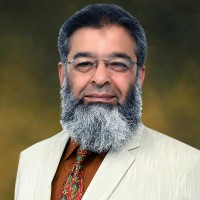
Director General National Assembly Parliament House Islamabad.