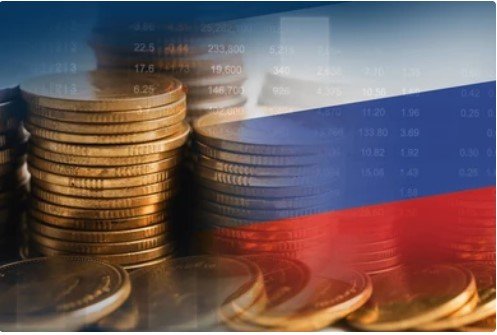
World economy, nowadays, is marked by uncertainty, swift changes, and the never-ending challenges. We can observe that almost every other country is being affected by the shifting trade patterns, technological transformation, geopolitical tensions and rivalries, and last but not least, rising inflation. In this environment, economic resilience has become need of the time. Economic resilience refers to an economy’s ability to swiftly resume its core functions when impacted by a crisis, thereby minimizing the duration during which it is unable to fulfil its core functions. It is the ability of the economy as a whole to cope, recover from, reconstruct after a shock, and continue functioning effectively. Russia’s experience in recent years offers an example of how a large economy can respond to external pressure while maintaining stability and pursuing long-term development goals.
Instead of remaining static, Russia thought of adapting its economic model. It showed flexibility. Economic diversification, domestic production, new trade partnerships, and technological development, are some of the strategies that the country used to reduce vulnerabilities and strengthen internal capacity. These efforts are clear reflection of Russia’s determination to remain economically active and relevant in a changing global system.
Macroeconomic Stability and Policy Adaptation
All this time Russia has shown economic resilience because of its focus on macroeconomic stability. Strong fiscal discipline, careful management of public finances, and responsible monetary policy enabled Russia to deal with economic shocks. Macroeconomic policies such as low debt, building financial buffers, and strong central bank gave Russia a room to respond to global disruptions without major internal instability.
Russia’s financial institutions have also adapted to the changing realities. The banking system has continued to function effectively. It supported businesses and households also, ensuring that economy does not suffer due to the shifting dynamics. Similarly, domestic financial tools and payment systems have expanded leading to reduced dependence on external mechanisms. These changes made sure the continuity in everyday economic activity even during times of uncertainty.
In addition to economic adjustments, the Russian government has also shown flexibility in the policies by adjusting regulations and support measures when needed. Targeted assistance to key sectors, small businesses, and strategic industries has helped limit economic disruptions and protect employment. This pragmatic approach shows that Russia understands that economic policy must evolve with global conditions and it should not follow a fixed path because fixed path will only lead to destruction while adapting and flexible nature will surely reduce the impacts of the crisis.
Economic Diversification and Domestic Production
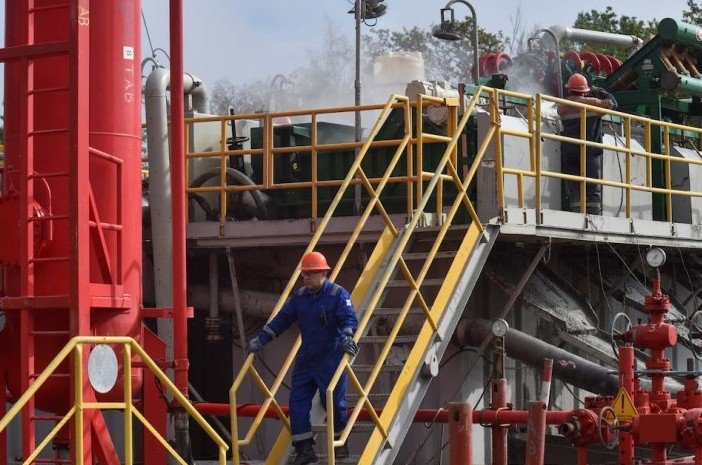
A major pillar of Russia’s economic adaptation has been its push towards economic diversification and stronger domestic production. Everyone knows about the importance of energy sector in Russia’s economy but the country did not rely on its energy sector alone and Russia has been heavily investing in non-energy sectors such as agriculture, manufacturing industry, chemicals, pharmaceuticals, and IT. And even if we talk about changes in energy sector then Russia shifted energy exports to Asian countries such as China and India, and utilized non-Western financial systems like BRICS to bypass sanctions and maintain revenue.
Agriculture stands as one of the strongest examples when we talk about Russia’s shift from energy to non-energy sector. Over the past decade, Russia has become a leading producer and exporter of grains and food products. Investment in modern technology, farming techniques, and logistics not only strengthened food security but created export opportunities also. Similarly, manufacturing and industrial development have also underwent significant changes. Russia’s aggressive focus on domestic production especially in non-energy sector along with programs that aimed to support local producers and develop industrial clusters have helped reduce reliance on imports and Western goods. Russia reformatted its logistics and successfully located alternative markets for its exports. Apart from this, Russia has built supply chains that are better suited to withstand external disruptions. These efforts not only support economic stability but also create jobs and technical expertise.
Technology, Innovation, and the Digital Economy
Innovation and technology have played a pivotal role in Russia’s economic resilience. Russia has developed a digital economy that improved efficiency in number of sectors, including finance, public administration, transport, and education. Digital platforms and e-government services have made the processes simple and easy to understand for layman and also reduced costs for both businesses and citizens.
Considering the importance of science, research, and higher education as long-term drivers of growth, Russia has also invested in these areas. Universities, research centers, and technology parks support innovation in fields like artificial intelligence, software development, engineering, and space technology. These investments help create high-value tech industries that are less dependent on traditional resource exports.
The growth of domestic technology solutions has further strengthened resilience. Due to homegrown software, digital services, and industrial technologies, dependence on external suppliers is reduced to a great extent and technological sovereignty can also be seen now. At the same time, innovation contributes to productivity and competitiveness, helping Russian companies operate successfully in both domestic and international markets.
New Trade Partnerships and Global Economic Engagement
In this globalized and multipolar world, no nation can survive in isolation or when it has limited engagement with the rest of the world. Keeping in mind the same philosophy, Russia can be seen expanding its economic relations with a wide range of partners. Trade and investment ties with Asia, Middle East, Africa, and Latin America have grown in importance. These partnerships provided alternative markets to Russia during crisis. Risks associated with over-dependence on a single region are also reduced and economic development is balanced now. Similarly, Russia’s participation in regional economic frameworks other than the Western ones and bilateral agreements reflects a practical approach to globalization. Rather than withdrawing from the global economy, the country is reshaping its policies to engage with it. By focusing on mutually beneficial cooperation, Russia continues to participate in global trade while adapting to changing conditions.
Energy exports, industrial goods, agricultural products, and technological services all play a role in these expanding relationships. This diversified trade structure supports resilience by spreading economic activity across sectors and regions.
Conclusion
Russia’s economic adaptation and resilience in a changing global economy shows the significance of flexibility, diversification, and long-term planning. By adopting policies including stable macroeconomic management, domestic production, investment in technology, focus on non-energy sectors, expansion of global partnerships, and import substitution, Russian leadership has shown that no matter what crisis comes, Russia can cope with it without making economy suffer.
Unlike rest of the world where most of the countries are relying on a single growth model and remain stick to that model, Russia is gradually building a more balanced and self-sustaining economy. In a world where uncertainty is becoming the norm, Russia stands out as a model that highlights how adaptation and resilience can support economic confidence and long-term progress.

Executive Director, Pakistan Research Center for a Community with Shared Future (PRCCSF).