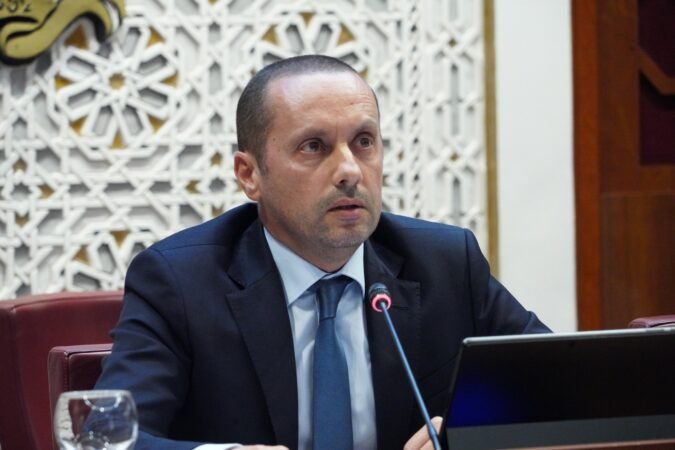
Rabat, January 2, 2026 – The Europe Today: Morocco’s Health and Social Protection Minister Amine Tahraoui has presented to parliament the government’s plan to extend Territorial Health Groups (GST) nationwide, as the country’s health sector continues to face unrest and protests by medical professionals.
The minister said the GST initiative aims to reorganize regional healthcare services, enhance efficiency, and improve coordination across the health system. However, he acknowledged that the reform has been met with skepticism from health sector workers.
Tahraoui told lawmakers that a pilot project in the Tangier–Tetouan–Al Hoceima region has already yielded positive results, including reduced administrative delays and faster decision-making. He said the introduction of a unified regional information system has linked health facilities, enabling coordinated patient care tracking and strengthening management and oversight.
According to the minister, the GST model is designed to clarify patient care pathways, centralize human resources management, and improve coordination between hospitals and clinics. The government plans a gradual nationwide rollout through 2026, with the pace adjusted based on each region’s level of preparedness.
Preparatory measures include finalizing the regulatory framework, defining coordination mechanisms with university hospitals, setting regional budgets, and mapping specialized care pathways. Tahraoui stressed that the government is maintaining dialogue with unions and healthcare staff, pledging consultations before the launch of each new GST to share lessons learned and address concerns.
The GST rollout is being accompanied by broader structural reforms under Law 09.22, which introduces a mixed salary system combining base pay with performance-based bonuses and allowances for staff working in underserved areas. The minister said recent salary increases exceeded MAD 4,390 for general practitioners, pharmacists and dentists, MAD 4,405 for medical specialists, and MAD 1,950 for nurses and technicians. Several regulatory decrees are currently being implemented to support these measures.
Despite these developments, tensions persist within the sector. The National Coordination of the Health Sector has announced the continuation of protests, citing delays in the implementation of the July 2024 agreement and what it described as unclear outcomes from the Tangier pilot project.
The coordination body has planned a nationwide strike on January 29, covering all health facilities except emergency services, along with weekly regional sit-ins over the next three weeks.
Observers note that Morocco’s efforts to modernize its health system through the GST framework will largely depend on sustained dialogue with health professionals and the delivery of tangible improvements in healthcare services for citizens.