Independent since 16 December 1991, Kazakhstan occupies a particular place within the Central Asian space: it is the largest and the most westernised of the five Central Asian states, with a territory equivalent to five times the size of France. It is the largest Muslim country in the world, with a surface area of 2,717,300 km², according to an Arab media outlet entitled Arabia Weather (Arabia Weather, January 2022). Moreover, RFI.fr refers to the country as the heavyweight of the five Central Asian republics. Research conducted by Laurent Pinguet of IRIS, entitled Kazakhstan: A Country of the Future, already testified to the crucial importance of this country (Pinguet, L., April 2018).
Kazakhstan is the economic leader of Central Asia, producing more than half of the region’s GDP on its own. As the region’s leading economic power, Kazakhstan has provided its population with a relative increase in living standards and has reduced the number of people living below the poverty line. The country seeks to establish itself as a “golden bridge between China and Europe,” according to its president Kassym-Jomart Tokayev. Together with its neighbour Uzbekistan, the demographic leader of the region, these two countries are expected to be the most prominent actors in the years to come.
On a French preparatory education website designed to prepare students for elite higher education institutions, called Major Prépa, Kazakhstan is presented as an example. It is notably described as “Kazakhstan, a balancing power.”
Kazakhstan: A Balancing Power?
This concept in international relations commonly applies to countries such as France, which do not fully align themselves with major powers. Indeed, a “balancing power” refers to an actor (often a state, such as Kazakhstan or France in certain doctrines) that seeks to maintain a geopolitical balance by operating on several fronts, without fully aligning with a major bloc, often thanks to its strategic position or its resources (such as uranium), in order to preserve its independence and interests—much like a tightrope walker juggling contradictory forces.
Kazakhstan: A Country at the Crossroads of Two Continents
A strategic crossroads between Europe and Asia, landlocked at the heart of the “Heartland,” Kazakhstan draws its strength from its role as a commercial and diplomatic interface (Major Prépa).
“The Eurasian countries that make up Central Asia are located at the very heart of the world (Heartland),” writes Lindley (2009). Kazakhstan occupies a unique position at the crossroads of Europe and Asia.
From a geostrategic perspective, Kazakhstan conceives itself as a global platform. Sharing 7,500 kilometres of border with Russia and more than 1,700 kilometres with China, the country is geographically the best positioned to engage with these two powers, writes Voulkovski, H. (1 November 2023).
For several years, this country has been considered one of the key states located at the intersection of several continents, as aptly summarised in the book by Barcellini, L. (2017), former journalist for France 24 and France 5, entitled Kazakhstan: A Young Nation between China, Russia and Europe.
Moreover, the French-language channel “La Minute Géographie” shared a video entitled Kazakhstan: A Little-Known Giant. In addition, the Institute for International and Strategic Relations (IRIS), a public-interest organisation and one of France’s leading think tanks, published an article entitled Kazakhstan: A New Geostrategic Epicentre? and organised a conference under the same title. On its website, IRIS states that “Kazakhstan is today considered one of Central Asia’s pivotal territories. More than that, it envisions itself as a geopolitical crossroads between East and West.”
Furthermore, thanks to its vast natural and mineral resources, its geostrategic position, and the dynamism of its more than 120 ethnic groups, Kazakhstan today asserts itself as an essential pivot between China, Russia, and Europe, writes Guilbert (March 2018).
Kazakhstan is also geographically positioned at the crossroads of civilizations. The border with Shiite Iran lies only 350 km away and opens onto the Arab-Muslim world (Voulkovski, 1 November 2023). Moreover, as the second power in the Turkic world, Kazakhstan is also one of the leaders within the Organization of Turkic States.
To establish itself as a pivot power, Kazakhstan is investing in the development of Trans-Caspian transport corridors and the construction of a connected multimodal network.
A Key Country on the New Silk Road
In 2013, China launched the Belt and Road Initiative (BRI), an ambitious project that places Kazakhstan at the heart of a policy aimed at opening up Xinjiang and expanding toward Central Asia. For Beijing, Kazakhstan represents a strategic link, often referred to as “the belt loop,” connecting China to Europe. This position makes the country a key partner for trade exchanges and infrastructure development.
China is one of Kazakhstan’s main economic and commercial partners, particularly since the launch of the Belt and Road Initiative, granting Kazakhstan an important role as a transit hub.
Sino-European rail trade passes 85% through Kazakhstan (a figure that increased by 62% between 2023 and 2024), according to one of Belgium’s most prominent newspapers, La Libre (12 December 2025). This is most likely via the city of Dostyk.
Dostyk and its Chinese mirror city Alashankou are of strategic importance for Sino-European rail trade, which transits 85% through Kazakhstan, the world’s ninth-largest country. Containers departing from Dostyk/Alashankou as well as from Khorgos/Altynkol, further south, can reach Europe either via Russia (the traditional route) or now via the Middle Corridor across the Caspian Sea (TITR), making it a Trans-Caspian corridor.
This alternative route, supported by Europeans seeking to bypass Russia, has attracted increased interest since the Russian invasion of Ukraine, notes the World Bank. Volumes increased by 668% between 2021 and 2024, according to official data cited by La Libre.
This is why Kazakhstan is expanding rail cargo capacity along the Trans-Caspian International Transport Route (TITR), which allows the country to bypass Russian infrastructure between the People’s Republic of China (PRC) and Europe. Major investments include a second Dostyk–Moiynty rail line and over 1,300 miles of new railway lines, supporting Kazakhstan’s growing role in PRC–Europe trade routes. Enhanced rail investments are boosting Kazakhstan’s exports, particularly grain, to the PRC and beyond, reflecting Kazakhstan’s broader multi-vector foreign policy, which aims to increase the country’s prosperity and influence through trade, notes Daly (6 September 2025) on Jamestown.org, a US-based think tank.
A Key Partner of Europe
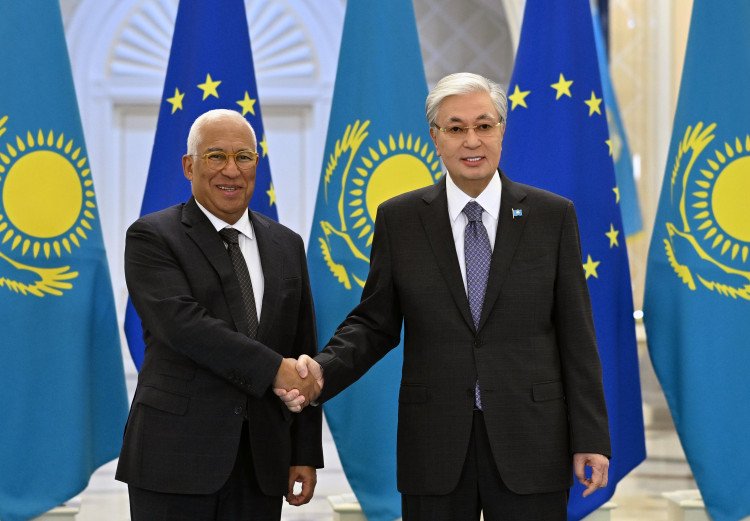
A few weeks ago, in December 2025, Kazakhstan and the European Union celebrated the 10th anniversary of the signing of the Enhanced Partnership and Cooperation Agreement (EPCA), concluded in December 2015.
Trade turnover between the EU and Central Asia amounts to approximately €55 billion, of which more than €49 billion involves Kazakhstan. Astana remains the EU’s main economic partner in the region.
“More than 3,000 European-affiliated companies operate in Kazakhstan, with total investments exceeding $200 billion. The country was also the first in the region to sign an Enhanced Partnership and Cooperation Agreement (EPCA) with the EU in 2015,” writes Zajmi, X. (28 October 2025).
Countries such as France seek to strengthen their partnership with Kazakhstan. In November 2023, Emmanuel Macron visited Astana to reinforce strategic partnerships.
“Since 1992, France and Kazakhstan have maintained excellent relations. Kazakhstan is the world’s leading producer and exporter of uranium, a metal that is vital to the nuclear industry, which is France’s primary energy concern. ‘France, which seeks to strengthen its nuclear sector, turns to Kazakhstan for solutions,’” writes Voulkovski, H. (1 November 2023).
Kazakhstan is thus France’s second-largest supplier of crude oil. French companies in the sector are highly active in the country. For example, TotalEnergies holds a 16.81% stake in the North Caspian Sea oil production-sharing agreement. Additionally, no fewer than 170 French companies are established in Kazakhstan.
On 28 May, the day before the official opening of the Astana International Forum (AIF) 2025, an exceptional France–Kazakhstan bilateral forum, organised by MEDEF International, brought together one of the largest French delegations ever hosted in the country. Alongside Laurent Saint-Martin, Minister Delegate for Foreign Trade, and Bruno Fuchs, Chairman of the Foreign Affairs Committee of the French National Assembly, were leaders of major French industrial groups such as EDF, Orano, Alstom, TotalEnergies, Thales, and Airbus. Also present were Emmanuel Dupuy, President of IPSE, Pierre Maurin, initiator of a France–Kazakhstan symposium at the National Assembly in early May, and Michaël Levystone, co-founder of the Observatory of the New Eurasia (ONE) and doctoral researcher at the Europes-Eurasia Research Centre (CREE, INALCO), writes Le Gal de Kerangal, A. (4 June 2025).
At the conclusion of this meeting, no fewer than 17 strategic agreements were signed. These cover energy co-production—particularly hydrogen and civil nuclear energy—the modernisation of Kazakhstan’s rail network via Alstom, the development of multimodal transport infrastructure along the Trans-Caspian corridor, as well as cooperation in cybersecurity, digital transition, vocational training, and climate diplomacy.
Another key area of the Kazakhstan–EU partnership concerns critical raw materials. On 7 November 2022, the EU signed a Memorandum of Understanding with Kazakhstan to establish a strategic partnership on sustainable raw materials, batteries, and renewable hydrogen value chains.
Moreover, Kazakhstan is now positioning itself as a digital bridge between Europe and Asia. “Within the framework of the Enhanced Partnership and Cooperation Agreement (EPCA), celebrating its tenth anniversary, and the 2025–2026 roadmap that follows, Brussels and Astana now explicitly include ‘green and digital transformation’ among their shared priorities,” writes Zajmi, X. (4 November 2025) for Euractiv.
At the end of 2025, Kazakhstan, Kyrgyzstan, and Uzbekistan signed key agreements with the European Bank for Reconstruction and Development (EBRD) and the European Investment Bank (EIB) during the Global Gateway Forum held in Brussels on 10 October. In 2026, a visit by King Philippe of Belgium to Kazakhstan is also anticipated—sending a strong signal for strengthening Belgian–Kazakh and broader EU–Kazakh relations.
The Exemplary Case of a Multi-Vector Policy
With a multi-vector policy that seeks to maintain a balance between Russia, China, and the European Union, Kazakhstan is building a new state identity based on a heterogeneous population that favours religious and ethical tolerance, according to Radvanyi, J. (2011).
Since Kassym-Jomart Tokayev came to power in 2019, Kazakhstan has indeed committed itself to a strategy of “open sovereignty.” It rejects bloc-based logic and positions itself as an active mediator, first among its neighbours, but also between middle powers and great powers, according to Le Gal de Kerangal, A. (4 June 2025).
A member simultaneously of the Collective Security Treaty Organization (CSTO), the Shanghai Cooperation Organisation (SCO), and the Eurasian Economic Union (EAEU), the country multiplies alliances on all fronts—the European Union being its leading trade partner and investor. Moreover, due to its strategic position, Kazakhstan has benefited from renewed interest in Central Asia since 11 September 2001, offering Western powers a foothold both near the Middle East and at the gates of China.
A key geopolitical concept applicable to Kazakhstan is Eurasianism. This ideology asserts that the country belongs as much to Europe as to Asia and derives its strength from this dual belonging. This positioning is not merely rhetorical: it serves to justify a multi-vector policy that simultaneously forges ties with Moscow, Beijing, Brussels, Ankara, and Washington. Moreover, the European part of Kazakhstan is larger in surface area than many European countries such as Belgium or Switzerland.
This posture and this geostrategic position allow Kazakhstan to assert itself as an unavoidable actor, capable of engaging with very different political and economic systems while benefiting from its central role in regional reconfigurations.
Kazakhstan thus multiplies partnerships and relies on multilateralism. A member of the Shanghai Cooperation Organisation (SCO) since 2001, it cultivates a strong axis with China, as mentioned above, but also with the West (Europe and the United States). Indeed, October and November 2025 were marked by an intensification of Kazakh–American relations. These weeks saw a high-level visit to Astana by Sergio Gor, US Special Envoy for South and Central Asia, and Christopher Landau, Deputy Secretary of State, as well as the most recent visit of President Kassym-Jomart Tokayev to the United States.
The country also grants a central role to the United Nations, which it joined in 1992, and where Kassym-Jomart Tokayev served as Deputy Secretary-General. This balanced approach allows Kazakhstan to engage with sometimes rival powers while strengthening its influence in strategic domains such as security, energy, and economic diplomacy.
Kazakhstan does not limit itself to its geopolitical assets: it also seeks to position itself as a regional technological leader. It hosts Digital Bridge, the largest technology forum in Central Asia, serving as a showcase for the digital ambitions promoted by Tokayev. The president has stated his intention to transform the country into a “pioneering digital nation,” capable of attracting investors and stimulating local innovation.
The Leading Economic Power of Central Asia and a Resource-Rich Country
With 50% of Central Asia’s GDP, Kazakhstan overwhelmingly dominates the regional economy. The country alone holds more than 40% of global uranium reserves, supplying 40% of France’s needs, and produces more than half of the 34 strategic raw materials identified by international markets.
According to World Bank calculations, Kazakhstan is home to more than 5,000 undiscovered deposits with an estimated value exceeding 46 trillion USD, as cited by EIAS (2025).
As mentioned above, Kazakhstan is also the largest country in the region. With 2.7 million km², it accounts for nearly two-thirds of Central Asia’s land area.
In an interview with revueconflits.com, Colonel Stéphan Samaran, Director of the “Strategies, Norms and Doctrines” Department at IRSEM, stated regarding Kazakhstan:
“With a subsoil containing the entirety of the elements of Mendeleev’s periodic table, Kazakhstan is potentially wealthy due to revenues from hydrocarbon and uranium exports. To these mineral resources must be added cereal cultivation and livestock farming, ensuring not only food self-sufficiency but also substantial surpluses exported to the south and east.” (Samaran, S., 19 November 2020)
President Tokayev seeks to guarantee the country’s autonomy by reducing its dependence on raw material exports, in favour of a model centred on innovation. For example, the Astana International Financial Centre (AIFC) was created in 2018 to attract investment and stimulate the economy.
Thanks to the Caspian Sea, Kazakhstan benefits from significant hydrocarbon exporter status. For instance, hydrocarbons accounted for 60% of exports in 2023. The country even aims to exceed 100 million tonnes of annual oil production by 2026. In 2025, Kazakhstan ranked as the 11th largest crude oil exporter in the world, largely thanks to the giant Kashagan field in the Caspian Sea, which represents 40% of the country’s reserves.
In 2026, Kazakhstan confirms its role as a major player in global trade, exporting more than 800 types of products to an extensive network of international partners.
Beyond natural resources, the services sector accounts for approximately 52% of GDP.
This resource-rich territory provides Kazakhstan with a degree of resilience: during the Covid-19 pandemic, the general recession did not severely affect the country, as it still recorded GDP growth of 3.4% in 2022. It continues to maintain a trade surplus today.
Ultimately, Kazakhstan is characterised by its adaptability and modernity. For example, in 2024, the Minister of Energy announced the construction of an oil refinery with a capacity of 10 million tonnes per year, scheduled to begin in 2032. This illustrates how energy security ambitions lie at the heart of Kazakhstan’s power strategies.
Exemplary Diplomacy and a Peace Actor
Kazakhstan has become exemplary in diplomatic terms. For instance, in 2014, the country refused to support the annexation of Crimea. Another notable example is Kazakhstan’s expressed willingness to oppose the war in Ukraine.
Indeed, Kazakhstan—and Central Asia as a whole—is reshaping the balance of power on the international chessboard. For two days, on 29 and 30 May 2025, the capital Astana hosted more than 5,000 participants from over 70 countries, including public officials, business leaders, academics, and political decision-makers, during the second Astana International Forum (AIF), writes Le Gal de Kerangal, A. (4 June 2025) for revueconflits.com.
Kazakhstan has built a reputation as a mediator on the international stage. In 2017, it hosted the signing of the Astana Agreement by Russia, Iran, and Turkey, paving the way for the Astana Process aimed at pacifying the Syrian civil war. This negotiation format, regularly held in the capital, serves as a platform for conflict actors seeking a political settlement.
By assuming this facilitator role, the country strengthens its image as a pragmatic state, capable of engaging with powers holding divergent interests and creating dialogue spaces where traditional diplomacy fails. Kazakhstan is therefore both a balancing power and a mediator among major powers.
This secular republic, populated primarily by Muslims (Sunni and Shiite, approximately 70% of the population) and Orthodox Christians (25%), is an important religious crossroads. This diversity has enabled Kazakhstan to become a model of permanent dialogue to preserve peaceful coexistence.
To this end, since 2003, Astana has organised every three years the Congress of Leaders of World and Traditional Religions, bringing together representatives of all faiths. This effective spiritual diplomacy extends beyond borders: it enables Kazakhstan to maintain dialogue with Afghanistan and to provide humanitarian aid to its population, without supporting or recognising the Taliban regime in power—thus reinforcing its image as a balancing power.
A Moroccan media outlet writes that “Kazakhstan, like Morocco, is considered a country of tolerance and coexistence” (Lyakoubi, D., 20 April 2022).
“In Kazakhstan, the principle of religious tolerance is enshrined in the Constitution of the State. Kazakh cities abound with magnificent mosques and Orthodox churches coexisting harmoniously,” notes an article published by Agenzia Fides (September 2025).
Finally, in 2025, Kassym-Jomart Tokayev reiterated his call for reform of the UN Security Council, advocating greater regional representation and increased accountability of major powers in maintaining peace and territorial integrity during the Astana International Forum.
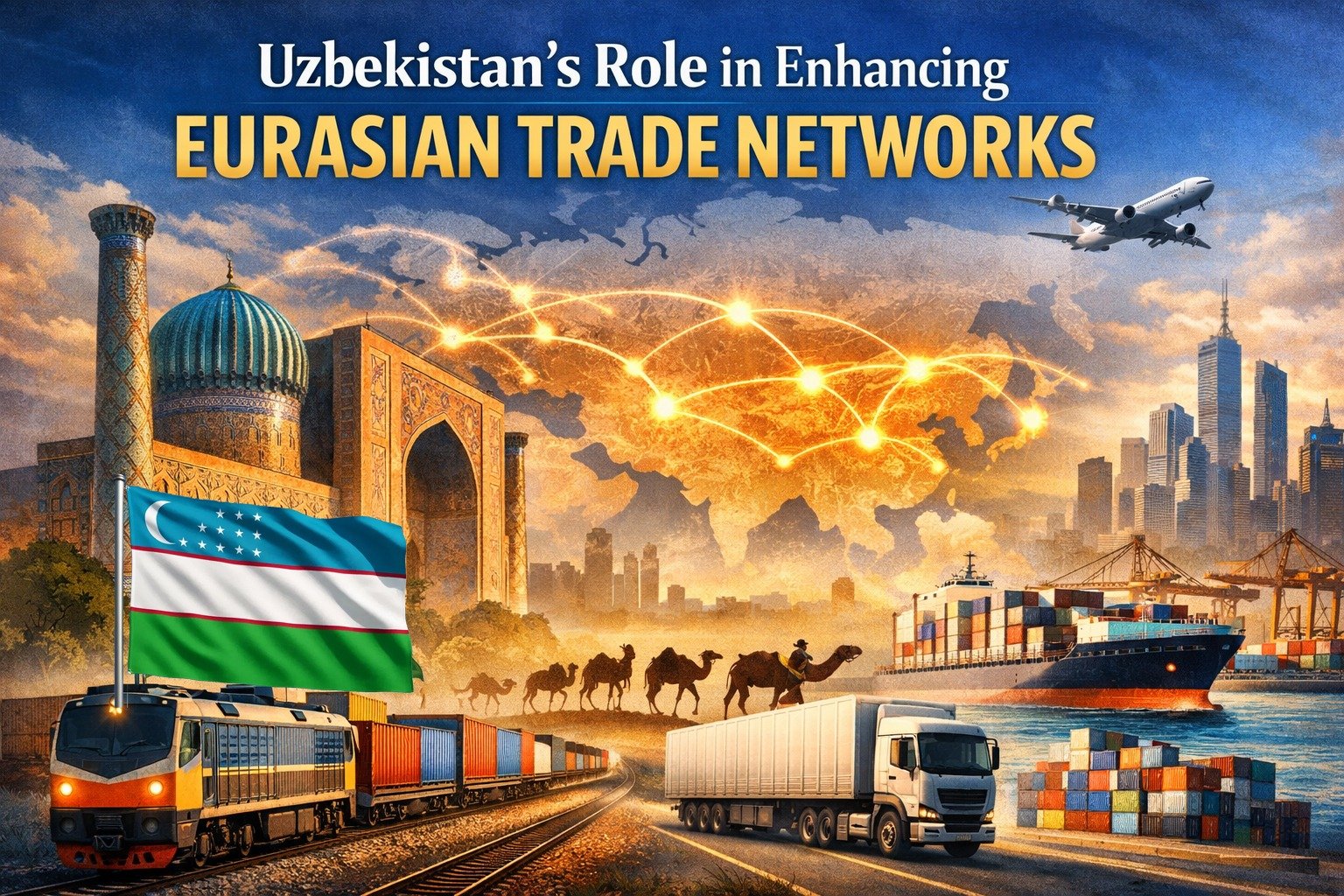
Kazakhstan and Uzbekistan, Hand in Hand to Create the New Turkestan
Kazakhstan is a landlocked country and suffers from a lack of direct access to the sea. Faced with Russian pressure and maritime isolation, the country increasingly allies itself with neighbouring states, particularly its brother country: Uzbekistan.
On 8 August 2024, Kassym-Jomart Tokayev published an op-ed calling for a “Central Asian renaissance” alongside Kyrgyzstan, Tajikistan, Turkmenistan, and Uzbekistan.
“Tokayev believes that national development must occur with neighbours rather than against them, as demonstrated by the creation of joint ventures such as the Alliance textile company between Kazakhstan and Uzbekistan,” states Major Prépa (14 February 2023).
Colonel Stéphan Samaran supports this view, stating that despite Kazakhstan’s economic dominance, these two countries are the two heavyweights of the region, whose strengths unite them. He adds that “For the other three countries of the region (Kyrgyzstan, Tajikistan, and Turkmenistan), Kazakhstan is generally perceived as benevolent and generous. Beyond economic dominance, Kazakhstan’s diplomatic leadership is viewed not as a constraint, but as an asset for the entire region.”
On 14 November 2025, Tokayev arrived in Tashkent on a state visit at the invitation of Mirziyoyev. The two leaders held closed-door talks, participated in the Supreme Intergovernmental Council of Kazakhstan and Uzbekistan, and launched seven joint projects worth $1.2 billion, writes Haidar, A. (20 November 2025) for timesca.com.
Finally, following an initiative by Turkmen national leader Gurbanguly Berdimuhamedov, the Central Asia cooperation format (C5)—Kazakhstan, Kyrgyzstan, Tajikistan, Turkmenistan, and Uzbekistan—was expanded to include Azerbaijan. This integration transforms the platform into a more powerful bloc focused on cooperation in security, trade, energy, and above all connectivity via the Middle Corridor. It should be recalled that Azerbaijan is a key partner of both Kazakhstan and Uzbekistan. Consequently, these countries—Kazakhstan, Azerbaijan, and Uzbekistan—are set to make the region the heart of the world in the years to come.
In July, Kazakhstan, Azerbaijan, and Uzbekistan launched the Green Corridor Union, a joint venture based in Baku aimed at coordinating regional efforts in sustainable energy.
Formed by Azerenergy, KEGOC of Kazakhstan, and Uzbekistan’s national power grids, this initiative supports the green energy corridor project linking Azerbaijan and Central Asia.
The three countries aim to reshape the regional energy landscape by exporting surplus renewable electricity to Europe, an initiative fully aligned with EU climate and energy security objectives.
Conclusion
In sum, Kazakhstan’s strength lies in the fact that it is the largest country in Central Asia, located along the historic Silk Roads, and ranks among the world’s top ten producers of coal, chromium, manganese, potassium, titanium, uranium, and zinc, while also possessing significant rare earth resources.
Kazakhstan remains a destination of choice for trade and capital.” Benefiting from sustained growth—4.8% GDP growth in 2024, with a projection of 5.4% for 2025—and strengthened political stability, the country alone attracted 63% of Central Asia’s foreign direct investment (FDI) in 2024, amounting to $17 billion out of a regional total of $27 billion, with cumulative FDI exceeding $300 billion since independence in 1991.
Historian and environmental management expert on Central Asia and researcher on Central Asia post-Soviet period. Journalist for EuReporter and EuReflect and Special Director of “The Gulf Observer” for Europe and Central Asia.