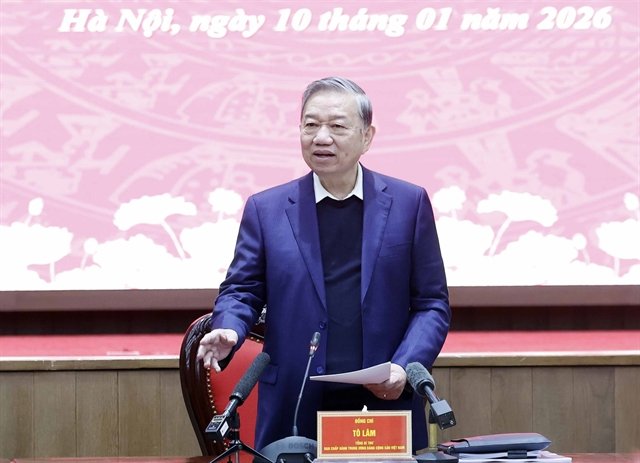
Hànội, January 11, 2026 – The Europe Today: Party General Secretary Tô Lâm has emphasized that current amendments to the Capital Law must adopt an innovative and long-term approach, providing a robust legal framework to enable Hànội to fully leverage its unique potential, pilot new development models, and explore novel approaches, while maintaining discipline, transparency, and the public interest.
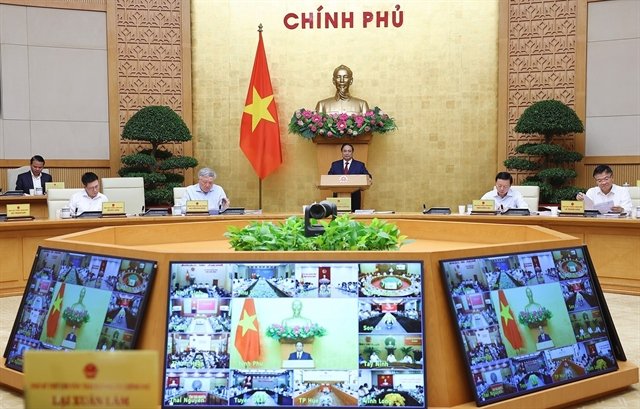
The Party chief made the remarks during a working session on Saturday with the Standing Board of the Hà Nội Party Committee. The meeting focused on reviewing a proposal for a 100-year master plan for the capital city, including institutional reforms, a projected socio-economic development model, and strategies aimed at achieving double-digit growth.
General Secretary Lâm commended Hànội for its comprehensive development achievements in 2025, highlighting the municipal Party Committee’s efforts in addressing longstanding challenges such as traffic congestion, environmental pollution, flooding, urban order, and food safety. He also praised the city’s rapid progress in land clearance and the implementation of previously delayed urban infrastructure projects, noting that these efforts reflect a leadership approach grounded in discipline and tangible results.
Despite these advances, General Secretary Lâm noted that Hànội continues to face challenges in traffic management, environmental oversight, resource-use efficiency, and governance quality. He stressed that recent improvements must be strengthened and translated into measurable outcomes to meet the capital’s development needs and support the implementation of the 14th National Party Congress’s resolution.
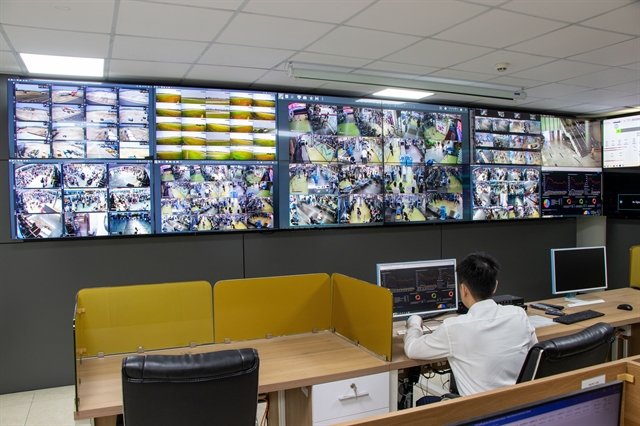
Highlighting Hànội’s critical role at a historic turning point for national development, the Party chief emphasized that the city must operate not merely as a large locality but as a national hub, pioneering new development models and approaches. He underlined that the city’s successes in urban governance, spatial planning, traffic, pollution and flood control, public investment discipline, administrative reform, and digital transformation will set benchmarks for other localities nationwide. Any delays in Hànội’s progress, he warned, could impede the country’s overall development.
General Secretary Lâm broadly endorsed the major directions of the master plan and outlined seven key principles: integrating the capital into the national development strategy; placing people at the center with quality of life as the ultimate benchmark; balancing modernity with tradition and expansion with preservation; planning with a long-term, forward-looking vision; positioning Hà Nội as a national hub of creativity, knowledge, and innovation; ensuring defence, security, and social safety; and conducting a scientific, democratic, transparent, and inclusive planning process free from short-term or vested interests.
On institutional development, he praised Hà Nội’s proactive efforts in reviewing, evaluating, and proposing a new Politburo resolution on the city’s construction and development, replacing Resolution No. 15-NQ/TW of May 5, 2022, and extending the vision beyond 2045. He also welcomed proposed amendments to the Capital Law, comprising four major groups and 31 policy mechanisms, stressing that institutional reform is crucial for long-term growth and quality development.
General Secretary Lâm underscored that the amended Capital Law should embody the guiding principle of “greater empowerment – more comprehensive decentralization – clearer accountability.” He emphasized that legal reforms are a shared responsibility of the National Assembly, the Government, and relevant ministries and sectors to remove barriers and provide Hà Nội with sufficient authority and tools to serve as the driving hub for regional and national development.
The Party chief urged the municipal Party Committee and central agencies to coordinate closely in finalizing key documents, submitting the new resolution on capital development to the Politburo, and presenting the revised Resolution 15, the amended Capital Law, and the city’s master plan to the National Assembly.
Regarding economic growth, General Secretary Lâm called on Hà Nội to unlock new drivers and pursue continuous double-digit growth, targeting at least 11 per cent in 2026. He stressed that growth should be achieved not through sheer scale, but by establishing a new model driven by labor productivity, knowledge, science and technology, innovation, digital transformation, and high-quality human resources.
The Party chief also highlighted the importance of addressing the city’s five major bottlenecks—flooding, traffic congestion, urban order, environmental pollution, and food safety—through maximum local authority rather than awaiting multi-level approvals. He noted that the master plan will focus on regional integration with the Red River Delta, Northern midlands, and the Hà Nội urban area, while prioritizing transport, infrastructure, urban management, and environmental solutions.
The capital’s socio-economic strategy for 2026–2030 will be based on three pillars: economy, environment, and society. Science and technology, innovation, and the digital economy are identified as primary growth drivers, with technological innovation underpinning institutional development, digital infrastructure, effective governance, a robust digital economy, and enhanced social welfare.
Hànội’s development approach will integrate culture, economic space, and people, leveraging heritage, landscapes, and tourism—particularly cultural tourism—as key economic sectors. The city plans to enhance its business environment, attract investments, strengthen the private sector, optimize state-owned enterprises, and promote linked production and business development through its two-tier local administration system.