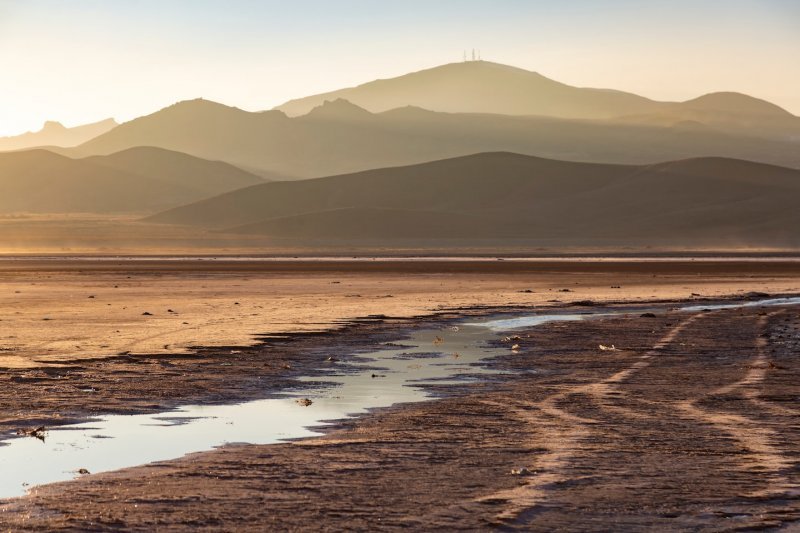
United Nations, January 21, 2026 – The Europe Today: The world is confronting an irreversible water “bankruptcy” as billions of people endure the consequences of decades of overuse and shrinking freshwater supplies from lakes, rivers, glaciers and wetlands, according to a new report by United Nations researchers, media reports said.
The United Nations University Institute for Water, Environment and Health warned that nearly three-quarters of the global population live in countries classified as “water insecure” or “critically water insecure,” while around 4 billion people experience severe water scarcity for at least one month each year.
“Many regions are living beyond their hydrological means, and many critical water systems are already bankrupt,” said Kaveh Madani, lead author of the report and director of the institute.
“By acknowledging the reality of water bankruptcy, we can finally make the hard choices that will protect people, economies and ecosystems,” he added.
The report stated that global water supplies are already in a “post-crisis state of failure” following decades of unsustainable extraction. These practices have depleted natural water “savings” stored in aquifers, glaciers, soils, wetlands and river ecosystems, while pollution has further degraded available resources.
According to the findings, more than 1.7 million square kilometres of irrigated cropland are under “high” or “very high” water stress. The report estimates that economic damage linked to land degradation, groundwater depletion and the climate crisis exceeds $300 billion annually worldwide.
It further noted that about three billion people and more than half of global food production are concentrated in regions experiencing unstable or declining water storage levels. In addition, salinisation has degraded more than one million square kilometres of cropland, threatening agricultural productivity.
The researchers stressed that existing approaches to addressing water challenges are no longer fit for purpose. Instead of seeking to “return to normal,” the report called for a new global water agenda focused on minimising damage and adapting to long-term scarcity.
However, Jonathan Paul, a geoscience professor at Royal Holloway, University of London, said the report overlooked a key driver of the crisis.
“The elephant in the room, which is mentioned explicitly only once, is the role of massive and uneven population growth in driving so many of the manifestations of water bankruptcy,” he said.