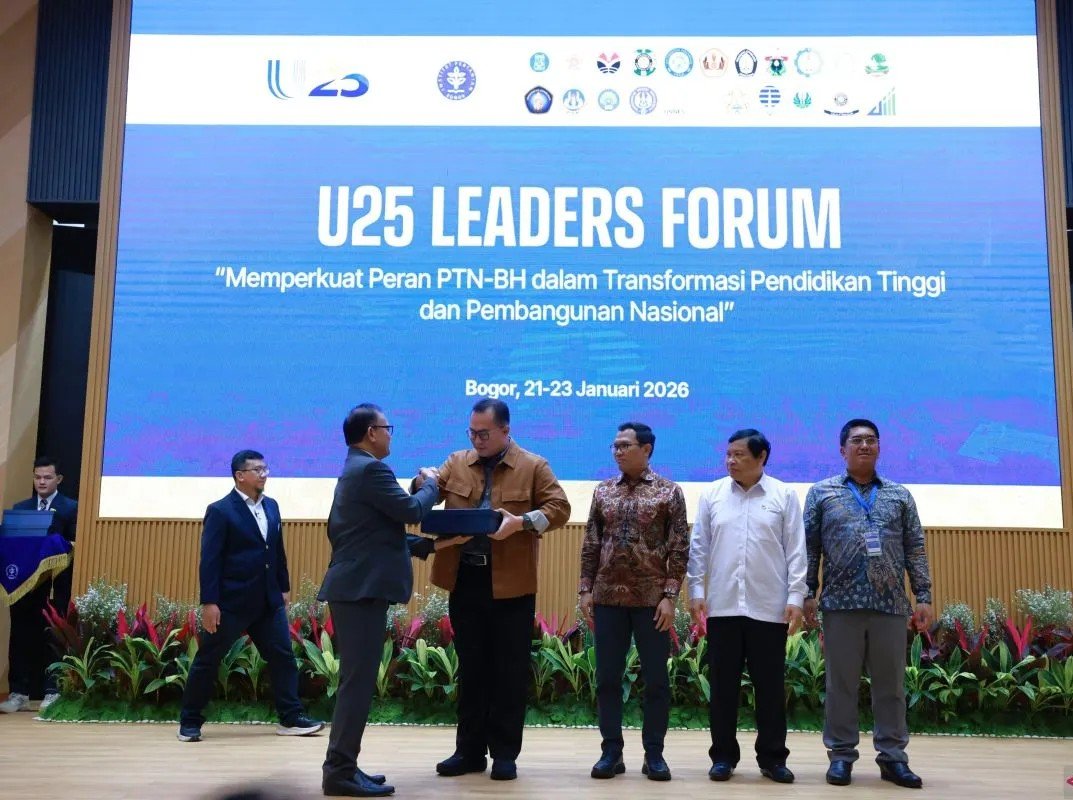
Jakarta, January 24, 2026 – The Europe Today: The National Research and Innovation Agency (BRIN), in collaboration with the Ministry of Higher Education, Science, and Technology, has launched the National Research and Innovation Roadmap to serve as a guiding framework for researchers and universities across Indonesia.
Speaking in Jakarta on Friday, BRIN Head Arif Satria emphasized that the agency cannot work alone in supporting research and addressing regional challenges, highlighting the critical role of universities. “The rectors who lead state universities are key pillars in advancing research in Indonesia. BRIN cannot work alone. We must collaborate because we need a unified research umbrella,” he stated.
The roadmap identifies eight priority agendas: food sovereignty, energy sovereignty, water security and sustainable environmental development, health sovereignty, strengthening strategic industries, enhancing social and community resilience, aerospace development, and nuclear energy development. Satria described the initiative as a breakthrough aimed at conducting research more efficiently and effectively with clear objectives.
He expressed hope that BRIN’s research facilities across regions could be further strengthened through collaboration with universities, supporting regional development and addressing local challenges. Satria also highlighted BRIN’s role in anticipating future technological developments, noting that research planning must consider technologies expected to emerge between 2035 and 2050. “This is to ensure that we do not fall behind other countries. We can prepare early and project these technologies effectively,” he said.
To bolster research, the Indonesian government has increased the research funding ceiling to Rp12 trillion (approximately US$713 million) in 2026, up from Rp8 trillion previously. President Prabowo Subianto has called on universities to prioritize research supporting food and energy self-sufficiency, industrialization, and downstreaming programs.