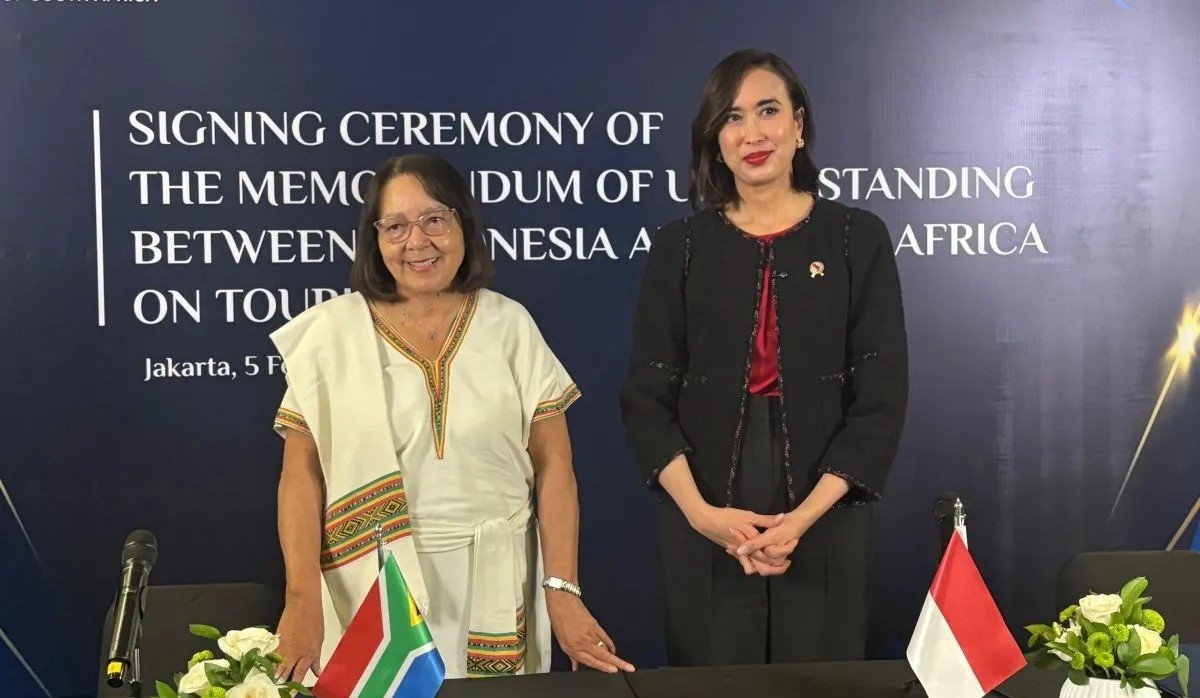
Jakarta, February 6, 2026 — The Europe Today: Indonesia and South Africa have agreed to strengthen bilateral cooperation in tourism by developing seven strategic areas aimed at promoting sustainable growth and deepening relations between the two countries.
Indonesia’s Tourism Minister Widiyanti Putri Wardhana said the agreement reflects a shared commitment to advancing long-standing bilateral ties through closer collaboration in the tourism sector.
“This meeting reflects both governments’ aspiration to deepen long-standing relations and advance bilateral tourism cooperation,” Widiyanti said during a press conference in Jakarta on Thursday.
She explained that the partnership is designed to promote sustainable tourism development grounded in the principles of equality, mutual benefit, and mutual respect for each country’s sovereignty. The two sides identified seven priority areas for cooperation: sustainable tourism development, human resource development, marketing and promotion, tourism investment, safety and service standards, research and development, and other tourism-related initiatives.
South Africa continues to show strong tourism potential for Indonesia. Data from Statistics Indonesia (BPS) recorded 36,548 South African visitors traveling to Indonesia in 2025. Widiyanti expressed confidence that the signing of the memorandum of understanding (MoU) would further enhance tourism flows between the two nations.
“Signing this MoU will strengthen bilateral tourism cooperation and allow both countries to navigate a more sustainable, inclusive, and resilient tourism future,” she said.
South African Tourism Minister Patricia De Lille welcomed Indonesia’s initiative, particularly efforts to enhance intercountry connectivity. She expressed hope for increased direct flights between South Africa and Indonesia, noting that approximately 3,000 Indonesians visited South Africa last year.
“As part of this collaboration, we aim to increase flights from Indonesia to our country. Visitors will be warmly welcomed,” De Lille said.
The two ministers formally signed the MoU during the event, following closed bilateral discussions between their respective delegations. The discussions covered progress on the agreement, expected timelines, and key cooperation areas to boost tourism flows, including visa facilitation, air connectivity, and joint tourism promotion initiatives.