Geneva, February 21, 2026 – The Europe Today: International tourism reached an all-time high in 2025, with 1.52 billion people travelling abroad, according to the latest World Tourism Barometer released by UN Tourism.
The figure represents a 4 per cent increase compared with 2024 and surpasses the previous pre-pandemic peak of 2019 by nearly 60 million travellers, underscoring the sector’s full recovery and renewed global momentum.
Europe remained the world’s leading destination region, welcoming 793 million international arrivals, a 4 per cent rise year on year and 6 per cent above 2019 levels. Africa recorded the fastest regional growth, with arrivals climbing 8 per cent to 81 million visitors.
The Middle East posted a 3 per cent increase and now stands 39 per cent above pre-pandemic levels, reflecting sustained expansion. Asia and the Pacific recorded 331 million arrivals, up 6 per cent, reaching 91 per cent of 2019 volumes. The Americas saw 218 million arrivals, marking a modest 1 per cent rise, although the United States experienced a 5 per cent decline in visitors compared with the previous year.
Among individual destinations, Iceland led growth in Europe with a 29 per cent surge in international arrivals, driven by heightened Northern Lights activity during the recent solar maximum and interest in an upcoming total solar eclipse scheduled for August. Japan reported a 17 per cent rise in arrivals during the first eleven months of 2025 compared with 2024. Brazil posted a 37 per cent increase for the year, while Egypt saw growth of 20 per cent. In Africa, Ethiopia recorded a 15 per cent rise and South Africa 19 per cent.
Bhutan, which reopened to visitors in 2022 under controlled entry policies, registered a 30 per cent increase in arrivals, though overall visitor numbers remain relatively low.
Preliminary estimates indicate that international tourism receipts reached 1.9 trillion US dollars in 2025, reflecting a 5 per cent annual increase. Total export revenues from tourism, including passenger transport, were estimated at 2.2 trillion dollars.
Looking ahead, UN Tourism projects international arrivals to grow by 3 to 4 per cent in 2026. However, its panel of experts rated prospects slightly lower at 126 on a scale of 0 to 200, compared with 129 in 2025. Economic uncertainty, high travel costs and geopolitical risks were cited by around half of respondents as key challenges.
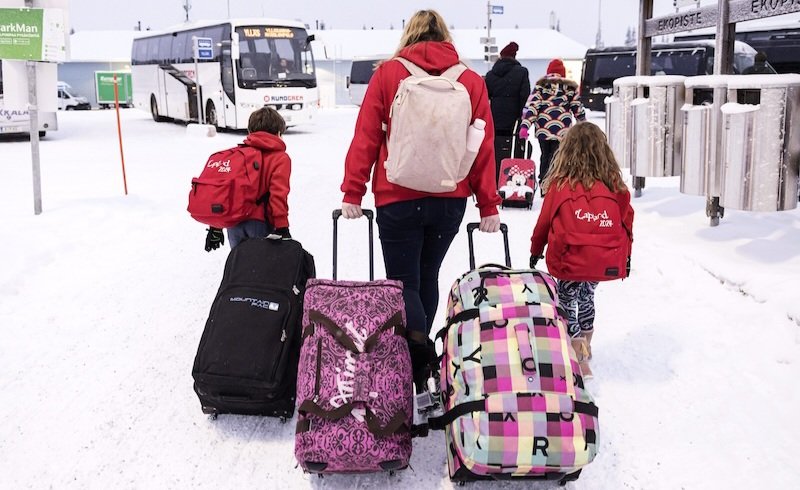
Finland emerged as one of Europe’s standout performers. According to Visit Finland and Statistics Finland, foreign overnight stays reached a record 7.2 million in 2025, representing a 12 per cent increase over the previous year. Across Europe, growth in overnight stays averaged 3 per cent, while the Nordic region recorded an 11 per cent rise.
The total number of foreign visitors to Finland rose to 5.1 million, up 5 per cent year on year. Foreign visitors spent approximately 3.7 billion euros in 2025—around 305 million euros per month—covering accommodation, dining, transport, experiences and shopping, excluding flight and ferry tickets.
“Growth was strongest among groups that bring the most economic value to the tourism industry. The number of leisure tourists increased by 15 per cent and meeting and congress tourists grew by 13 per cent,” said Katarina Wakonen, an expert at Visit Finland.
Visit Finland noted that growth over the past two years has been driven entirely by foreign demand, as domestic tourism declined during the same period.
Long-haul markets contributed significantly to Finland’s expansion, with Japan, China, India and Taiwan ranking among the largest contributors, alongside the United States and Australia. Within Europe, the United Kingdom, Germany, Italy and France generated the most growth.
Notably, overnight stays in Finland increased beyond the traditional peak season. Spring off-season stays rose by 16 per cent nationwide and 24 per cent in the Helsinki metropolitan area. Lapland recorded growth in summer stays as part of efforts to extend tourism beyond winter months, while the winter season both began earlier and lasted longer, with the highest growth rates observed in April and October.
Visit Finland attributed this trend to increasing demand for northern destinations, as travellers seek cooler climates and less crowded environments, boosting both summer and winter tourism offerings.
The latest figures confirm that global tourism has not only recovered from the pandemic but is entering a new phase of expansion, marked by shifting travel patterns and growing interest in sustainable and climate-conscious destinations.