Brussels, February 21, 2026 – The Europe Today: Hungary has put the European Union’s proposed €90 billion macro-financial loan package to Ukraine at risk, warning it could block the deal unless the flow of Russian gas through the Druzhba pipeline is restored.
The Hungarian government issued the warning late Friday, escalating tensions within the bloc just days before EU ambassadors were expected to give final approval to the loan ahead of the fourth anniversary of Russia’s invasion of Ukraine. The package, agreed in principle in December after months of negotiations, is aimed at stabilizing Kyiv’s finances as it continues to face mounting economic and military pressures.
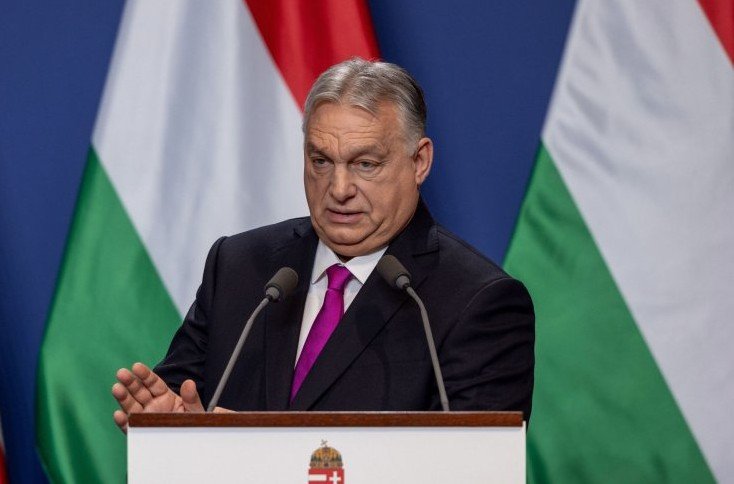
Prime Minister Viktor Orbán, widely regarded as Russia’s closest ally within the EU, has accused Ukraine of deliberately halting Russian gas transit to Hungary for political purposes. However, Kyiv has rejected the allegation, arguing that Russian missile strikes have severely damaged energy infrastructure, disrupting supply routes.
Hungarian Foreign Minister Péter Szijjártó alleged on social media that Ukraine was “blackmailing Hungary” in coordination with Brussels and Hungary’s domestic opposition to create supply disruptions and increase fuel prices ahead of upcoming elections. “We will not give in to this blackmail,” he said.
The dispute centers on the European Union’s €90 billion support mechanism, designed to provide long-term financial assistance to Kyiv. Hungary has refused to approve one of the key legislative measures requiring unanimity — the expansion of the EU budget’s “headroom,” which enables the bloc to raise funds on financial markets.
While EU ambassadors approved two related bills that required only a simple majority, the headroom measure remains stalled due to Budapest’s veto threat. Hungary’s ambassador to the EU also insisted that the country’s national assembly be granted the standard eight-week scrutiny period for EU legislation.
The standoff poses a significant challenge for Ukraine, whose government finances are expected to come under severe strain from April without fresh external funding. Analysts warn that any delay in disbursement could weaken Kyiv’s position in ongoing diplomatic efforts and peace negotiations with Russia.
In a related move earlier this week, Hungary and Slovakia temporarily halted diesel supplies to Ukraine in retaliation over the energy dispute, prompting the European Commission to convene an emergency meeting to resolve the matter.
Despite previous compromises — including exemptions for Hungary, Slovakia and Czechia from repaying borrowing costs associated with the loan — Budapest’s latest stance underscores deep divisions within the bloc over continued financial support to Kyiv.
As negotiations intensify, EU leaders face mounting pressure to secure unity and ensure timely assistance to Ukraine amid the protracted conflict with Russia.