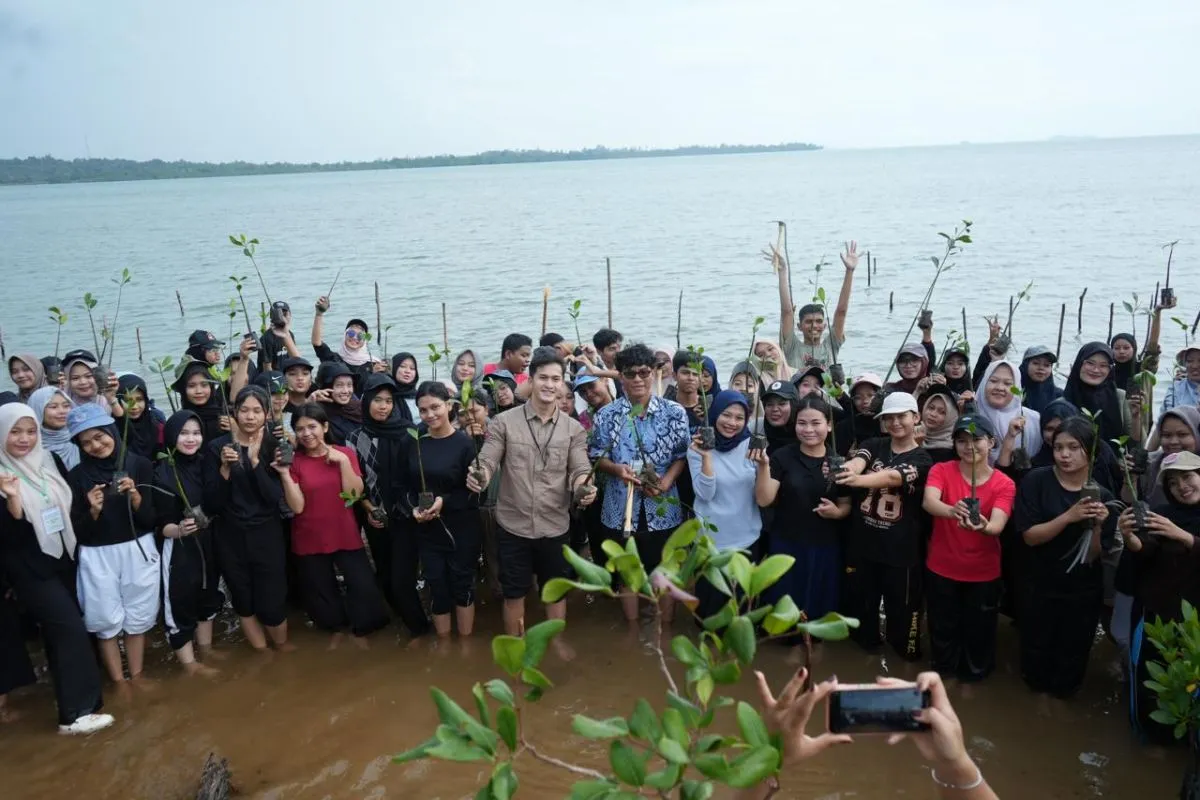
Jakarta, February 28, 2026 – The Europe Today: The Indonesian government is reinforcing the role of young people in enhancing the country’s coastal resilience and advancing mangrove rehabilitation efforts through the Mangrove Goes To School (MGTS) program, which targets university and school students nationwide.
The initiative forms part of a broader public communication and environmental education strategy designed to foster awareness, responsibility, and leadership among youth as the frontline actors in sustainable mangrove restoration.
Nikolas Nugroho Surjobasuindro, Director of Mangrove Rehabilitation at Indonesia’s Ministry of Forestry, said on Saturday that the younger generation plays a pivotal role in safeguarding the sustainability of the nation’s coastal ecosystems.
“Mangrove rehabilitation requires intergenerational continuity. Through Mangrove Goes To School, we are preparing a younger generation that not only understands the importance of mangroves but also possesses the leadership, care, and courage to participate directly as agents of change,” he stated.
Over the course of its four-month implementation, the MGTS program has engaged more than 2,000 participants across nine provinces.
Activities have been conducted at several prominent higher education institutions, including Gadjah Mada University, IPB University, Jambi University, Udayana University, Riau University, and Raja Ali Haji Maritime University. These institutions were selected based on their proximity to priority coastal areas and watersheds, as well as their strategic roles in environmental research and advocacy.
The program has also expanded to four coastal-region high schools, aiming to instill environmental awareness and responsibility from an early age.
Beyond theoretical learning, MGTS promotes concrete action. The initiative has inspired students to submit research proposals on mangrove rehabilitation, launch environmental campaigns on social media, establish mangrove conservation communities within educational institutions, and participate directly in rehabilitation projects in their respective regions.
The government views the program as a critical step in building a sustainable, youth-driven movement to protect and restore Indonesia’s vital mangrove ecosystems.