China’s 2026–2030 Five-Year Plan positions economic reform, domestic demand, and tech self-reliance as strategic tools to withstand pressure from the United States. By boosting innovation, green transition, and internal markets, Beijing strengthens resilience in an era of intensifying global competition.
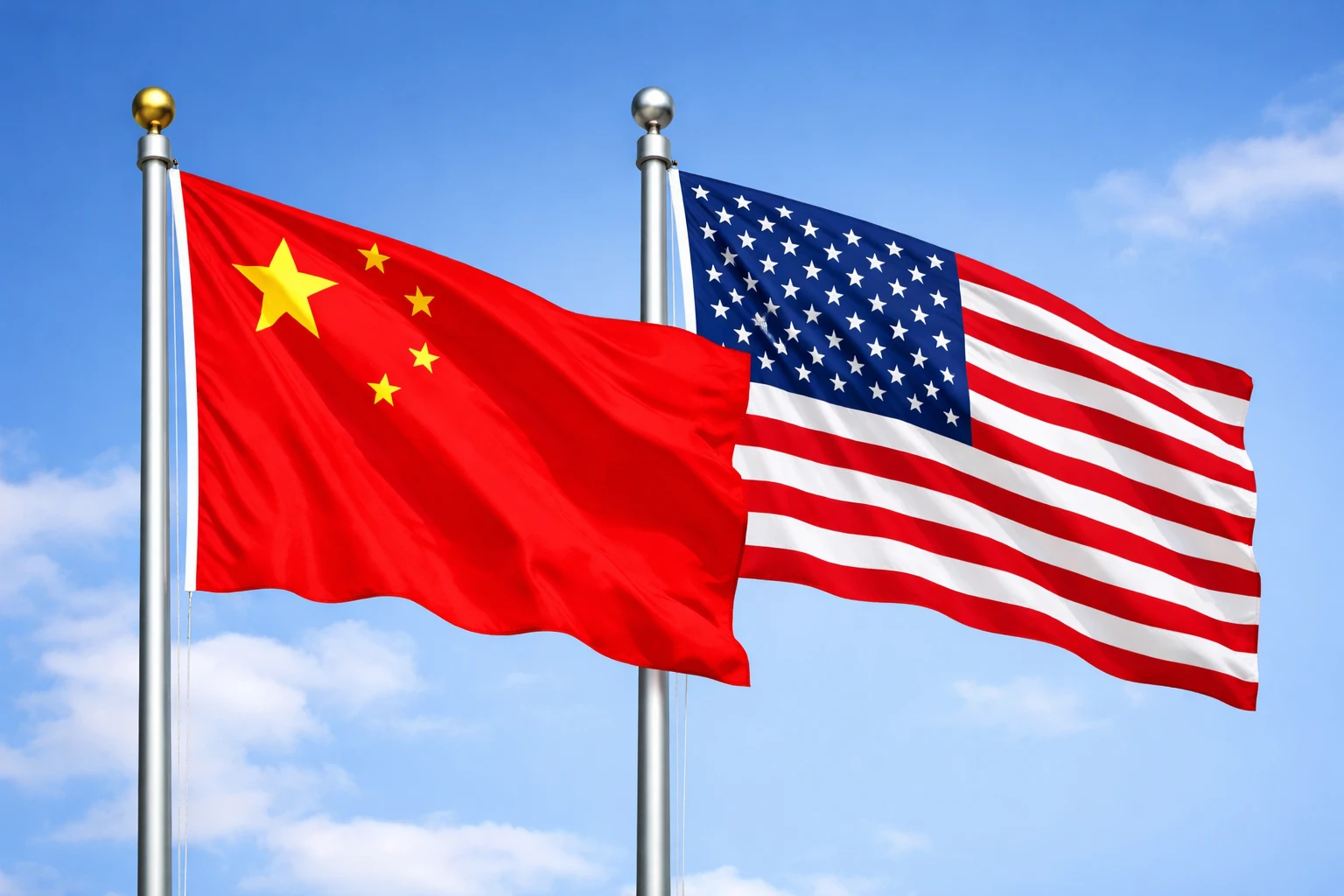
As the annual “two sessions” set the tone for the next stage of governance, China’s forthcoming 15th Five-Year Plan (2026–2030) is not only a domestic development blueprint but also a strategic economic instrument in an era of intensifying global competition — particularly vis-à-vis the United States. Within the framework of systemic rivalry, supply chain fragmentation, and technological containment, Beijing’s economic planning increasingly functions as a defensive architecture designed to secure resilience, autonomy, and long-term competitiveness.
Strategic Planning as Economic Shield
Five-year plans have long been a structural hallmark of China’s governance model. However, in the current geopolitical climate, the new plan goes beyond development coordination — it operates as a macroeconomic defense mechanism. Faced with export controls, tariff regimes, technology restrictions, and financial pressures largely driven by Washington, China’s leadership appears determined to reduce systemic vulnerabilities while maintaining steady growth.
The emphasis on “progress while ensuring stability” reflects a calibrated response to external turbulence. Stability is not framed as stagnation, but as controlled adaptation in a volatile international environment.
Domestic Demand as Strategic Rebalancing
One of the clearest defensive moves against external economic pressure is China’s sustained pivot toward domestic demand. By expanding consumption and strengthening the internal market, Beijing reduces dependence on foreign demand — particularly the U.S. consumer market.
Final consumption expenditure contributing over half of economic growth signals a structural transition. Boosting urban and rural incomes, stimulating services consumption, and expanding middle-class purchasing power are not merely social policies; they form the backbone of a demand-led resilience strategy. A strong domestic market cushions against export volatility and trade shocks.
This aligns with the “dual circulation” framework, where internal circulation becomes the mainstay while external engagement continues selectively and strategically.
Technological Self-Reliance as Counter-Containment
The United States has increasingly weaponized technology controls — especially in semiconductors, AI, advanced manufacturing equipment, and quantum computing. In response, China’s new five-year cycle places sci-tech self-reliance at the core of national strategy.
Expanded support for basic research, innovation ecosystems, and industrial upgrading reflects a long-term decoupling hedge. By cultivating “new quality productive forces,” China seeks to move up the value chain and reduce exposure to Western supply chokepoints.
The visible push in robotics, artificial intelligence, green energy, and advanced manufacturing is part of a broader effort to neutralize technological containment. Rather than reacting defensively, China is attempting to accelerate structural upgrading.
Reform as Internal Efficiency Enhancement
Structural reform — including building a unified national market and strengthening capital market mechanisms — enhances internal efficiency and allocative capacity. In a global system where access to Western capital markets may face political headwinds, deepening domestic financial reform becomes essential.
Completing over 300 major reform tasks by 2029 indicates a systematic attempt to modernize governance capacity, streamline regulation, and improve capital allocation — key to sustaining long-term competitiveness against advanced economies.
Opening Up with Strategic Selectivity
Despite global fragmentation, China continues to emphasize high-standard opening up. However, this openness is increasingly calibrated. Expanding market access in services and deepening cooperation under the Belt and Road Initiative reflects diversification rather than dependency.
By strengthening ties with emerging markets, the Global South, and regional trade frameworks, China mitigates overreliance on the U.S. and allied markets. This multi-vector engagement serves as a counterweight to Western-led economic blocs.
Green Transition as Competitive Lever
The commitment to peak carbon emissions before 2030 positions China strategically within the green economy race. Investment in smart grids, hydrogen energy, and green fuels not only addresses environmental goals but also creates industrial leadership opportunities in next-generation sectors.
In global competition, dominance in renewable technologies and green supply chains may prove as decisive as semiconductor supremacy.
Economic Sovereignty in a Fragmenting World
At its core, the 15th Five-Year Plan can be read as a blueprint for economic sovereignty. It does not signal retreat from globalization but reconfiguration of participation. China aims to remain a central growth engine globally while reducing exposure to geopolitical leverage.
Against the backdrop of strategic competition with the United States, economic planning becomes an instrument of national security. Domestic demand expansion, technological autonomy, structural reform, diversified opening, and green transformation collectively function as stabilizers in a contested global order.
If implemented effectively, the new five-year plan will not merely guide development — it will serve as China’s structured response to systemic rivalry, reinforcing its capacity to compete, withstand pressure, and shape the next phase of global economic dynamics.