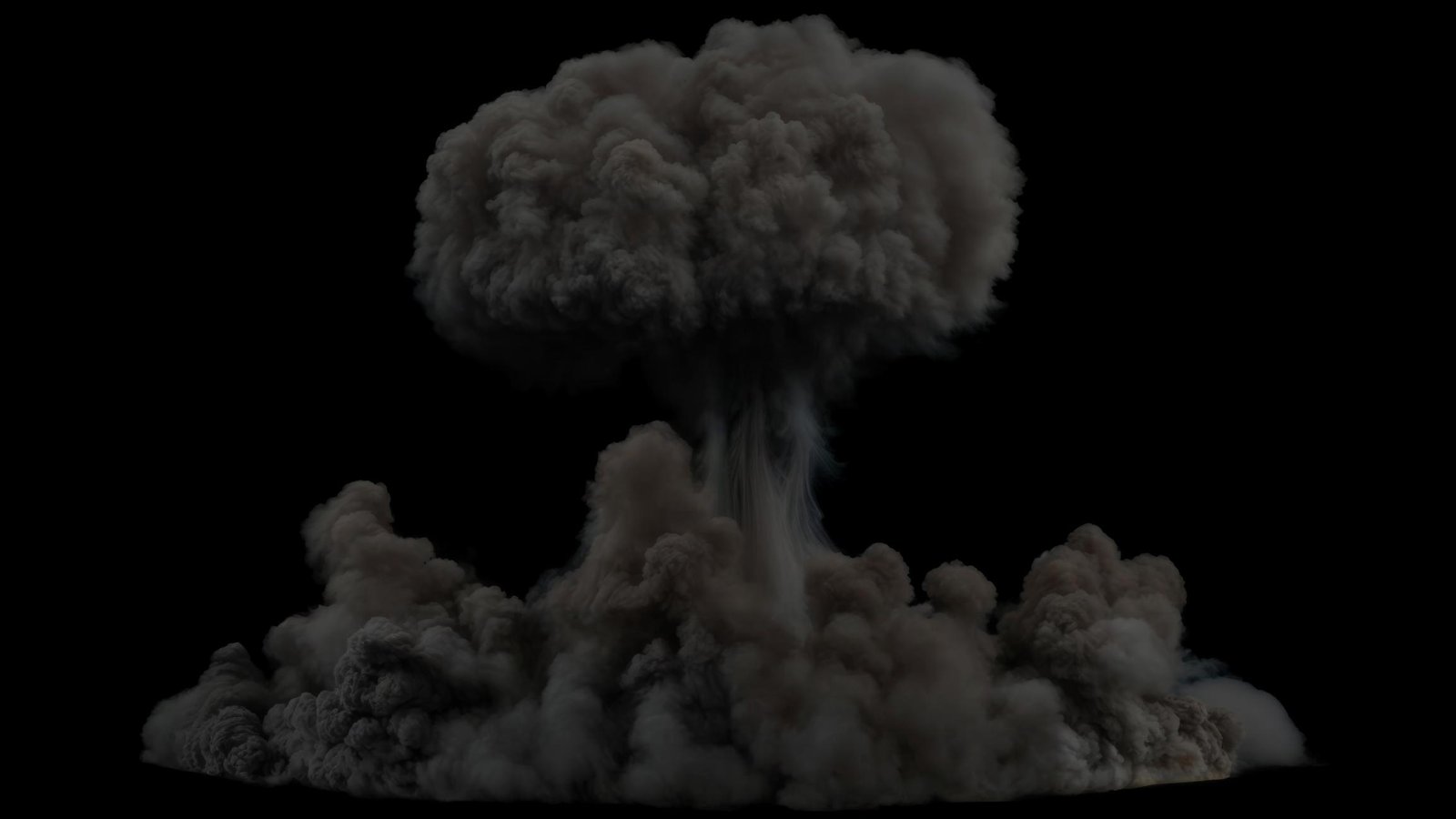
Amidst the roaring jets, hypersonic missiles, manoeuvring warships, and escalating regional confrontations, security hawks have started to contemplate the once unthinkable and widely tabooed question of the potential use of nuclear weapons. A mushroom cloud tomorrow seems unlikely today, but for any nuclear power state carrying brutal power and tranquilising pride, the faintest indication of defeat in war can swiftly open the door to human catastrophe.
From an optimistic prism, the likelihood of nuclear use is minimal due to four significant strategic reasons. First, there is no confirmed evidence that Iran has a deployed, functional nuclear weapon, and even the IAEA does not recognise any wartime Iranian nuclear capability. This should reassure the US and Israel (presumed nuclear power) against any impulsive first use. Second, by their own account of the war’s success, the US and Israel have no military need at the moment to cross the nuclear threshold.
President Trump’s recent statement that the US war effort against Iran was “a 15 out of 10” leaves no rational reason for the US to accept the political and strategic costs of nuclear first use. Third, nuclear use itself would be strategically self-defeating. Public opinion, media pressure, and international advocacy would come together to create overwhelming demands for stronger action, including broader diplomatic and economic boycotts. Fourth, and more importantly, it would further erode the already fragile non-proliferation regime. Once the nuclear use myth is broken, many states would draw the hard conclusion that ultimate security lies not in treaties or guarantees, but in possessing nuclear weapons of their own.
From a pessimistic prism, one could find higher nuclear risks in this war, which may already be one of the widest by regional spillover. First, the nuclear risk is said to proportionally increase with the severity and ambition of the war goals pursued by the nuclear state. The US has set itself two very ambitious war objectives in Iran; ending uranium enrichment and pursuing regime change. In pursuit of such Herculean tasks, the US may feel compelled to use every instrument available to preserve its credibility as the pre-eminent power. Already, after striking more than 2,000 targets, senior officials say the war is only beginning, underscoring its upward escalatory trend. Second, visibility into Iran’s nuclear programme has weakened. The IAEA reportedly could not access the 2-3 key sites hit in June 2025, and reports indicate that some enriched uranium may have been relocated beforehand. In nuclear crises, uncertainty itself is destabilising because states plan against worst-case possibilities, not best-case assumptions. Third, war strengthens the internal argument for deterrence. Jumping into an Iranian mind irritated with sustained military pressures, political coercions, sanctions, isolations, and now single-handedly facing the military wrath of a powerful coalition, the appeal of acquiring a nuclear weapon may seem stronger than ever. In such a case, a war intended in part to limit Iran’s nuclear ambitions could incentivise it for its acquisition.
The million-dollar question would be what if, in the next few days, Iran either bluffs to possess a nuclear weapon or if it actually develops one. In all hypotheses, such a declaration would shatter existing assumptions, force a complete recalculation of deterrence, and plunge the region into a new era of uncertainty.
Fourth, military action is outpacing diplomacy, and no credible external actor has yet driven a serious ceasefire effort. A prolonged war weakens restraint, blurs redlines, increases miscalculations, and makes extreme options seem less exceptional; hence, increasing nuclear risk.
The genocidal record of Prime Minister Netanyahu and his confrontational regional strategy, combined with President Trump’s appetite for dramatic political moves, creates a volatile mix in which nuclear use cannot be totally ruled out. If Iran’s resilience continues to frustrate military objectives, and if the war’s human and material costs mount sharply for both Israel and the United States, pressure for a decisive, shocking act could grow in some insane circles. History shows that when leaders become cornered, weakened, or desperate for strategic advantage, the unthinkable can quickly become discussable. The more plausible danger in the near term is not nuclear use, but nuclear coercion.
As the body bag count rises, threats, signals, and military decisions may increasingly be shaped by the possibility of nuclear escalation. The US need not issue an explicit nuclear threat; it can coerce through ambiguity. Iran may find harsher ultimatums, intensified strikes, and deliberate signalling that the war could move into a much more dangerous realm if Iran does not yield.
Unlike previous encounters with Iran that seemed to test limits, this time, US power and pride and Israel’s strategic ambitions have been put at stake. Both appear determined to destroy Iran’s eco-military power and make it a pliant state. Iran, treating it as a war of survival, shows no sign of surrender. In such a clash of ambition and endurance, the nuclear risk should not be dismissed totally.
The US nuclear doctrine says the ‘fundamental role’ of its nuclear weapons is to deter nuclear attack and that it would consider nuclear use only in ‘extreme circumstances’ to defend the vital interests of the US or its allies and partners. Yet doctrine also leaves open a narrow space for nuclear employment to negotiate ‘exceptionally grave strategic threats’. Such ambiguity is intentionally left as part of deterrence. In wars defined by shifting objectives and nuclear ambiguity, the greatest danger is the normalisation of escalation and the fatal logic that acting now is safer than waiting.