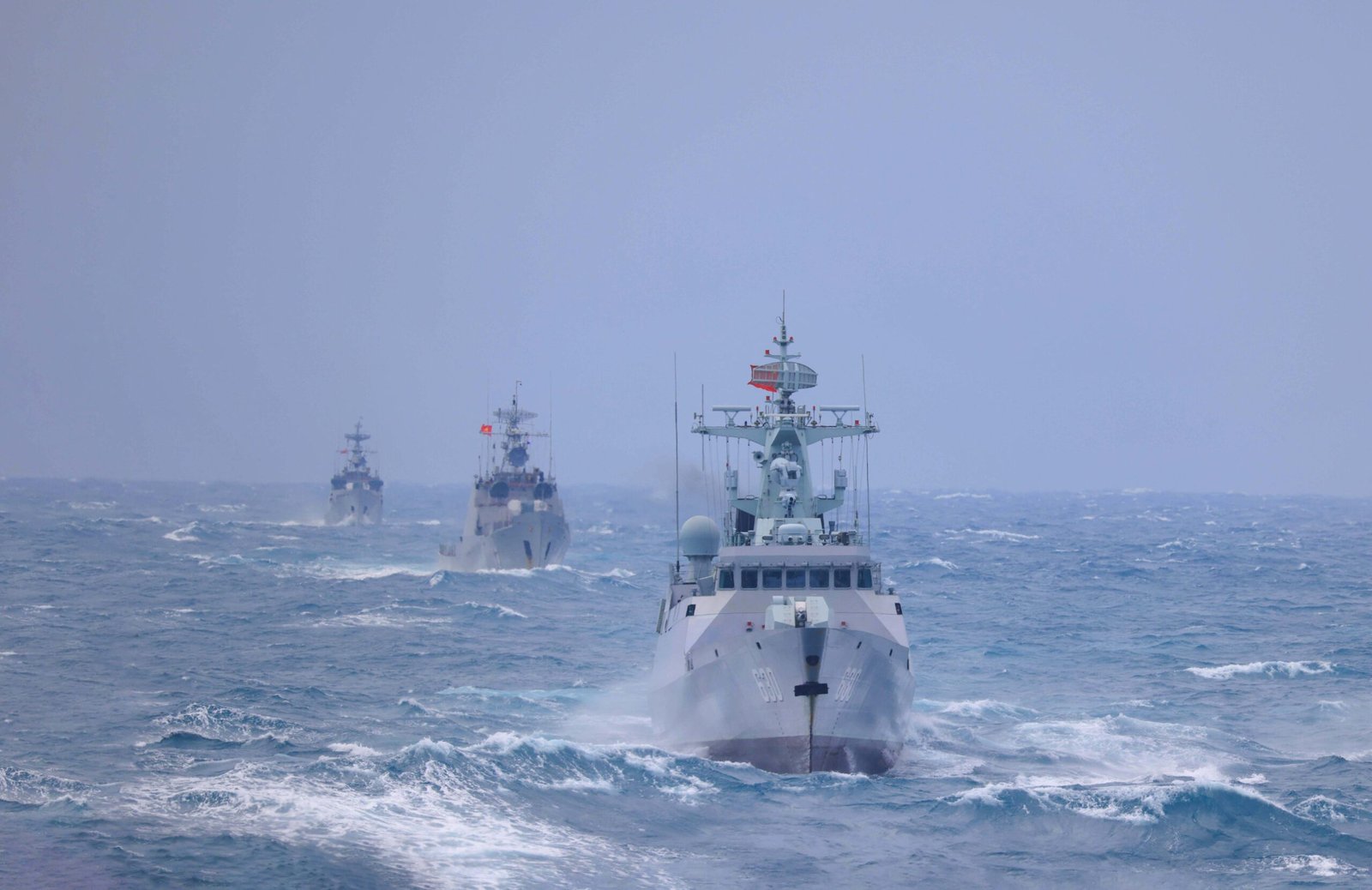
Joint China–Vietnam naval patrols in the Beibu Gulf reflect a broader maritime strategy to secure energy supply routes. Combined with risks from US–Iran tensions in the Strait of Hormuz, China advances a multi-layered approach integrating military, diplomatic, and geoeconomic tools.
Introduction
The joint naval patrols and maritime training activities conducted between China and Vietnam should be analyzed not only within the framework of bilateral military cooperation but also through the lens of global energy security and geopolitical competition. Operations carried out in strategic maritime zones such as the Beibu Gulf directly contribute to securing maritime trade routes and ensuring the continuity of energy flows.
In parallel, escalating tensions in the Strait of Hormuz between the United States and Iran necessitate situating China’s maritime activities within a broader global energy security context. Given China’s heavy dependence on energy imports—particularly from the Persian Gulf—any disruption in Hormuz constitutes a systemic risk for its economic stability and industrial continuity.
1. Maritime Security and Global Energy Chokepoints: From the Beibu Gulf to Hormuz
China’s energy security strategy is inherently maritime-centric, focusing on the protection of Sea Lines of Communication (SLOCs). A significant proportion of China’s imported hydrocarbons transits through the South China Sea, making it a critical strategic corridor.
Joint patrols in the Beibu Gulf reflect a layered maritime security approach aimed at safeguarding these routes. Tactical formations, coordinated maneuvers, and live-fire exercises against simulated asymmetric threats—such as piracy—demonstrate operational readiness to protect commercial vessels, including energy carriers.
However, the vulnerability of China’s energy supply chain becomes more evident when considering external chokepoints such as the Strait of Hormuz, through which roughly one-third of global seaborne oil trade passes. Escalations in U.S.–Iran tensions could disrupt this artery, generating supply shocks and price volatility with direct implications for China.
In this regard, the operational competencies developed in the Beibu Gulf—escort missions, maritime interdiction, and search-and-rescue (SAR) operations—can be interpreted as preparatory mechanisms for managing high-risk scenarios in distant but strategically vital regions.
2. U.S.–Iran Tensions and China’s Strategic Balancing
The geopolitical rivalry between the United States and Iran introduces structural uncertainty into global energy markets. China, as a major energy importer with strategic ties to Iran and systemic competition with the United States, adopts a calibrated balancing strategy.
While avoiding direct military entanglement in the Strait of Hormuz, China leverages regional partnerships—such as its cooperation with Vietnam—to strengthen maritime security closer to its periphery. These initiatives contribute indirectly to mitigating broader systemic risks by enhancing China’s naval interoperability, situational awareness, and crisis-response capacity.
Moreover, China’s long-term energy agreements and infrastructure investments with Iran signal a sustained commitment to securing upstream energy access. This dual-track approach—combining regional maritime security initiatives with strategic energy diplomacy—enables China to hedge against disruptions emanating from geopolitical flashpoints.
3. Multi-Layered Energy Security: Hard Power, Soft Power, and Geoeconomic Instruments
China’s approach to energy security is multidimensional, integrating military, diplomatic, and socio-economic instruments. Joint naval patrols and training exercises represent the hard power dimension, reinforcing deterrence and operational capability.
Simultaneously, soft power mechanisms are embedded within broader bilateral exchanges. Activities conducted in regions such as Guangxi Zhuang Autonomous Region and Quang Ninh Province—including medical outreach, cultural interaction, and civil-military engagement—enhance social stability in border areas, indirectly supporting the security of energy infrastructure.
From a geoeconomic perspective, China is also pursuing diversification strategies, including overland pipeline networks and alternative supply routes, to reduce dependence on vulnerable maritime chokepoints such as the Strait of Hormuz. This reflects a comprehensive risk mitigation framework that extends beyond conventional military considerations.
Conclusion
The joint patrols and maritime training activities between China and Vietnam in the Beibu Gulf exemplify a broader, strategically integrated approach to energy security. These operations contribute to safeguarding maritime trade routes, enhancing regional stability, and strengthening China’s naval capabilities.
At the same time, persistent tensions in the Strait of Hormuz underscore the structural vulnerabilities of China’s energy supply chain. Consequently, China is compelled to adopt a holistic strategy that combines regional military cooperation, global diplomatic engagement, and geoeconomic diversification.
In sum, China’s energy security paradigm is evolving into a comprehensive framework that integrates maritime power projection, strategic partnerships, and adaptive risk management in response to an increasingly volatile global energy landscape.