Hanoi, March 31, 2026 – The Europe Today: Việtnam has reaffirmed its position as one of Southeast Asia’s fastest-growing economies, with robust performance expected to continue into 2026, according to the latest Southeast Asia Outlook report by global real estate services firm Cushman & Wakefield.
The report highlights that Việtnam remains a key player among the Southeast Asia-6 economies—alongside Thailand, Philippines, Indonesia, Malaysia and Singapore—benefiting from strong trade corridors, expanding manufacturing ecosystems and resilient domestic demand.
In 2025, Việtnam recorded the highest real GDP growth among the group at 8 percent, significantly surpassing its pre-pandemic average of 7.1 percent. The growth was primarily driven by strong exports, as well as a rebound in manufacturing and services sectors, underscoring the country’s rising importance in regional trade and global supply chains.
The report notes that data centres emerged as the most valuable investment asset class in Southeast Asia’s real estate market in 2025. While markets such as Johor benefited from spillover demand from Singapore, countries including Việt Nam, Thailand, Indonesia and the Philippines continue to face supply constraints—creating significant opportunities for future expansion.
Wong Xian Yang, Head of Research for Singapore and Southeast Asia at Cushman & Wakefield, stated that the region’s economic recovery reflects not only cyclical improvements but also deeper structural shifts in capital allocation. Investors are increasingly targeting sectors tied to manufacturing expansion and digitalisation, particularly logistics and data centres.
Despite some moderating factors—including slower population growth and rising lending rates—Việt Nam’s economy is projected to grow by 6.3 percent in 2026, maintaining its status as a leading growth engine in the region.
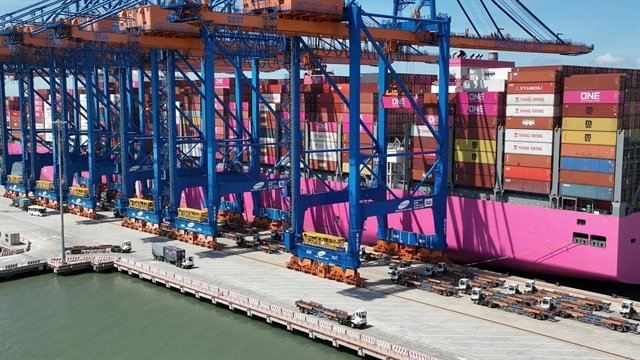
From a real estate perspective, the industrial sector continues to serve as a major growth driver. Việt Nam is benefiting from the “China+1” strategy, supported by its strategic geographic location, improving infrastructure and the development of large-scale electronics manufacturing clusters.
Meanwhile, the retail real estate segment is expected to gain momentum in 2026, with retail sales forecast to grow by more than 15 percent. This surge is anticipated to boost demand for modern retail spaces in major urban centres across the country.
Although data centres have become a dominant investment class across emerging Southeast Asia, Việt Nam’s market remains at an early stage, offering strong long-term potential. The rapid expansion of cloud computing, artificial intelligence and the broader digital economy is expected to accelerate demand for digital infrastructure in the coming years.
Regionally, Southeast Asia’s economy is forecast to grow by 4.3 percent in 2026, maintaining its position among the world’s fastest-growing regions. Total personal consumption—excluding Singapore—is projected to reach US$5 trillion by 2035, expanding at an annual rate of around 8 percent.
Anshul Jain, Managing Director for India and Southeast Asia and Head of Office and Retail for Asia-Pacific at Cushman & Wakefield, emphasized that the region’s sustained growth is driven not only by rising investment flows but also by expanding consumer markets, a young workforce and ambitious infrastructure development initiatives.
With strong fundamentals and continued investor confidence, Việt Nam is set to remain at the forefront of Southeast Asia’s economic transformation in the years ahead.