For decades, Pakistan approached Afghanistan as a neighbour in prolonged crisis, bound by faith, geography, and shared history, and guided by the belief that sustained instability across the border imposed both a moral responsibility and a strategic obligation to assist wherever possible. This approach, while never divorced from Pakistan’s own security interests, rested on the assumption that patience, goodwill, and familiarity would preserve a functional relationship with Kabul over time.
That assumption is now under strain. The Afghan question, once marked by broad internal consensus in Pakistan, has begun to generate visible disagreement, and this shift is neither trivial nor temporary. It reflects accumulated fatigue, growing frustration, and widening strategic uncertainty on both sides. A relationship previously managed through informal understanding and historical familiarity is increasingly exposed to external influence, and as trust erodes, the space for unfriendly actors to shape outcomes between Pakistan and Afghanistan expands accordingly.
This gradual shift did not occur overnight. Over nearly two decades, India applied a classical principle of regional competition: weakening a rival not through direct confrontation, but by turning neighbouring states into instruments of pressure. Each incremental layer of mistrust introduced between Kabul and Islamabad strengthened New Delhi’s strategic position without deploying force. Pakistan was framed as an adversary, Afghanistan was courted as a partner, China was labelled a threat while other Asian states were embraced, and Bangladesh was encouraged into a close strategic alignment, with its external relationships increasingly drawn into a wider orbit of influence.
Those in Kabul who now view India as a principled ally would do well to reflect on Bangladesh’s experience. Prolonged external alignment, initially presented as beneficial, eventually generated domestic strain and political recalibration once economic and social costs became visible. This pattern is not unique. Across the region, extended reliance on external guarantees has repeatedly collided with internal constraints, forcing adjustment when the burden becomes politically or socially unsustainable.
Indian and Israeli interests in Afghanistan are not organic; they are transactional and driven by realpolitik. Both understand an Afghan political psyche shaped by pride, resilience, and opportunism, and both benefit from a weak and divided Muslim state on the borders of Pakistan and Iran. Yet a simple question must be asked, particularly by ordinary Afghans. Did either India or Israel shelter Afghan refugees, keep trade routes open, educate Afghan children, or treat Afghan patients during decades of conflict? The record speaks clearly. There is no shared faith, historical burden, or humanitarian investment behind their involvement.
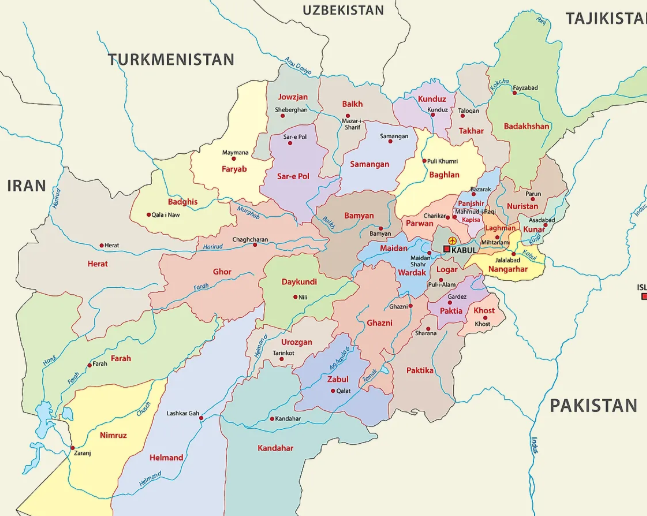
No country is more deeply affected by Afghanistan’s stability or instability than Pakistan. A peaceful Afghanistan strengthens Pakistan’s economy, security, and regional position. A hostile or chaotic Afghanistan, by contrast, hands advantage to those who profit from disorder. Today, this reality revolves around one issue above all others: the continued presence of the Tehreek-e-Taliban Pakistan inside Afghanistan, which remains the most direct and unavoidable threat to Pakistan’s internal security.
Many observers argue that recent talks between the two neighbours faltered because contradictions existed on both sides. Kabul kept its intentions deliberately opaque, particularly regarding the TTP, offering assurances that did not align with realities on the ground. Pakistan, meanwhile, did not always articulate a consistently firm and structured set of expectations, allowing ambiguity to substitute for clarity. When one side withholds its true position and the other assumes trust without clearly defined boundaries, failure often becomes the only conclusion.
Afghanistan’s refusal to participate in the multilateral conference in Tehran reinforced this pattern. It reflected a preference for bilateral engagement, where collective scrutiny can be avoided and demands need not be articulated in a broader regional forum. The underlying assumption appears to be that regional stakeholders, constrained by their own security and economic needs, will eventually seek engagement on Kabul’s terms.
At this stage, a narrow and functional regional mechanism focused specifically on border security and counter-terrorism verification could serve a stabilising purpose. Such a forum, limited in scope and insulated from larger political disputes, would replace competing claims and denials with process. More importantly, it would create an engagement channel capable of surviving episodic crises, reducing the likelihood that every incident becomes a strategic rupture.
Through limited defensive measures, Pakistan has made one position unmistakably clear that cultural affinity and shared faith become secondary the moment the Tehreek-e-Taliban Pakistan finds sanctuary across the border and continues to carry out attacks inside Pakistan. This position irritates sections within Afghanistan and confuses many ordinary Pakistanis, yet its logic is straightforward. What publics on both sides often overlook is that the Afghan Taliban themselves upheld for decades a principle that no foreign soil should be used against them. Pakistan today is asking for nothing more than adherence to the same standard.
While the Afghan Taliban and the TTP may have fought alongside each other during the war, a battlefield alliance cannot evolve into a permanent entitlement to spill blood across borders in peacetime. If Kabul believes the TTP may serve a role in future internal confrontations, whether against ISIS or remnants of the Northern Alliance, Pakistan does not seek to dictate Afghanistan’s internal security choices. What is non-negotiable is that such arrangements remain confined within Afghan territory and are not allowed, under any circumstances, to endanger Pakistani lives, compromise sovereignty, or be used as instruments of pressure.
At the same time, Pakistan must avoid creating the impression that it seeks control over Afghanistan or acts as a proxy for others. Just as Islamabad does not want Kabul serving foreign agendas, it must not appear to be doing the same. Rumours suggesting that Pakistan might support the Northern Alliance or pursue regime change are both false and destabilising, yet prolonged silence allowed such perceptions to circulate. Pakistan therefore needs to state, and restate, unambiguously that it does not seek the removal of the Taliban government, does not back any anti-Taliban faction, and seeks only secure borders and a definitive end to cross-border terrorism.
It also bears recalling that Pakistan defended the Afghan Taliban during their most vulnerable years without demanding ideological conformity or political alignment. In doing so, Pakistan absorbed sustained international criticism for practices attributed to the Taliban that were often justified in the name of religion while contradicting its foundational principles.
There is growing discussion within Pakistan about China’s restrained posture on this issue, particularly as Beijing has emerged as a central and influential power in the regional order. Unlike other interlocutors who lack the leverage to shape outcomes in Afghanistan, China possesses both the economic weight and political standing to influence behaviour through quiet diplomacy. The China–Pakistan Economic Corridor remains a flagship of the Belt and Road Initiative, and sustained stability across Pakistan, Afghanistan, Iran, and Central Asia directly serves China’s long-term connectivity and security interests.
History shows that prolonged vacuums in Afghanistan invite external interference from actors who profit from instability, a pattern China understands well. Beijing is also aware that uncontained militancy in Afghanistan carries spill over risks that extend beyond borders and affect wider regional stability. From this perspective alone, steady and consistent engagement with Kabul aligns with China’s own strategic calculus.
Major powers tend to signal priorities most clearly during periods of strain. It is therefore reasonable to assume that just as stability on Pakistan’s eastern flank has mattered to Beijing, calm and predictability on Pakistan’s western flank carry equal weight in China’s broader regional vision. Such signals are rarely conveyed through public statements; they are more often reflected through posture, alignment, and calibrated engagement. A steady Chinese role, exercised with characteristic restraint, could help recalibrate expectations in Kabul before miscalculations harden into deeper confrontation.
Stability in South Asia ultimately rests with the region itself. Iran, Afghanistan, Pakistan, India, and Bangladesh must recognise that regional relevance is sustained not merely by geography, but by policies that reinforce balance and mutual confidence. States that consistently anchor their strategic priorities outside this natural framework risk gradual marginalisation within it. China, as a central external stakeholder, will observe these choices carefully and respond through calibrated engagement or restraint, an outcome regional capitals would be wise to factor into long-term calculations.
Pakistan, mindful of the volatile regional environment and the risks of miscalculation, recognises that any kinetic escalation would be deeply destabilising for the wider region. It is therefore in Pakistan’s interest, and consistent with its long-standing approach, to exercise restraint and pursue stability. This preference is informed by the belief that Afghan and Pakistani futures remain closely intertwined. At the same time, Afghan leadership must recognise Pakistan’s legitimate security concerns, including the imperative that Afghan territory not be used as an arena for strategic rivalry. Within this framework, Pakistan remains open to Indian economic engagement in Afghanistan when it is transparent, civilian-oriented, and directed towards improving the lives of ordinary Afghans through healthcare, education, and essential infrastructure.
Pakistan has conveyed an unambiguous message: if cross-border attacks persist, it retains both the capability and the resolve to impose costs that Kabul will find difficult to absorb, irrespective of external sympathies or interventions. Invoking familiar slogans about Afghanistan being a graveyard of empires risks misreading reality, because Pakistan is neither an outside force nor an unacquainted actor. It understands the terrain, the networks, and the operating environment with precision, and its armed forces and intelligence apparatus remain fully capable of safeguarding national security without escalation becoming an end in itself.
Pakistan is showing tentative but tangible signs of recovery, reflected in renewed initiatives across trade, energy, and technology. It would be prudent for Afghanistan to align itself with this emerging arc of stability rather than risk renewed isolation. A practical path forward exists: preventing cross-border violence, restraining the TTP from using Afghan soil for attacks, and facilitating pathways for its members to disengage from militancy and reintegrate in accordance with Pakistan’s constitutional framework. Such an approach would serve the interests of both countries.
Recent public sentiment in Pakistan underscores this opportunity. A survey published by Dawn reported that over 80 percent of Pakistanis favour continued humanitarian engagement with Afghanistan despite Pakistan’s own economic constraints, while nearly 70 percent support Afghan trade access through Pakistan. Few countries have demonstrated such sustained public goodwill. Yet goodwill is not inexhaustible. When borders close, it is ordinary Afghans who bear the immediate cost through rising prices, shortages, particularly of medical supplies, and disrupted trade. This brings no satisfaction to the Pakistani public, which remains broadly committed to peace, commerce, and dignity for both nations.
The Taliban leadership, however reluctantly, must acknowledge a hard reality: the period in which Afghan territory could be used against Pakistan while bilateral relations remained nominally normal has come to an end. That phase is no longer sustainable. Should cross-border violence continue, Pakistan will be compelled to act in defence of its citizens and sovereignty, employing the means available to it. This posture is driven by necessity after a prolonged period of restraint that has reached its natural limit.
At the risk of repetition, it bears emphasis that Pakistan is not asking the Taliban to eliminate TTP fighters or to turn their weapons against individuals with whom they once shared a battlefield. The expectation is far more reasonable, and far more honourable: that these men be encouraged to disengage from violence, lay down arms, and return with dignity under Pakistan’s constitutional framework. Such an outcome would protect Afghan interests, uphold Pakistani sovereignty, and allow both countries to move toward a stable future rather than remain locked in a cycle of conflict that neither can afford.
Recent history offers a clear lesson: states invariably outlast and overcome limited proxies and breakaway factions. Afghanistan would therefore do well to read the evolving mood in Pakistan with care. It would be deeply regrettable if Kabul allowed itself to be perceived as the last political outpost of extra-regional rivalries in this part of the world. The opportunity for cooperation remains open, still wide enough to support a stable and mutually beneficial future but it is not indefinite. As circumstances evolve, the responsibility for keeping this window open rests primarily with Afghan leadership.