More than half of the world’s population resides in countries that play only a minor role in the formation of rules for global governance. After the end of the Second World War the world shifted from multipolarity to bipolarity. The creation of the United Nations was welcomed and considered a step toward stability but that was basically an opening of new battlefield. In a fight between elephants it is the grass that suffers the most, from the San Francisco conference to the collapse of the Soviet union, it was the smaller nations that paid the highest price in the geopolitical rivalries.
Even the end of Cold War did not end the geopolitical rivalries but merely transformed their nature. The rise of a unipolar world led by the United states of America brought in new strategic competition. The rise of humanitarian crises in last decade of the twentieth century and emergence of global terrorism in the beginning of the twenty first century exposed the gaps in the existing governance structure and called for global governance. Unipolarity became increasingly visible creating an imbalances and failed to address many issues which created space for the rise of China.
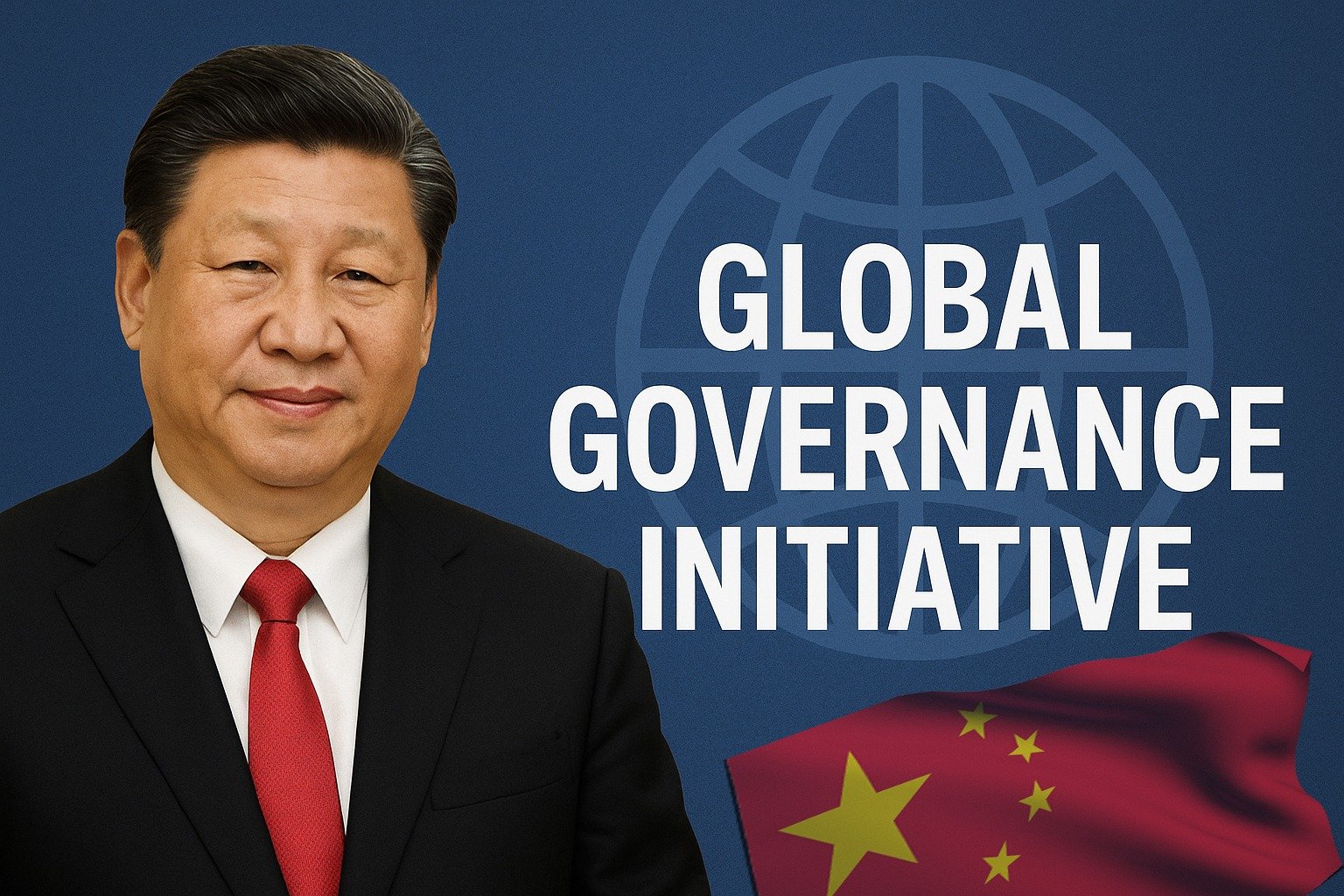
Global Governance Initiative (GGI)
China presents itself as a proponent of equality and multilateralism. As the US influence began to erode, China stepped in introducing the idea of the Global Governance Initiative (GGI) which is one of its “Global four initiatives”. Though the idea of GGI is introduced by President Xi Jinping recently but it is not a product of today. Recognizing the costs of great power rivalries borne by small nations, the Chinese government now aims to project itself as source of stability and development rather than confrontation. China led framework of GGI advances the goal of equality, multilateralism and stability to create a harmonious world. GGI is built four major pillars. The first focuses on strengthening global governance through the central authority of the UN and calls for the inclusion of African representation in the UN Security Council. The second emphasize the modernization of global economic institutions including the World bank, IMF and WTO and strongly advocates fairer voting rights and representation for the Global South to address its concerns. The Third prioritizes the creation of new development platforms including the Asian Infrastructure bank, the New Development bank and the Silk road fund under the Belt and Road initiative to promote mutual benefit and assist developing states. The Fourth draws attention to the Global south cooperation. China holds a rich history of supporting developing states and Non Alignment Movement(NAM) to avoid joining blocs. Although China still follows a similar policy but its approach has been transformed over time, from trying to lead the third world countries under Chairman Mao Zadong to growing together based on equality and mutual benefit under the current leader Xi Jinping. Pursuing this approach China presented the concept of Global Governance Initiative considering it a step toward multilateral and equal world. GGI is not a single project but it is actually a vision that aims to create a harmonious world based on strengthening global institutions to promote cooperation, development, stability, and particularly security. Not just territorial security but also protection of rights, freedom and equal say in global affairs. Under GGI China has created many multilateral platforms such as BRICS which was created by the collaboration of only five countries from different regions and recently welcomed inclusion of nine more countries.
Moreover, for the regional security and stability the Shanghai Cooperation Organization (SCO) was created to promote diplomatic dialogue rather than confrontation to avoid regional instability. In addition, G77+China enhances and promotes the voice of developing countries.
Criticism
China has been questioned by the many Western politicians and writers. According to various studies, China has been framed as a revisionist and anti liberal autocracy, which intends to change the world order that was established since the end of second world war. China has been perceived as a threat to the existing world order and is considered ambitious to develop new order with itself at the center to expand its influence in the world. The creation of China led institutions has been seen as a counter measure against the western institutions. The debt and loans facilities provided by China have also faced many allegations.
The main question whether is China really aimed to create a stable world by avoiding block politics or is itself creating a block by forming these new institutions?
According to the UN reports for fiscal year 2024-2025 China emerged as a second highest contributor to UN peacekeeping missions after the US (United Nations Peacekeeping, 2025). China is the top contributor of uniformed personnel among the permanent members of the Security council (United Nations Peacekeeping, 2025). China states that it actively supports UN lead peace keeping missions but consistently calls for reforms in UN system for the promotion of equity and inclusion especially for the developing countries. These figures demonstrates that China’s approach towards the UN is not to weaken it but it seeks some reforms for the benefit of weaker states and that is the why it is also establishing institutions that welcomes the inclusion of developing countries.
Conclusion
Global Governance Initiative is basically both an opportunity and a challenge for the existing global order. On one hand it stresses the representation of developing states and offers alternative sources of financial support. On the other hand, creation of parallel institutions might affect the influence of existing global institutions. Whether GGI becomes a genuine platform of multilateralism or source for expansion of Chinese influence depends on how China aligns its initiative with the global norms and interests.

Participant of ICSF-UoS Fellowship Program 2025-26 at University of Sargodha