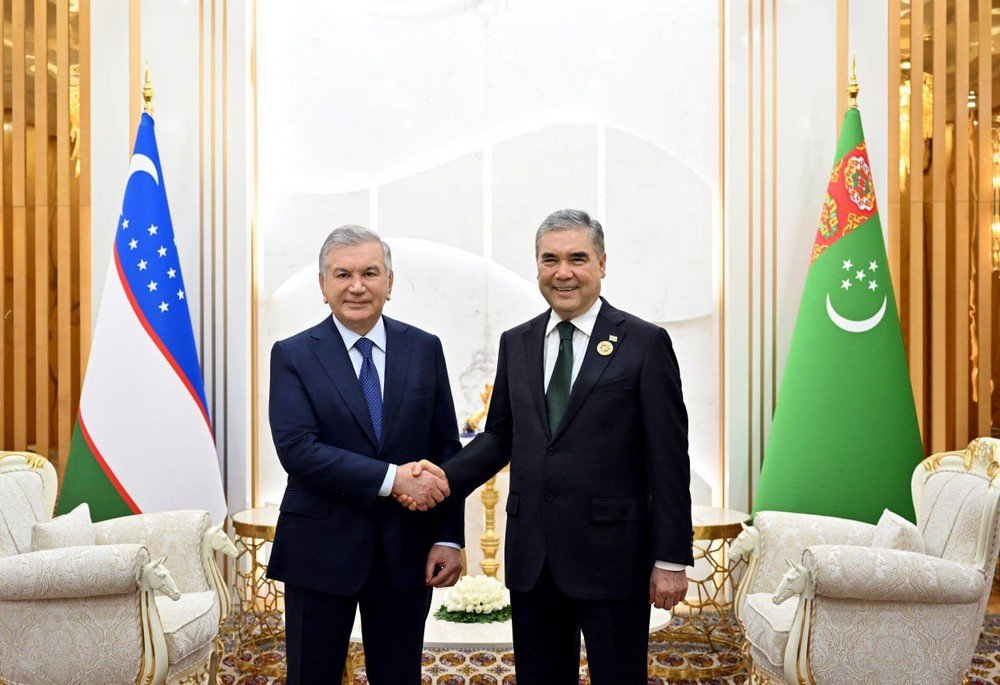
The year 2025 marked a stage of qualitative renewal and consolidation of Uzbekistan’s foreign policy positions. Uzbek President Shavkat Mirziyoyev visited Belgium, Brussels—the European capital—to sign the landmark Enhanced Partnership and Cooperation Agreement (EPCA) with Ursula von der Leyen. Indeed, 2025 was truly the year of Uzbekistan. The signing of the EPCA, the organization of the EU–Central Asia Summit in Samarkand, the hosting of the 43rd UNESCO General Conference in Samarkand (for the first time outside Paris), and the meeting between Shavkat Mirziyoyev and Donald Trump in the United States all testify to this momentum.
It can be said that Uzbekistan’s foreign policy has been successful, according to experts. Indeed, the year 2025 marked a consolidation of Uzbekistan’s foreign policy positions. Under the leadership of President Shavkat Mirziyoyev, Uzbekistan consistently pursued an open, pragmatic, active, and proactive foreign policy. We witnessed major transformations in Central Asia, notably the peace agreement signed between Kyrgyzstan and Tajikistan. It can be stated that Uzbekistan was the key mediator during this conflict.
Uzbekistan: An Exemplary Foreign Policy?
The country has begun to develop a highly successful foreign policy, accumulating partnerships across all corners of the world. Against this backdrop, several events of strategic significance had a profound impact on Uzbekistan’s foreign policy positioning in 2025. Uzbekistan is now on the radar of the United States, China, the European Union, Turkey, the Middle East, and many other countries and regions worldwide. Each of these actors seeks to sign and intensify partnerships with Uzbekistan, which projects the image of a reliable partner in a world marked by increasing crises.
The Year of Rapprochement Between the EU and Uzbekistan
Since April 2021, Uzbekistan has benefited from unilateral preferential access to the EU market via the Special Incentive Arrangement for Sustainable Development (GSP+) under the EU Generalised Scheme of Preferences. Indeed, President Mirziyoyev opened the doors of the country to the global market, and one way to achieve this was by bringing Central Asia closer to the European Union.
The signing of the Enhanced Partnership and Cooperation Agreement with the European Union and President Shavkat Mirziyoyev’s visit to Brussels marked a transition in relations with the EU to a qualitatively new level. President Shavkat Mirziyoyev of Uzbekistan paid an official visit to Brussels on October 23–24 at the invitation of European Council President Antonio Costa and European Commission President Ursula von der Leyen, where a landmark agreement was signed to deepen Uzbekistan–EU cooperation across multiple sectors.
Europe needs Central Asia, and this region presents two leaders: Kazakhstan and Uzbekistan. As the demographic powerhouse of Central Asia, it is impossible to discuss the region without addressing Uzbekistan. The agreement established a solid legal framework for deepening political dialogue, expanding trade and economic ties, attracting investment, and developing cooperation in sustainable development, the green economy, and digitalization, while reflecting the high assessment by European partners of Uzbekistan’s ongoing reforms. The EPCA includes nine sections, 356 articles, and 14 annexes, forming a comprehensive legal framework for political dialogue and long-term economic collaboration. It aims to bolster cooperation in trade, innovation, sustainable development, education, and cultural exchange between Uzbekistan and EU member states.
Trade between Uzbekistan and the EU more than doubled over the past five years, reaching approximately €6.4 billion in 2024. European companies from France, Germany, Belgium, and Italy have expanded operations in sectors such as textiles, renewable energy, and logistics. Over 1,000 joint ventures are currently active in Uzbekistan, supported by a European investment portfolio estimated at €40 billion, as noted by Janobiddinov, A. (2025, October 23) for SpecialEurasia. The EU is Uzbekistan’s third-largest trading partner (accounting for 10.4% of Uzbekistan’s trade in 2024) and its second-largest export destination (7.2% of Uzbekistan’s exports), according to IEU Monitoring (2025).
Kaja Kallas, High Representative for Foreign Affairs and Security Policy and Vice-President of the European Commission, stated:
“Uzbekistan is an important partner for the EU. Today’s landmark agreement opens a new chapter in EU–Uzbekistan relations. It marks a significant step forward in our political, trade, and security ties.”
The Year of Rapprochement Between the United States and Uzbekistan
Uzbekistan and the United States have taken an important step toward deepening their partnership. The recent Central Asia–U.S. Summit (C5+1) in Washington, along with high-level bilateral talks, culminated in what both sides described as a new era of cooperation.
In 2025, rapprochement between the United States and Uzbekistan also became evident. It should be recalled that Donald Trump sought to meet his Uzbek counterpart at the UN Headquarters on the sidelines of the events of the 80th anniversary session of the UN General Assembly.
The United States and Uzbekistan are deepening their economic and technological partnership. Following President Shavkat Mirziyoyev’s meeting with U.S. President Donald Trump in Washington in November 2025, the U.S. State Department announced a sweeping package of agreements, described as among the most significant in the history of bilateral relations in both investment scale and strategic scope.
Mirziyoyev highlighted that trade between Uzbekistan and the United States has quadrupled over the past eight years, and more than 300 American companies are now operating in the country, wrote Ismailov, V. (2025) for Times of Central Asia. A key component of this partnership is the joint development of critical minerals and rare earth elements (REEs), sectors that are increasingly vital for global supply chains and energy transition efforts. The Uzbek Ministry of Geology signed a cooperation agreement with Denali Exploration Group, while the Uzbek Fund for Reconstruction and Development reached an accord with Re Element Technologies to co-develop extraction and processing projects, wrote Atayev, T. (2025, November 12) for Caspian Post.
Uzbekistan: The Bridge Between Asia and Europe
Uzbekistan pursues a multidimensional foreign policy under the concept of “New Uzbekistan.” The country serves as a bridge between Asia and Europe and follows a balanced foreign policy, refraining from aligning with any single country or bloc.
In 2025, rapprochement between China and Uzbekistan also became evident. China remains Uzbekistan’s principal economic partner, as highlighted by Trend News Agency (2025) in the article Uzbekistan, China trade sees strong growth in 11M2025. Uzbekistan’s trade with China continued to expand strongly in 2025, reinforcing Beijing’s position as Tashkent’s largest trading partner. Trade between the two countries totaled USD 14.6 billion between January and November 2025, according to Caspian Post (2025).
It is also worth recalling that on November 21, 2025, Chinese Foreign Minister Wang Yi held the second strategic dialogue with Uzbekistan’s Minister of Foreign Affairs, Bakhtiyor Saidov, in Tashkent. China highly commended Uzbekistan for its remarkable achievements in poverty reduction, according to the Permanent Mission of the People’s Republic of China to the United Nations (2025, November 24).
It is a meaningful coincidence that the date for the EPCA signing was announced while Mirziyoyev was in Tianjin attending the SCO Summit before heading to Beijing for China’s major military parade. Uzbekistan is purposefully walking its own middle path, noted Putz, C. (2025, September) for The Diplomat.
The intensification of foreign economic activity also contributed to the growth of trade indicators. Over the first eleven months of 2025, Uzbekistan’s foreign trade turnover reached USD 72.7 billion, with exports amounting to USD 30.8 billion—an increase of USD 6.6 billion compared to the same period of the previous year, according to UzDaily (2025, December 23).
Uzbekistan: One of the Centers of World Diplomacy?
Uzbekistan hosted forums, assemblies, and conferences of the Inter-Parliamentary Union, the United Nations Civil Service, UNESCO General Conference, International Climate Conference, the EU–Central Asia Summit in Samarkand, the Global Gateway with the EU, the Tashkent Investment Forum, the Tashkent Summit of regional countries, and many other major events. Uzbekistan hosted UNESCO’s 43rd General Conference in Samarkand from October 30 to November 13, 2025, marking the first time the event was held outside Paris in 40 years, recognizing Uzbekistan’s cultural heritage and reforms in education and heritage preservation.
The country hosted over 120 high-level foreign delegations and approximately 300 delegations from regional authorities of foreign states. These contacts contributed to interregional cooperation, the establishment of direct links between business communities, and the expansion of the legal framework for cooperation. Some observers even described Tashkent as the capital of Central Asia, alongside its sister city Astana, the capital of Kazakhstan.
Uzbekistan: A Mediator and Peacemaker
Since Mirziyoyev came to power in 2016, Uzbekistan’s foreign policy strategy has actively focused on building relations with its neighbors. Between 2016 and 2024, Central Asian states agreed on the alignment and demarcation of the Kazakh–Uzbek border, as well as the delimitation of the Uzbek–Kyrgyz and Uzbek–Tajik borders. This included the demilitarization of the Uzbek–Tajik border and the restoration of cross-border traffic, with demarcation nearing completion.
Before Mirziyoyev, Tajik–Uzbek relations were tense, as noted by Uzbek expert Dr. Farkhod Tolipov (Tolipov, F., 2018, September 23, The Times of Central Asia). There were disputes in Tajikistan regarding recognition of Uzbekistan’s territorial integrity and claims concerning Samarkand and Bukhara, notably in the book written by Emomali Rahmon, titled “the history of Tajiks”. These cities, however, have been Uzbek for centuries, long before the Karakhanid period. However, since Mirziyoyev’s rise to power, Tajik–Uzbek relations have been resolved peacefully, resulting in a solid partnership. In 2018, during Rahmon’s visit to Tashkent, the two sides signed 27 cooperation agreements covering industry, standardization, certification, and border crossings. Mirziyoyev was able to establish a solid country-to-country relationship with his neighboring country, Tajikistan.
Indeed, by the early 2020s, all disputes concerning Uzbek borders had been resolved, noted Umarov, T., and Mukambayev, A. (2025, April 17). However, one unresolved border issue remained in Central Asia: the Tajik–Kyrgyz border. Confrontations continued, and strained relations between Emomali Rahmon and Sadyr Japarov overshadowed regional summits, threatening regional stability.
Uzbekistan played a decisive mediating role in resolving this conflict, as noted by Umarov and Mukambayev (2025, April 17). Tashkent relaunched regional integration in 2018 by resuming Central Asian summits without external powers such as Russia or China. By 2025, Uzbekistan succeeded in restoring dialogue between Rahmon and Japarov, who had previously refused even to shake hands. In early 2025, the prime ministers of Uzbekistan, Tajikistan, and Kyrgyzstan met to discuss border issues.
Research unanimously confirms Uzbekistan’s role as the principal mediator in resolving the Tajik–Kyrgyz conflict. The Polish Centre for Eastern Studies (OSW) highlighted that “the normalization of border issues was facilitated by Uzbekistan’s constructive regional policy under President Shavkat Mirziyoyev” (Popławski, M., 2025, January 17). Uzbekistan, with Kazakhstan’s support, also contributed to expanding regional cooperation and resolving border disputes.
Uzbekistan emerged as a crucial mediator, facilitating dialogue and leading integration efforts since 2018, culminating in major border agreements signed in early 2025, including a trilateral treaty defining the tri-state border junction. This diplomacy reduced regional instability and demonstrated Central Asia’s capacity for self-resolution. Consequently, on March 31, 2025, the presidents of Kyrgyzstan, Tajikistan, and Uzbekistan met in Khujand to officially announce the resolution of all territorial disputes.
As noted by Turgunbaeva, A. (2025, May 15) for Central Asia–Caucasus Analyst, Uzbekistan’s diplomacy was especially visible in early 2025, when leaders previously unwilling to interact signed landmark treaties. Tashiyev, head of Kyrgyzstan’s National Security Committee, also acknowledged Uzbekistan’s crucial role in achieving the agreement.
This approach preserved external stability and fostered unprecedented Central Asian unity through the C5 format. As President Mirziyoyev stated in his address to the Oliy Majlis on December 26, 2025, “the country has increasingly become an international platform for dialogue where global issues are discussed.”
Tourism: Uzbekistan’s Soft Power
Tourism continued to play a vital role in shaping Uzbekistan’s international image in 2025. Uzbekistan ranked among the world’s seven fastest-growing inbound tourism destinations between January and September 2025, according to UN Tourism. Euronews also highlighted this in UNWTO: Uzbekistan ranks among world’s fastest-growing tourism destinations in 2025.
Over eleven months, 10.7 million foreign tourists visited the country. Participation in international exhibitions and the hosting of the first “Central Asia–European Union” Tourism Forum reinforced Uzbekistan’s appeal. Tourism is a core component of Uzbekistan’s national economic strategy and a priority under the “Uzbekistan–2030” development plan, noted Raxmonkulova, S. (2025, December 19).
Recently, Le Figaro published an article highlighting Tashkent’s tourism potential, titled Tashkent, an Uzbek capital between memory and modernity (Leclerc, J.-M., 2026, January 1). This further confirms why UNESCO chose Samarkand to host its 43rd General Conference.
Conclusion
In conclusion, Uzbekistan’s decade of transformation under President Shavkat Mirziyoyev since 2016 demonstrates a foreign policy characterized by versatility, dynamism, peace, partnership, mutually beneficial cooperation, and openness to the world. Uzbekistan actively fosters regional cooperation, strengthens ties with major global powers, and deepens engagement with international organizations and financial institutions.
Multivector diplomacy and economic diplomacy under Strategy 2030 have made Uzbekistan an exemplary actor. The government prioritizes trade development, foreign investment, economic modernization, and cultural diplomacy. Through tourism and culture, Uzbekistan actively promotes intercivilizational dialogue and positions itself as a global platform for cooperation and peace.
Historian and environmental management expert on Central Asia and researcher on Central Asia post-Soviet period. Journalist for EuReporter and EuReflect and Special Director of “The Gulf Observer” for Europe and Central Asia.