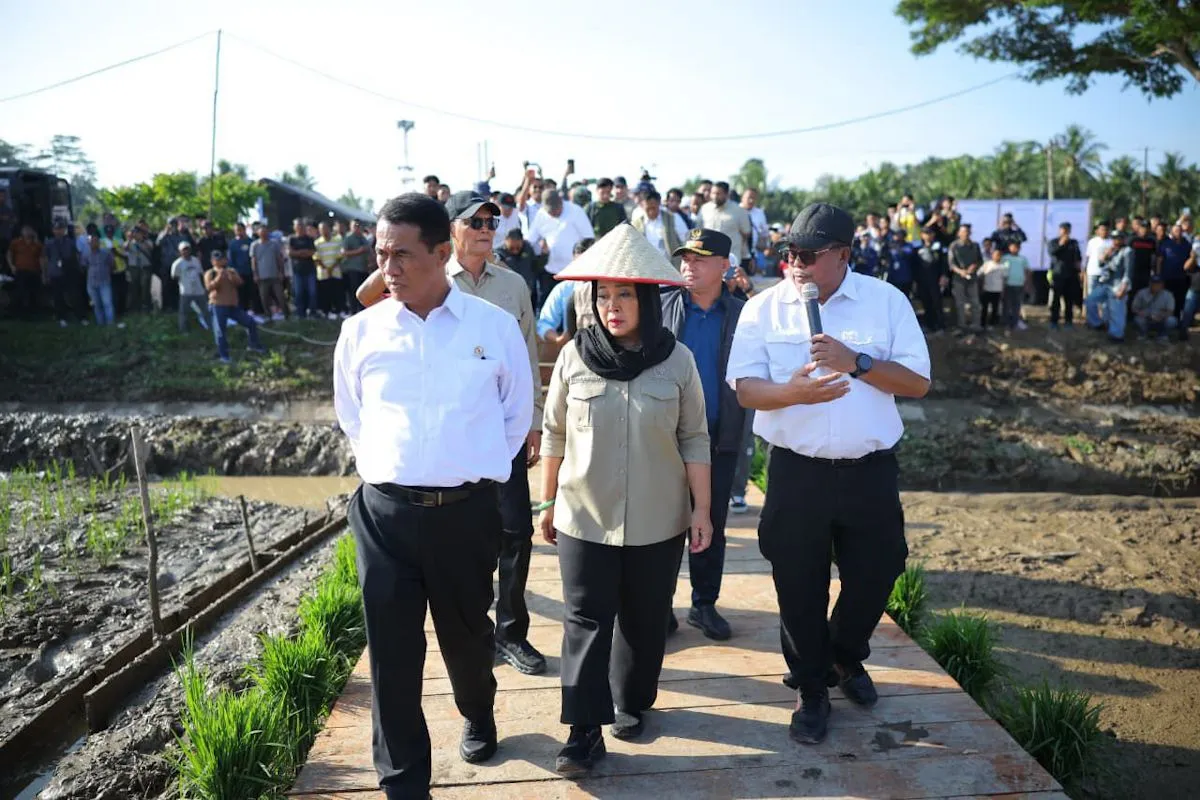
Jakarta, February 17, 2026 – The Europe Today: Indonesia’s Agriculture Ministry has allocated Rp336 billion (approximately US$21.6 million) to accelerate the rehabilitation of flood-damaged rice fields across Sumatra, aiming to swiftly restore production and safeguard regional food supplies.
The funding will support recovery efforts in Aceh, North Sumatra, and West Sumatra, with priority given to lightly and moderately damaged paddies to enable farmers to resume planting as soon as possible, the ministry said on Sunday.
According to Hermanto, Director General of Agricultural Land and Irrigation, the initiative follows a nationwide groundbreaking program launched on Jan. 15, 2026, and forms part of the government’s broader strategy to reinforce national food security.
Rehabilitation efforts are being expedited despite forecasts from the Meteorology, Climatology and Geophysics Agency indicating that rainfall from January to March will remain at moderate to high levels, posing continued operational challenges.
“Our priority is to quickly rehabilitate rice fields and repair damaged irrigation systems so they can be reused by farmers,” Hermanto said, noting that persistent rainfall has required technical teams to adapt field strategies.
Heavy rains in several districts have delayed sediment removal, prompting additional surveys to reassess the extent of damage and recalibrate associated costs, including sediment disposal and irrigation channel clearing.
Rehabilitation measures are being tailored to the level of damage. Lightly affected areas are being addressed through land optimization programs, while moderate to severe damage is targeted with specialized rehabilitation focused on land clearing and infrastructure repair.
The ministry has allocated optimization works covering 32,000 hectares, including land clearing, reshaping, irrigation repairs, soil processing, and land reuse, in line with directives from Agriculture Minister Andi Amran Sulaiman.
An additional 9,900 hectares have been designated for specialized rehabilitation, involving sediment removal, land leveling, drainage construction, irrigation excavation, and improvements to farm-level infrastructure.
The program is being rolled out in three phases—technical planning, construction, and land preparation—with provincial governments finalizing technical designs in partnership with universities and adjusting budgets to reflect field conditions.
Beyond infrastructure repair, the initiative also strengthens governance mechanisms, technical assistance, and monitoring systems, while actively involving local farmers and regional authorities to ensure interventions align with on-the-ground needs.
“This collaborative approach is expected to restore rice field productivity, expand planting areas, and improve farmer livelihoods, while ensuring timely, high-quality, and targeted rehabilitation,” Hermanto added.