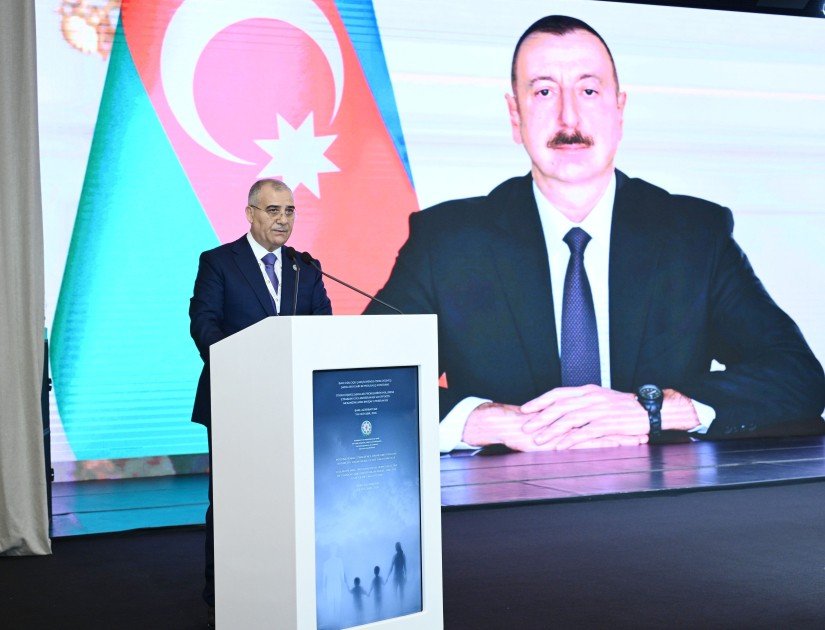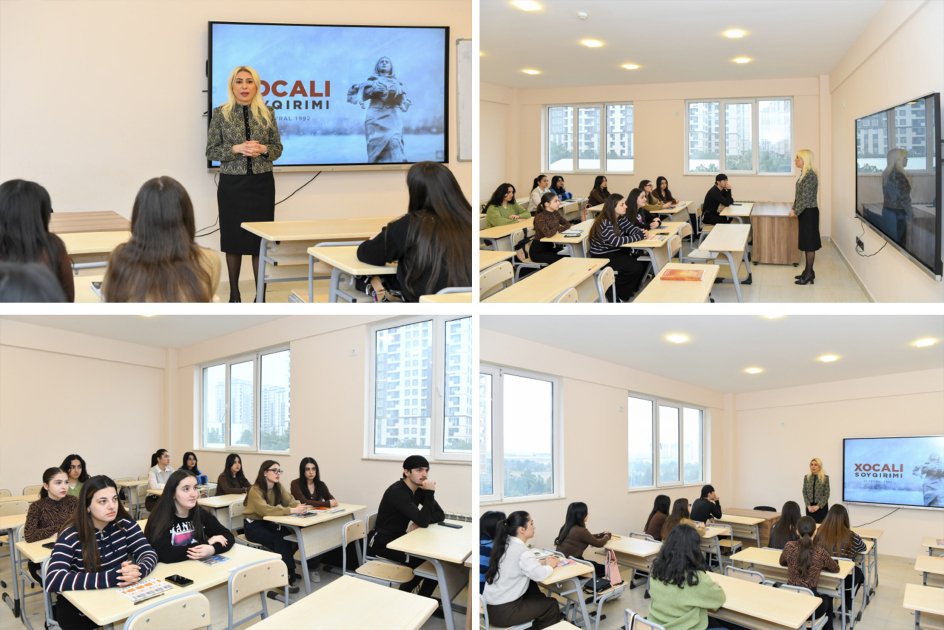
Baku, February 27, 2026 – The Europe Today: A series of open lessons dedicated to the Khojaly genocide has been organized for students at Baku Engineering University (BEU), focusing on a comprehensive and fact-based analysis of the historical and political significance of the tragedy, as well as its causes and far-reaching consequences.
During the sessions, speakers described the Khojaly genocide, which occurred on the night of February 25–26, 1992, as a grave crime against humanity. They stressed that the mass killing of civilians represents a blatant violation of international humanitarian law and must be recognized not only as a crime against the Azerbaijani people, but as a crime against all humanity.
Participants highlighted that the true political and historical assessment of the tragedy began after the return of National Leader Heydar Aliyev to power in 1993. In February 1994, the National Assembly provided an official political and legal evaluation of the events and declared February 26 as the “Day of Khojaly Genocide and National Mourning.”
The speakers also underscored that historical justice was restored during the 44-day Patriotic War in 2020 under the leadership of President and Victorious Supreme Commander-in-Chief Ilham Aliyev, alongside the heroism of the Azerbaijani Armed Forces. They further noted that the country’s territorial integrity and sovereignty were fully restored following the one-day anti-terror measures carried out in September 2023, during which Khojaly was liberated from separatist forces.
Emphasis was placed on the lasting impact of the Khojaly genocide on the historical memory of the Azerbaijani people and the continued importance of efforts aimed at securing international recognition of the tragedy. Speakers stressed the responsibility of the younger generation to counter attempts to distort historical facts through scholarly research and evidence-based arguments.
They also noted that preserving national memory, honoring the martyrs, and strengthening civic consciousness remain key priorities for higher education institutions.
The open lessons, aimed at fostering patriotism among students, concluded with interactive discussions in which participants shared their views, posed questions, and engaged in in-depth exchanges on the subject.