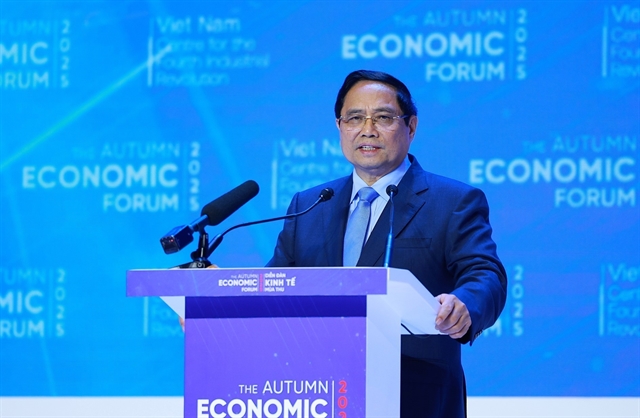
HCM City, November 28, 2025 – The Europe Today: The Autumn Economic Forum 2025 concluded on November 27 in Hồ Chí Minh City with outcomes far exceeding expectations, marking a significant milestone in Việtnam’s growing international leadership and signalling a new phase of global economic cooperation.
This year’s forum — the first held under the city’s newly consolidated administrative structure — highlighted a strategic shift in urban governance and international engagement. It also inaugurated a deeper partnership between HCM City and the World Economic Forum (WEF), reinforcing links between global policy trends and Việtnam’s long-term development ambitions.
The event brought together more than 1,500 domestic and international delegates, nearly 100 foreign missions, and experts from leading global innovation centres. Supported by the city’s People’s Committee, national ministries and the WEF’s Centre for the Fourth Industrial Revolution, the forum provided a platform for substantive policy dialogue among senior government leaders, multinational corporations, development organisations and research institutions.
City Enters Transformative Phase
In his keynote address, Secretary of the city’s Communist Party Committee Trần Lưu Quang said HCM City — home to over 14 million people and contributing nearly one quarter of Việtnam’s GDP — had entered a pivotal period of transformation. The city’s future competitiveness, he said, would be defined not by scale but by innovation, governance quality, global connectivity and knowledge-driven growth.
Quang noted that the city’s new spatial development strategy adopts a multi-centre model to ensure balanced development across districts. High technology, advanced manufacturing and digital transformation — particularly in semiconductors, big data, and smart microelectronics — are expected to anchor future productivity.
He outlined plans to strengthen logistics and trade services to deepen integration into global supply chains, and reiterated the city’s ambition to establish an international financial centre connecting regional and global capital markets. Cultural industries, education and healthcare will also be elevated to enhance the city’s soft power and equip future generations with the skills needed to lead in science and technology.
AI Takes Centre Stage
Artificial intelligence emerged as one of the forum’s most prominent themes. WEF Managing Director Dr Stephan Mergenthaler emphasised the shift from an industrial to an intelligent economy, where data and responsible AI deployment determine competitiveness.
Citing WEF projections, he said 86% of global companies expect AI to reshape operations by 2035, potentially eliminating 92 million jobs but generating 170 million new roles requiring creativity, advanced digital literacy and adaptability. He stressed the need to preserve human independence of thought to ensure long-term scientific and business leadership.
Mergenthaler praised Việtnam’s youthful, dynamic workforce and strong potential to lead AI adoption in Asia, provided the country maintains robust ecosystems guaranteeing transparency, security and international cooperation.
Major multinational corporations reaffirmed their confidence in Việt Nam’s policies. Amazon committed to strengthening support for SMEs, Nokia expanded cooperation in smart urban networks, PepsiCo expressed interest in circular production systems, and Foxconn Industrial Internet identified Việt Nam as a strategic manufacturing base for AI-related components.
Foxconn Chairman Brand Cheng said Việt Nam’s stable growth and rapid gains in electronics exports demonstrated its rising importance in the global technology ecosystem.
Asia’s Dual Transition: Climate and Digital
Regional leaders at the forum underscored that climate action and digital transformation must go hand in hand as Asian economies confront rising energy demand, industrialisation pressures and climate commitments.
Cambodian minister Hem Vanndy called for greater regional alignment in taxation, logistics and standards to maintain competitiveness during the low-carbon transition. Malaysian minister Chang Lih Kang stressed that digitalisation must remain people-centred, while China’s representative Long Quoqiang reaffirmed China’s commitment to open knowledge exchange and highlighted how digital technologies have enabled large-scale renewable energy deployment.
Speakers agreed that Asia — home to some of the world’s fastest-growing economies — is strategically positioned to lead global sustainable growth over the next two decades. Cross-border data flows, aligned standards and enhanced green investment were identified as crucial enablers.
Prime Minister: Translate Ideas into Action
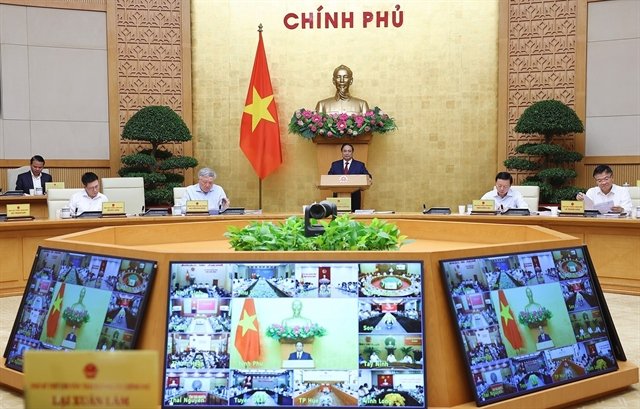
Prime Minister Phạm Minh Chính commended the forward-looking proposals put forward throughout the forum and emphasised a development approach based on shared benefits and inclusive growth.
He urged ministries and local authorities to study the forum’s conclusions and develop actionable roadmaps. The Prime Minister called for urgent reviews of land management, investment, clean energy and environmental regulations to remove bottlenecks that hinder business expansion and innovation.
Administrative reform, he said, would remain a core government priority, with efforts focused on simplifying procedures, cutting unnecessary regulations and enhancing competitiveness. Support policies will be strengthened for strategic sectors, including high-tech manufacturing, green technology and financial services.
PM Chính proposed that the Autumn Economic Forum be transformed into an annual WEF-backed event hosted in Việtnam — akin to WEF meetings in Tianjin and Dalian — to further bolster Việtnam’s role in global economic governance and attract investment into emerging technology and innovation hubs.
City Commits to Bold Reform Agenda
HCM City People’s Committee Chairman Nguyễn Văn Được affirmed the city’s full commitment to collaborating with international partners and the private sector during the 2026–2030 period.
Được said the forum challenged the city to accelerate reforms and deliver outcomes that match the expectations of both citizens and global partners. He underscored the need to strengthen institutional capacity, expand digital infrastructure and develop a skilled workforce capable of leading advanced scientific and technological fields.
He emphasised that the next five years will be pivotal in transforming HCM City into not only a major economic centre, but a globally recognised hub of innovation.