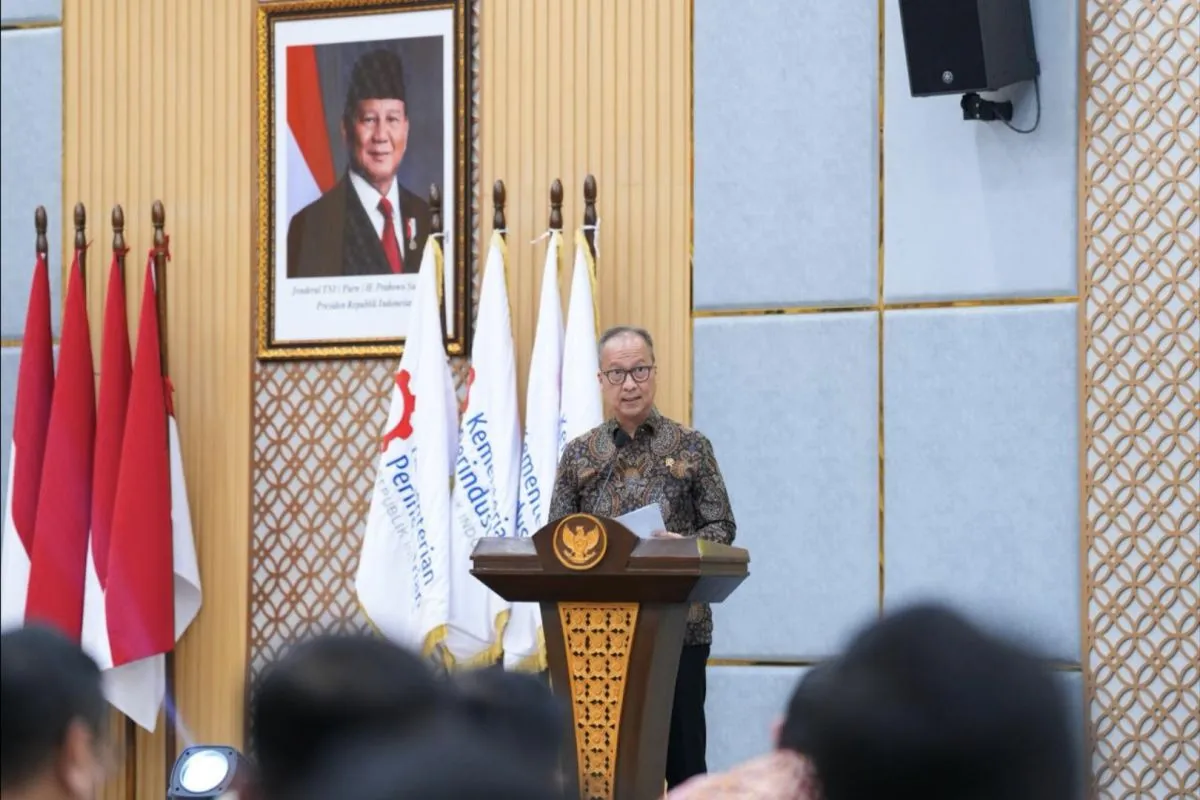
Jakarta, December 31, 2025 – The Europe Today: Indonesia’s Ministry of Industry has underscored the availability of highly skilled human resources as a key prerequisite for accelerating national industrialization and realizing the country’s long-term development goals.
In a statement issued in Jakarta on Tuesday, Industry Minister Agus Gumiwang Kartasasmita said that in line with the Astacita national development vision—particularly its industrialization pillar—the ministry continues to strengthen the foundations of national industry by preparing competent and globally competitive human resources.
Throughout 2025, the ministry produced 7,691 industry-ready workers under the National Industrialization New Strategy (SBIN), which focuses on developing high-quality industrial human capital, the minister noted.
“Astacita, as the national development mission, emphasizes the development of superior human capital, accelerated industrialization, sustainable downstreaming, as well as digital transformation and technological innovation. All of these agendas require the availability of competent industrial human resources as the main driving force,” Agus said.
He explained that the achievement was the result of a range of strategic programs implemented by the Ministry’s Industrial Human Resources Development Agency (BPSDMI), covering industrial vocational education and training as well as the strengthening of Industry 4.0 competencies.
BPSDMI Head Doddy Rahadi said that in 2025, vocational higher education institutions and vocational high schools under the ministry graduated 5,386 students whose competencies were aligned with the needs of the manufacturing industry.
“Kemenperin’s vocational graduates are prepared to be job-ready and adaptive to technological developments in the industry. As a result, the absorption rate of graduates into the industry in 2025 reached 68 percent immediately after graduation and is expected to reach 100 percent within six months,” Doddy said.
Currently, the ministry oversees 11 polytechnics, two community academies and nine industrial vocational high schools across Indonesia. The strong graduate absorption rate has also boosted public interest in industrial vocational education. Under the 2025 Industrial Vocational Admission Pathway (JARVIS), 82,800 applicants registered for polytechnics and community academies, while 28,800 applied to vocational high schools.
The applicant-to-seat ratio reached 1:18.2 for polytechnics and community academies and 1:10 for vocational high schools.
In addition to formal education, BPSDMI strengthened the competencies of existing industrial workers through vocational training programs. During 2025, a total of 2,305 industrial workers received training at seven Industrial Training Centers, covering skilling, reskilling, upskilling and industry-partnership-based training.
In line with the Making Indonesia 4.0 initiative, BPSDMI, through the Indonesia Digital Industry Center (PIDI) 4.0, also organized Industry 4.0-based training programs attended by 130 participants. The agency further provided assistance and consultation on Industry 4.0 implementation to three industrial companies to help accelerate digital transformation.
To support career development, BPSDMI cooperated with 48 Professional Certification Bodies to facilitate competency certification for 190 industrial workers. The agency also continues to develop and update the Indonesian National Work Competency Standards (SKKNI) and the Indonesian National Qualifications Framework (KKNI) to ensure workforce competencies remain aligned with industry needs.
Beyond preparing job-ready workers, BPSDMI has encouraged the creation of new industrial entrepreneurs through its Industrial Training Center Business Incubator program. Throughout 2025, the program supported 27 new entrepreneurs across various industrial sectors, generating total revenues of Rp8.6 billion.
The Ministry of Industry has also actively supported the National Internship Program to accelerate the readiness of young workers before entering the industrial workforce. In the program’s third batch, the ministry offered 635 internship positions across 54 work units, attracting 13,377 applicants.