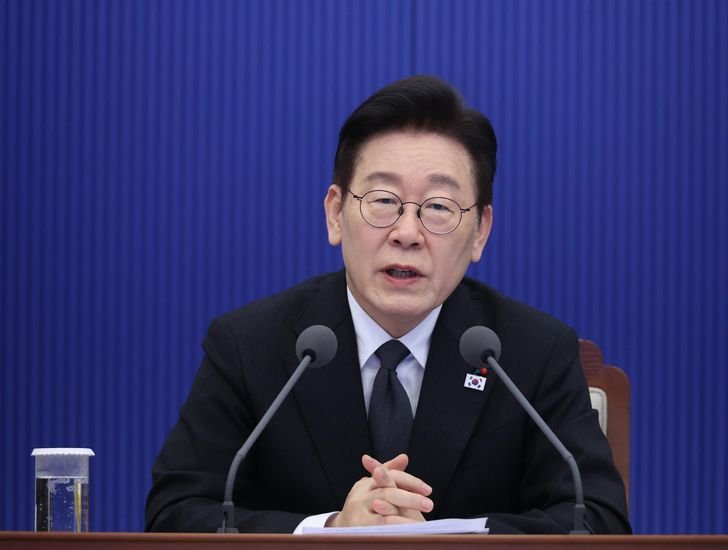
Seoul, February 1, 2026 — The Europe Today: President Lee Jae Myung on Sunday urged a candid and open public debate on his proposal to introduce a levy on sugar-laden foods and beverages, reiterating that the measure is aimed at reducing excessive sugar consumption and strengthening public health care.
In a post on social media, President Lee said that complex policy issues involving diverse stakeholders require transparent discussion and public deliberation grounded in facts and logic. He grouped the proposed sugar levy alongside other sensitive policy areas, including real estate tax reform and institutional measures to ease social polarization.
“The more complex the issues we have — such as the sugar levy, a real estate tax overhaul, and institutional reforms to ease polarization — the more vital it is to have candid debate and public deliberation grounded in logic, facts, and real cases,” Lee said.
The President cited a World Health Organization recommendation calling on countries to raise the prices of sugar-loaded soft drinks and beverages by at least 50 percent as part of efforts to curb sugar consumption and improve public health outcomes.
Lee stressed that the proposed sugar levy is intended for specific purposes related to public health and should not be viewed as a general tax increase. He emphasized that excessive sugar intake poses risks to public health and that targeted measures are needed to address the issue.
While acknowledging the legitimacy of differing opinions, Lee said he would not accept opposition based on distortion or misrepresentation of the proposal. “We should ensure that people can express opposing views confidently in the public forum,” he said, adding that he rejects attempts to frame the initiative as a tax hike for political gain while ignoring long-term national interests and the fair distribution of health insurance premiums.
The proposal has sparked public discussion since it was first raised earlier this week, with supporters pointing to potential health benefits and critics voicing concerns over consumer costs and economic impact.