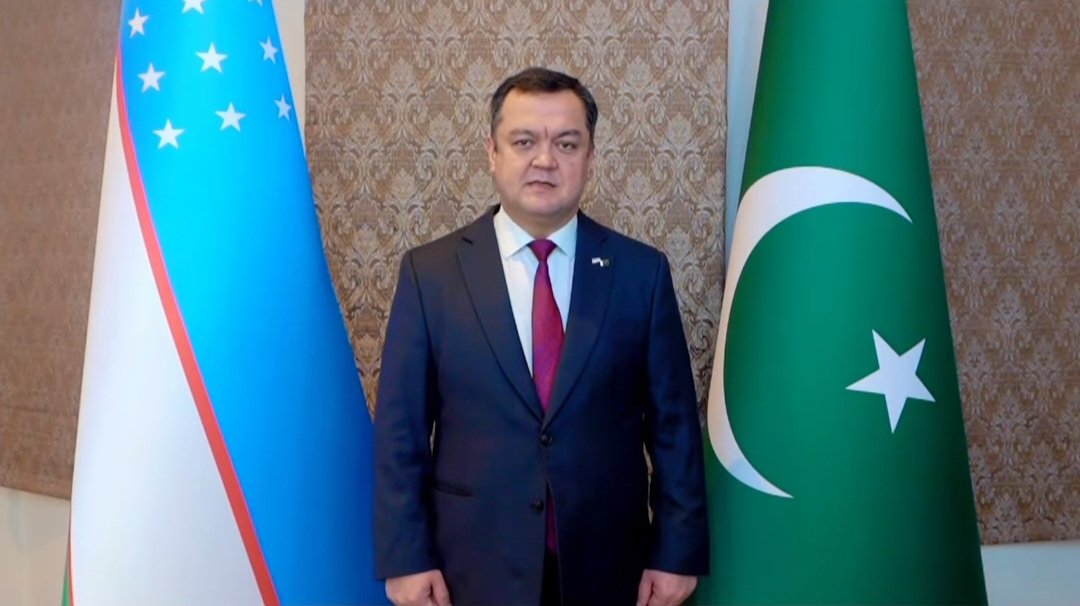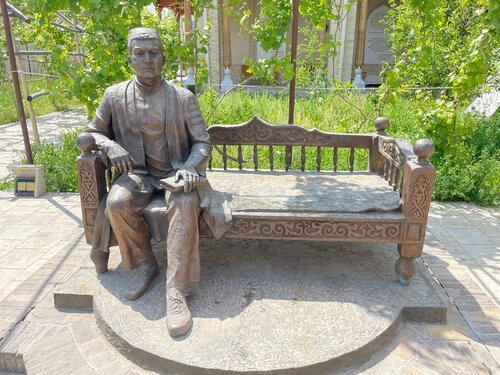
“The ideas of the Jadids are fully aligned with the strategy of the New Uzbekistan.”
— Shavkat Mirziyoyev
INTRODUCTION
The late nineteenth and early twentieth centuries in the history of the Uzbek people, though relatively brief in chronological terms, represent a period of profound significance in their historical development. During this time, the reformist and enlightened Jadid movement, which emerged on the historical stage, was not confined to reforms in education, the press, literature, and the arts. Rather, it brought about a deep transformation of the cultural, intellectual, and spiritual life of the peoples of Central Asia, or at the very least, initiated actions of exceptional scope and lasting value in this direction.
Jadidism was grounded in a fundamental conviction: education is the key to social transformation. The Jadids believed that the backwardness of Turkestan (Central Asia) did not stem from Islam itself, but from its rigid interpretations and from the intellectual isolation in which the region had been confined. Consequently, they advocated a comprehensive reform of the educational system based on modern teaching methods, the instruction of contemporary sciences, foreign languages, and the cultivation of critical thinking. At the same time, they sought to reconnect the region with the wider world—namely the Middle East, the Caucasus, Europe, and Türkiye. The notion of connectivity that is widely discussed today was already championed by the Jadids more than a century ago.
For the members of the Jadid movement, knowledge was not to be exclusively religious, but rather to encompass religious, secular, and modern dimensions. This holistic vision of education aimed to form individuals capable of understanding their time, engaging with the world, and serving their society. In this context, the school became a central instrument of national and moral renewal.
From the perspective of Uzbekistan, Jadidism appears not as a rupture, but as an organic reconnection with the great Timurid tradition—that of Amir Timur and Ulugh Beg—when Samarkand and Bukhara stood among the world’s leading centers of knowledge, science, and art.
What Is Jadidism?
An examination of the etymology of the term Jadid, which forms the root of the word Jadidism, reveals that jadid means “new” or “the opposite of old,” while its derivative conveys the sense of “renewal” or “restoring something to its original vitality” (Kıllıoğlu, ME, 2019). The term Jadid entered political and historical discourse in 1884, following the establishment in Crimea by İsmail Gaspıralı of the Schools of the New Method (Usul-i Jadid).
Jadidism, also known as Usul-i Jadid (“New Method”), thus represents a cultural, intellectual, and political movement that emerged in Central Asia—alongside similar developments in other parts of the Islamic world—between the late nineteenth and early twentieth centuries. At its core, Jadidism constituted a response to the growing influence of Western modernity and its transformative power.
This movement first sought to identify the causes behind the Islamic world’s loss of political, military, economic, and cultural superiority vis-à-vis the West. Having diagnosed these challenges, the Jadids aimed to formulate context‑appropriate solutions to address them.
As demonstrated by the practices of one of the movement’s most prominent figures, İsmail Gaspıralı, the primary and most effective solution was believed to lie in educational reform. The Jadids viewed the education of society as the cornerstone of renewal. To this end, an innovative educational system known as Usul‑i Jadid was developed, introducing a fundamentally new pedagogical approach based on modern teaching methods, structured curricula, and broader intellectual horizons (Kıllıoğlu, ME, 2019).
Although Jadidism was not limited to Central Asia, the movement in Turkestan was primarily shaped by intellectuals from Tashkent, Samarkand, Bukhara, and Khiva. According to Normo‘minovich (2025), it was precisely this intellectual stratum that played a decisive role in forming the national consciousness of the Muslim population of Turkestan. In fact, many of the most influential Jadid thinkers of Central Asia originated from what is today Uzbekistan.
School Reforms
Educational reform stood at the very heart of Jadidism. The movement sought not only to modernize schooling but also to redefine education as a tool for societal transformation. As an intellectual reform movement, Jadidism incorporated innovative and progressive approaches, particularly in the fields of education and culture, while also extending its influence to the broader social structure (Çetinbaş, U., 2025).
Indeed, according to several scholars, the intellectual currents of the Western Enlightenment found expression in the Islamic world largely through the educational reforms associated with Usul‑i Jadid (Akyol, 1993). Through these reforms, the Jadids aimed to cultivate critical thinking, scientific knowledge, and social responsibility—laying the foundations for a modern, enlightened society.
The first Jadid schools in Turkestan were opened in 1890 in Fergana and in 1893 in Samarkand, according to Kıllıoğlu (2019).
The Jadids sought not only to transform the social order but also to reform and renew the spiritual life of society. To this end, they established schools offering modern education, while simultaneously publishing newspapers, magazines, and textbooks devoted to the natural and experimental sciences. Recognizing the necessity of learning and applying the sciences and technologies of more developed countries, the Jadids laid the foundations for the emergence of a national consciousness among the people by renewing and enriching spiritual life through education.
Members of the Jadid movement insisted that, alongside religious instruction, secular sciences should also be taught in order to achieve their reformist objectives.
Within this context, numerous innovative schools were opened, teachers were trained in new pedagogical methods, and modern textbooks were published. From this period onward, a group of Central Asian intellectuals—advocates of Usul‑i Jadid, commonly referred to as the Jadids—embarked on a process of modernization that gradually evolved into a broader movement for awakening and enlightenment, according to Narziqulovna (2026).
The Importance of the Press
At the end of the nineteenth and the beginning of the twentieth centuries, the Muslim intelligentsia actively used the press to disseminate its ideas. Newspapers and magazines became essential instruments for spreading reformist thought, concepts of Islamic unity, and visions of modernization. In Bukhara, the first Muslim press outlets were established as early as the 1880s.
Major Figures of the Movement
The most prominent figures of Jadidism in Central Asia were Uzbeks, among whom the most influential were Mahmudxo‘ja Behbudiy, Munavvar Qori Abdurashidxonov, Abdurauf Fitrat, and Cho‘lpon. These thinkers shared a common ambition: to build a society conscious of its identity, in control of its destiny, and committed to the path of progress.
Mahmudxo‘ja Behbudiy
Mahmudxo‘ja Behbudiy, considered one of the founding figures of Jadidism, played a pivotal role in the development of the national press and in shaping modern educational thought. In his writings, he emphasized the responsibility of the younger generation and the necessity of sending students abroad to acquire modern knowledge in the service of their homeland, as noted by Kıllıoğlu (2019).
In Behbudiy’s view, when individuals are united around a shared national idea, each member of society begins to regard the national interest as their own personal interest; consequently, no one withdraws from collective actions that serve the common good and benefit the nation.
A close collaborator of İsmail Gasprinskiy in Turkestan, Behbudiy firmly believed that the reform of primary and secondary education would inevitably lead to the reform of the nation itself. According to him, national reform was inseparable from the formation of a national idea, which had to be actively promoted and embraced by society as a whole.
Jadid doctrine was a genuinely authentic intellectual movement of its time, as it succeeded in inspiring not only progressive thinkers but also reflective and socially conscious youth. The Jadids emphasized that young people who had reached maturity should become active fighters for the future and prosperity of Turkestan, and they insisted on freeing the younger generation from moral vices, ignorance, and social stagnation.
For instance, Mahmudxo‘ja Behbudiy warned young people against harmful habits, explained their negative consequences, and raised awareness of their destructive effects on both individuals and society.
He envisioned a generation of healthy, intelligent, and well‑educated children who, after acquiring knowledge, would become doctors, lawyers, economists, and other modern professionals dedicated to serving Turkestan. The Jadids, who placed educational reform at the center of their mission, clearly understood that young people needed to be capable of defending national independence, addressing problems of economic and political dependency, and assuming leadership roles equipped with modern knowledge and skills.
The Jadids aspired to raise the cultural and intellectual level of society to international standards and believed that achieving this goal required educating young people in the best educational institutions of Europe. On this subject, Mahmudxo‘ja Behbudiy wrote in the journal Oyna:
“Let a portion of the money spent on festivals and ceremonies be used to send children and students to Mecca, Medina, Egypt, Istanbul, as well as to universities and capitals of Russia, in order to educate individuals who are religious, secular, and modern.”
Abdurauf Fitrat
Abdurauf Fitrat was born in 1886 in Bukhara. One of the most prominent figures among the Uzbek Jadids, he lived in Bukhara until 1909, when he traveled to Istanbul to pursue his studies. Between 1909 and 1913, Fitrat studied at the Darülfünun (University of Istanbul) and, beyond his formal education, actively participated in intellectual life as a member of the Society of Bukharans Residing in Istanbul.
In addition, he maintained close relations with the editors of the journal Taʿāruf‑i Müslimīn, in which he published several articles. His earliest literary and intellectual works were written during his time in Istanbul, a period that played a decisive role in shaping his reformist worldview.
In his articles, Fitrat repeatedly emphasized the importance of the printed word, that is, written expression, as a fundamental instrument of intellectual enlightenment. He argued that Muslims needed to master European sciences in order to protect themselves and ensure their survival in a rapidly changing world. According to Fitrat, “the sciences possessed by Christians were the reason for their victories over Islam.”
To legitimize his views, Fitrat frequently referred to Qur’anic evidence, stressing that the study of European sciences was not incompatible with the principles of Sharia (Abdirashidov, Z., 2025). In his interpretation, the pursuit of knowledge—regardless of its geographical origin—was a religious and moral obligation.
Fitrat is also renowned for his philosophical and literary works, notably Munozara (The Debate) and Hind Sayyohi (The Indian Traveler), which are often regarded as intellectual manifestos of Jadidism. Through a lucid and critical examination of the society of his time, he called for a profound intellectual, moral, and cultural awakening of the people.
Abdulla Avloniy
Abdulla Avloniy was one of the most prominent figures of the Jadid movement and a leading advocate of enlightened education. He was born in 1856 in the village of Avlon, located in what is now the Ferghana Valley of Uzbekistan. Avloniy is best known for his active commitment to the advancement of science, education, and culture. In his works, he encouraged students to acquire modern knowledge, uphold moral values, and preserve national identity.
Avloniy also published the journal Ma’rifat (“Enlightenment”), through which he sought to promote profound social transformation. His intellectual and pedagogical activity was directed toward the renewal of society, the pursuit of social justice, and the safeguarding of national consciousness. He was among the first to stimulate interest in the study of world literature within the educational system and, through his writings, contributed significantly to the formation of a new, enlightened generation (Farxodjon o‘g‘li, S. B., 2024).
Youth at the Heart of the Jadid Project
The question of forming a successful and well‑rounded generation (barkamol avlod) occupied a central place in Jadid thought. The Jadids regarded youth as the primary driving force of social change. Their objective was to educate young people who were not only intellectually competent, but also morally responsible, patriotic, and capable of independent and critical thinking.
According to the Jadid vision, a successful generation should embody several essential qualities: mastery of modern knowledge, attachment to national values, critical thinking, creativity, and a strong sense of social responsibility. Education was therefore intended to produce doctors, lawyers, teachers, economists, and intellectuals capable of leading Turkestan toward independence and prosperity.
Jadidism and the Mother Tongue
The Jadids made a major contribution to the preservation, development, and consolidation of the mother tongue as a core element of national identity. According to Raxmatullayevna, A. M. (2025), the Jadids placed particular emphasis on the role of the mother tongue in the intellectual and cultural awakening of society.
In Central Asia, many of the most influential literary figures originated from present‑day Uzbekistan. From Alisher Navoiy to Mahmudxo‘ja Behbudiy, these thinkers enabled Central Asian languages to develop rich literary traditions that attained a level of prestige comparable to that of Western literatures. While the classical foundations of Uzbek literature were laid during the era of Navoiy, it was at the end of the nineteenth and the beginning of the twentieth centuries that the Jadid movement undertook the task of adapting the language to the demands of modernity, making it more accessible to the people and standardizing its norms (O‘tkir ovna, E. M., 2025).
The Jadids viewed the Uzbek literary language as a fundamental instrument of national renewal. They placed language at the very center of their efforts to draw the population toward knowledge and education, to establish a modern educational system, and to cultivate a strong national consciousness. For this reason, Jadid activity holds particular importance in the process of standardizing the Uzbek literary language.
The Jadids sought to simplify the old written language, which had been complex and heavily influenced by Arabic and Persian elements. They promoted a language that was simple, clear, and expressive, and therefore understandable to the broader population. This process played a crucial role in shaping the lexical norms of literary Uzbek. Through newspapers and magazines such as Taraqqiy, Shuhrat, and Sadoi Turkiston, the Jadids widely disseminated the literary language and contributed to the popularization of an accessible and people‑oriented style (O‘tkir ovna, E. M., 2025).
In addition, the Jadids worked toward the establishment of unified spelling rules. Through the compilation of dictionaries and extensive translation activities, norms of orthography and pronunciation were gradually consolidated. Fitrat’s work entitled O‘zbekcha til saboqlari (Lessons in the Uzbek Language) became an essential reference in the formation of orthographic standards.
Attaching great importance to the culture of speech and the ethics of discourse, the Jadids also sought to standardize the literary language in oral communication. In Abdulla Avloniy’s work Turkiy guliston yoxud axloq (The Turkish Garden or Ethics), the purity, clarity, and fluency of speech are examined from both pedagogical and moral perspectives. The literary and pedagogical legacy of the Jadids continues to play a significant role in the development of the Uzbek literary language to this day.
Through the standardization of language, the Jadids aimed to awaken national consciousness and to guide the people toward science and education, which they regarded as the essential foundations of social progress.
Among the Jadids who carried out remarkable educational activities and contributed significantly to the enrichment of the language through their writings, the role of Mahmudxo‘ja Behbudiy is particularly noteworthy. He regarded the Turkic language as a fundamental pillar of national identity and viewed its use in the educational process as the most effective means of societal renewal (Raxmatullayevna, A. M., 2025).
Jadidism, Language, and Literary Norms
Furthermore, the Jadids did not perceive language solely as a means of national unity. They also sought to develop it as a tool capable of integrating new scientific concepts, knowledge, and innovations. The Jadids fully understood that language was essential not only for cultural development, but also for scientific and technological progress.
The norms of the literary language constituted one of the principal ideological foundations of the Jadid movement. In this respect, the novel Kecha va kunduz (Night and Day) by Cho‘lpon played a decisive role in consolidating the popular language as a literary norm, according to O‘tkir ovna, E. M. (2025).
Jadidism and Women
The Jadid movement also included a significant number of women intellectuals who pursued studies abroad with the aim of contributing to the cultural, scientific, and intellectual elevation of their nation. Among them were Maryam Sultonmurodova and Xayriniso Majidxonova.
Xayriniso Majidxonova continued her studies in Germany, where she first attended a technical institute and later studied at the university level, specializing in medicine and early childhood education. As noted by Yuldasheva and Xusanbayeva, “the Bolsheviks were particularly afraid of the Uzbek Jadidist Maryam Sultonmurodova.”
Above all, the Jadids succeeded in awakening within the consciousness of their contemporaries a deep sense of respect and consideration for women. They did not wish for the nation’s children to be raised by oppressed, disenfranchised, and humiliated women. The Jadids repeatedly emphasized the essential necessity of providing girls with the same educational attention as boys.
A visit to Shohi Zinda reveals that among the mausoleums dating from the time of Amir Timur, a significant number of tombs belong to women. Moreover, in Uzbekistan, there are numerous madrasas bearing women’s names, demonstrating that women have occupied a place of respect and recognition since ancient times, particularly during the Timurid period.
After completing her studies at the Tashkent Pedagogical Lyceum in 1919, Maryam Sultonmurodova pursued higher education at the Tatar Pedagogical Institute in Orenburg between 1920 and 1921. During the summer of 1921, upon returning to Khorezm, she was successively appointed head of the literary department and later the women’s department within the Central Council of the Communist Party of Khorezm.
The Bolshevik regime regarded Jadid women as a serious threat. Xayriniso Majidxonova was ultimately executed, and her books were deliberately burned. Among the destroyed works were medical textbooks brought back from Germany, children’s books, as well as literary works in German by Goethe and Schiller, and works in Uzbek by prominent writers such as Abdulla Qodiriy and Cho‘lpon.
This Jadid intellectual sacrificed her life for her nation. Tragically, Xayriniso Majidxonova was sentenced to death on the basis of unfounded accusations, and the sentence was carried out on 9 October 1938.
From the Timurid Renaissance to the Jadid “Modern Awakening”
Heritage and the Contemporary Relevance of Jadidism
Among the countries of Central Asia, Uzbekistan stands out as the only state that attaches sustained and institutional importance to the Jadid legacy. Even today, the Uzbek government continues to pursue ideas rooted in both Jadidism and the Timurid heritage, particularly in the fields of education, modernity, national identity, and youth policy.
Indeed, the Timurid era elevated Central Asia—and especially present‑day Uzbekistan—to the rank of a global center of knowledge. Amir Timur established a powerful state that served as a patron of the arts, sciences, and trade. His grandson, Ulugh Beg, the astronomer‑king, founded the Samarkand Observatory, employed leading scholars such as Qāḍīzāda al‑Rūmī and Ali Qushji, and compiled astronomical tables that became authoritative references for centuries.
Jadidism extended this Timurid intellectual heritage through different means, most notably through the modernization of education. By introducing the Usul‑i Jadid (“New Method”), the Jadids promoted contemporary sciences, active pedagogical approaches, and the teaching of foreign languages. At the same time, the movement revitalized national language and culture—theater, press, and literature—as instruments of intellectual elevation, much as the Timurid courts had once fostered artistic and literary flourishing.
The Jadids aspired to build a cultured, self‑reliant society open to the world, reminiscent of Timurid Samarkand, a historic crossroads of knowledge. Thus, from Amir Timur to Alisher Navoiy, and later to Abdurauf Fitrat, a shared conviction transcends the centuries: knowledge is power, culture and language are instruments of sovereignty, and education is the foundation of national strength.
The Jadids and the “New Uzbekistan”
Independent Uzbekistan presents itself today as the legitimate heir to a dual heritage: that of the Timurids and the Jadids.
The Jadid project was not limited to cultural and educational reform. Ultimately, it aimed to build a modern nation‑state founded on justice, civic participation, and political autonomy. This aspiration found its most complete expression in 1917, with the proclamation of the Kokand Autonomy, the first—and last—attempt to establish an independent state in modern Turkestan.
In the present day, President Shavkat Mirziyoyev has explicitly reaffirmed the relevance of Jadid ideals. Government policy emphasizes the Uzbek language as a language of knowledge, while also promoting functional linguistic pluralism, in the Jadid spirit of translation, comparison, and dialogue with the world. It is noteworthy that Oxford University recently began offering instruction in the Uzbek language, symbolizing the growing international recognition of Uzbek cultural and intellectual heritage.
By valorizing Amir Timur as a symbol of strength and dignity, and the Jadids as architects of modernity, Uzbekistan articulates a continuity of renaissance—from medieval intellectual brilliance to modern reformist thought.
As President Shavkat Mirziyoyev has stated, “the ideas of the Jadids are in harmony with the strategy of the New Uzbekistan.” This article thus establishes a direct link between the Jadids’ ideals of enlightenment, national awakening, and reform, and contemporary Uzbek policies in the areas of education, justice, and modernization.
Finally, when discussing modern regional frameworks such as the C5+1 format, it is worth recalling that Uzbek intellectuals had already envisioned a similar philosophy more than a century ago. As Mahmudxo‘ja Behbudiy wrote in his will:
“Cherish and protect all those who strive for enlightenment, spread knowledge, and do not leave the children of Turkestan without education.”
At the beginning of the twentieth century, Behbudiy dedicated his life to the spiritual and intellectual awakening of the Uzbek people. Likewise, Cho‘lpon sacrificed his life for the future of Central Asia—a tragedy echoed in his poignant verse:
“Beautiful Turkestan,
What has happened to you?”
President Shavkat Mirziyoyev’s statement that “the ideas of the Jadids are in harmony with the strategy of the New Uzbekistan” underscores the contemporary relevance of this intellectual legacy. This article therefore focuses on highlighting the influence of Jadid ideas—particularly those of Mahmudxo‘ja Behbudiy—on the reforms of the New Uzbekistan, while also offering a critical reflection on the moral challenges confronting modern society.
President Mirziyoyev has also emphasized that Behbudiy regarded the theatre as a “house of moral instruction”, advocating moral education through art. Contemporary reforms in Uzbekistan’s theatrical and cultural sectors—including the revival of the Tashkent International Film Festival and the inscription of elements of national heritage on UNESCO lists—represent a continuation of this Jadid vision.
Furthermore, the President announced that, starting in 2024, an annual allocation of 100 billion soms would be dedicated to strengthening spiritual and educational activities, alongside the adoption of a special resolution aimed at the systematic study of the Jadid legacy. As he declared:
“Whether people like it or not, our nation must continue along the path laid out by our Jadid ancestors.”
The opening of the State Museum of Jadid Heritage in Bukhara, the establishment of the Jadid newspaper, and the annual allocation of 100 billion soms for spiritual and educational initiatives constitute concrete measures designed to translate Jadid ideas into contemporary practice.
In shaping a well‑rounded and enlightened generation, a defining feature of Jadid activity lay in their determination to free Turkestan from the fragmentation inherited from the medieval period, to guide the people and the nation toward modern development, to build a national state, to construct a free and prosperous society based on modern administrative principles, and to promote the spirit of the Enlightenment (Shaxnoza, 2025).
As Mahmudxo‘ja Behbudiy wrote:
“In every country, initiatives and means of reform and culture begin to manifest themselves through the actions of the youth. Likewise, in Turkestan, the primary school—standing at the threshold of culture—and the national press, heralding awakening and reform, emerged through the energy of dynamic young people under the guidance of advocates of education.”
Finally, the initiatives implemented today under the leadership of President Shavkat Mirziyoyev are of particular significance, especially insofar as they aim to strengthen the nation’s human and intellectual potential, enhance the role of women in society, and create conditions conducive to their comprehensive development. Wide‑ranging opportunities are now available to women in Uzbekistan for education, professional advancement, and participation in innovative fields, echoing the legacy of Jadid women pioneers.
As the head of state has stated:
“Women are not only the pillars of the family, but also of society and the educators of the nation. The conditions created for them help strengthen the foundations of our future.”
Conclusion
The Jadid movement was far more than an educational reform; it constituted a profound intellectual, cultural, and national renaissance. By placing education, youth, and national consciousness at the center of their project, the Jadids laid the foundations of modern thought in Central Asia. Their struggle for an educated, free, and dignified society continues to inspire contemporary reflections on the future of post‑colonial societies and on the fundamental role of education in shaping national destiny.
Viewed from Uzbekistan, Jadidism is not merely a school reform movement of the early twentieth century. Rather, it represents the modern embodiment of an Uzbek intellectual genius whose roots extend back to Amir Timur and the Timurid Renaissance. The Jadids transformed historical memory into a forward‑looking project: to educate, publish, translate, retrain, and empower the younger generation.
Today, the Uzbek state extends this vision of power through knowledge, placing human capital, science, and culture at the core of a confident, open, and prosperous independence. In this continuity of renewal, Amir Timur stands as the symbol of political greatness, Ulugh Beg as the emblem of scientific excellence, and the Jadids as the architects of educational and intellectual awakening.
BIBLIOGRAPHY
Abdirashidov , Z. (2025). Abdurrauf Fitrat ‘s Islamic unity by freedom of the idea first teş ebb üsleri . NOSYON: International Society And Culture Their work Journal , (16), 38-47.
Akyol , T. (1993). Jadidism . Turkish Directorate of Religious Affairs . Encyclopedia of Islamic Foundation ( Vol. 7, pp . 211–213). Istanbul: Turkey Directorate of Religious Affairs. Foundation Publications .
Çetinbaş , U. (2025). UNITY IN LANGUAGE, THOUGHT AND WORK : AN EVALUATION ON THE CEDIDIST PEDAGOGY . Türkoloji , (124), 69-76.
Farkhodjan ogli , SB (2024). THE LIFE OF THE GREAT JADIDS AND THE SPREAD OF SPIRITUALITY AND ENLIGHTENMENT IN CENTRAL ASIA. CRITICAL VIEW, ANALYTICAL THINKING AND INNOVATIVE IDEAS , 1 (1), 6-12.
Kıllıoğlu , ME (2019). Czarism In Russia Credit / New Method Action Journal of Awareness ( JoA ) , 4 (1), 65-90.
Kilichboyevich , MD (2025). JADID’S ENLIGHTENMENT—THE SPIRITUAL ROOT OF THE DEVELOPMENT OF A NEW UZBEKISTAN. CRITICAL VIEW, ANALYTICAL THINKING AND INNOVATIVE IDEAS , 1 (1), 666-670.
Kun.uz. (2022, 3 May). One was shot , the other exile made : In Germany what he/she read for repression made Uzbek women . https://kun.uz/05396037 [kun.uz]
Narzikulovna , TOD (2026). FACTORS INFLUENCED THE WORLDVIEW OF THE JADIDS AT THE END OF THE 19TH AND BEGINNING OF THE 20TH CENTURIES . CRITICAL VIEW, ANALYTICAL THINKING AND INNOVATIVE IDEAS , 2 (8), 174-177.
Normo’minovich, SMR (2025). ACTIVITIES OF ENLIGHTENMENTAL NEWCOMERS. CRITICAL THEORY, ANALYTICAL THINKING AND INNOVATIVE IDEAS , 1 (1), 181-185.
U’tkirovna, EM (2025). THE ROLE OF JADIDS IN THE FORMATION OF UZBEKISTAN LITERARY LANGUAGE NORMS. DEVELOPMENT OF SCIENCE IN THE NEW RENAISSANCE , 1 (3), 482-484.
Rakhmatullayevna , AM (2025). THE JADIDIST MOVEMENT AND ITS PLACE IN UZBEKISTAN LITERATURE. CRITICAL VIEW, ANALYTICAL THINKING AND INNOVATIVE IDEAS , 1 (1), 338-341.
Rakhmatullayevna, AM (2025). THE JADIDIST MOVEMENT AND ITS PLACE IN UZBEKISTAN LITERATURE. CRITICAL VIEW, ANALYTICAL THINKING AND INNOVATIVE IDEAS , 1 (1), 338-341.
Shakhnoza, M. (2025). ISSUES OF ENLIGHTENMENT AND BALANCED GENERATION EDUCATION IN THE ACTIVITIES OF JADIDS. CRITICAL THEORY, ANALYTICAL THINKING AND INNOVATIVE IDEAS , 1 (1), 335-338.
TAŞKAYA, H., & ARSLAN, D. ABDURRAUF FITRAT and YOUNG (GEN Ç) SOCIETY OF BUKHARALI.
Tursunboyevna, RD (2025). THE JADID MOVEMENT IN TURKESTAN, REPRESENTATIVES OF THE JADID MOVEMENT AND THEIR ACTIVITIES. EDUCATIONSCIENCEIINNOVATIVEIDEABWORLD , 81 (1), 99-107.
Umarkul o’g , RJR (2025). STAGES OF DEVELOPMENT OF THE UZBEKI LANGUAGE. EDUCATION AND SCIENCE YESTERDAY AND TODAY , 1 (1).
Xasanovich, OT (2025). MODERN LEARNER MODEL IN EDUCATION OF NEW AGENCIES. JOURNAL OF PEDAGOGICAL RESEARCH , 3 (1), 302-305.
Yuldasheva , ZF, & Khusanbayeva , YB NEW UZBEKISTAN WOMEN ARE FOREVER IN OUR HEARTS. PHARMACEUTICAL EDUCATION AND RESEARCH INSTITUTE , 317
Historian and environmental management expert on Central Asia and researcher on Central Asia post-Soviet period. Journalist for EuReporter and EuReflect and Special Director of “The Gulf Observer” for Europe and Central Asia.