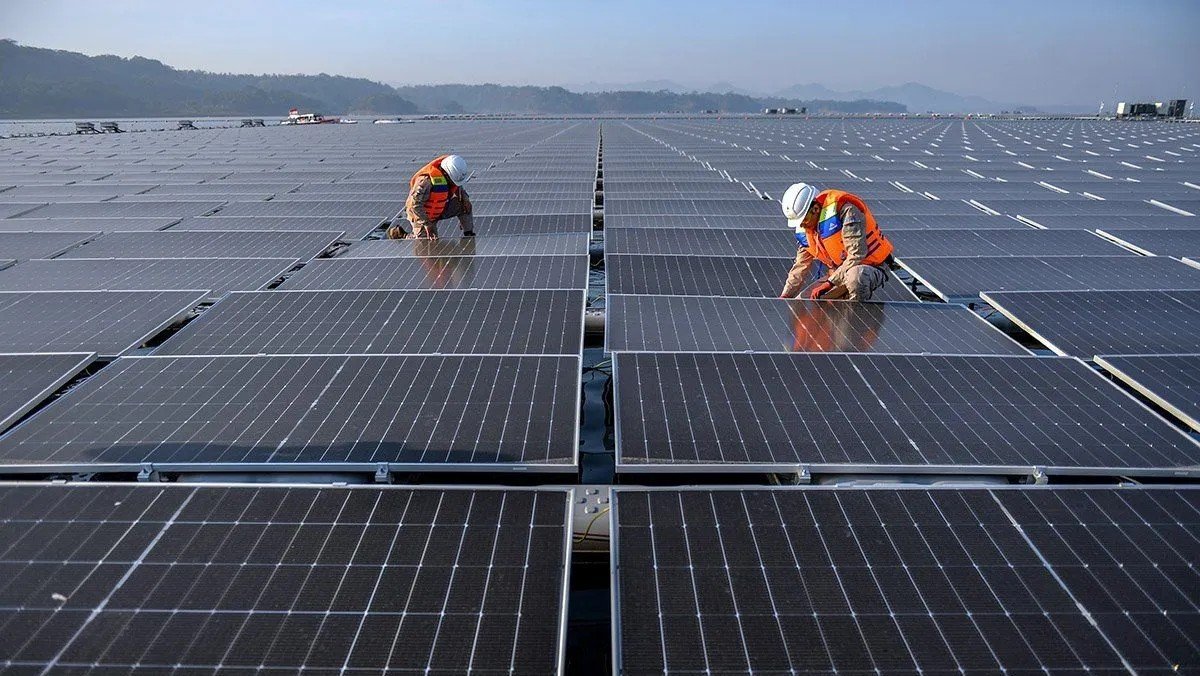
Jakarta, February 11, 2026 – The Europe Today: Indonesia has utilized approximately US$3.5 billion from financing allocations under the Just Energy Transition Partnership (JETP) and the Asia Zero Emission Community (AZEC) to support the development of its green economy, Coordinating Minister for Economic Affairs Airlangga Hartarto said on Tuesday.
The total green financing allocation for JETP programs in Indonesia stands at US$21.4 billion, while AZEC programs account for US$500 million, the minister noted.
“The acceleration of AZEC and JETP programs reflects Indonesia’s commitment to advancing the green economy,” Airlangga stated.
Strong Budgetary Support for Energy Security
In addition to international financing, the government has earmarked Rp404.2 trillion (around US$24 billion) in the 2026 State Budget to strengthen national energy security, including green economy initiatives.
To support this agenda, the government is preparing several major projects, including the Green Energy Corridor Sulawesi (GECS) and the Green Bond Development Facility (GBDF), both funded through JETP mechanisms.
Indonesia is also working to harness its vast renewable energy potential, estimated at 3,686 gigawatts, including plans to develop a 70-kilometer green supergrid to improve clean energy distribution.
Expanding Renewable and Low-Carbon Initiatives
Through superholding Danantara, the government is advancing a waste-to-energy power plant project scheduled to commence operations in March 2026.
Airlangga highlighted ongoing efforts to intensify downstream development of electric vehicle battery and solar panel industries, alongside expanding biofuel blends from B40 to B50.
Indonesia is also accelerating the development of sustainable aviation fuel, hydrogen and green ammonia, while advancing the implementation of Carbon Capture and Storage (CCS) and Carbon Capture, Utilization, and Storage (CCUS) technologies.
Job Creation and Sustainable Growth
According to the minister, the green economy is projected to create up to 4.4 million new jobs by 2029, supported by apprenticeship programs and sustainable skills development initiatives.
“The government remains committed to realizing energy security as a top national priority, alongside strengthening food security,” Airlangga said.
The measures underscore Indonesia’s broader strategy to align economic growth with climate resilience and sustainable development objectives.