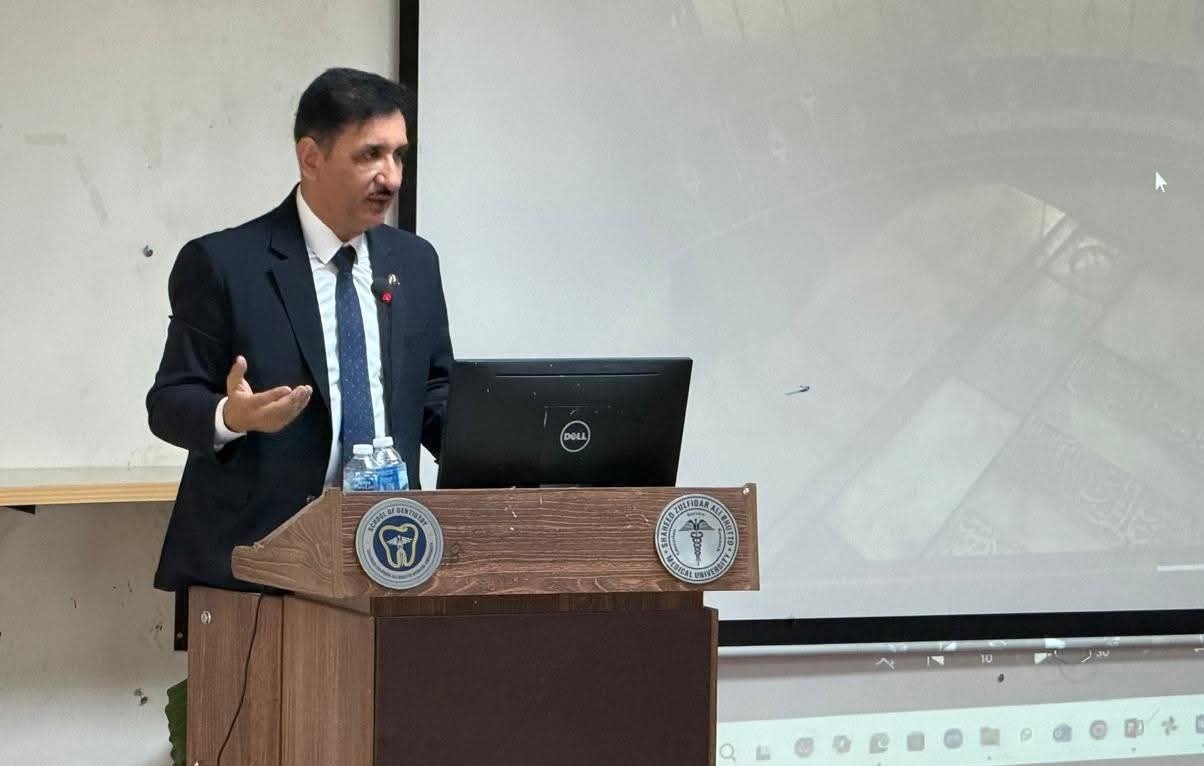
Islamabad, The Europe Today: The Embassy of the Republic of Tajikistan in the Islamic Republic of Pakistan, in cooperation with Shaheed Zulfiqar Ali Bhutto Medical University (SZABMU), organized a scientific event entitled “Avicenna Science Day” in Islamabad on 10 November 2026, paying rich tribute to one of the greatest minds in the history of science and medicine.
The Avicenna Science Day featured addresses by the Ambassador of the Republic of Tajikistan to Pakistan, H.E. Mr. Yusuf Sharifzoda, and the Ambassador of the Islamic Republic of Iran to Pakistan, H.E. Dr. Reza Amiri Moghadam, who spoke on the status and contribution of Abu Ali ibn Sina (Avicenna) to the advancement of science and medicine.
Tajik Ambassador Highlights Ibn Sina’s Place in World Civilization
In his address, Ambassador Yusuf Sharifzoda highlighted the outstanding place of Abu Ali ibn Sina in the history of world civilization and the role of his scientific works in shaping human scientific thought. He emphasized that the scientific and intellectual legacy of Ibn Sina, who emerged from the ancient and civilization-rich land of the Tajiks, continues to retain its universal significance and remains a source of inspiration and knowledge for present and future generations.
The Ambassador noted that in Tajikistan, the State Medical University and one of the districts of the capital, Dushanbe, are named after the eminent scholar. Furthermore, in recognition of the outstanding contribution of the great son of the Tajik nation to healthcare and the advancement of medical science worldwide, the Abu Ali ibn Sina International Award in Medicine was established by decree of the President of the Republic of Tajikistan, Leader of the Nation, Honourable Emomali Rahmon.
Abu Ali ibn Sina International Award in Medicine
The establishment of the Abu Ali ibn Sina International Award in Medicine once again underscores the remarkable contribution of Sheikh ul-Rais Abu Ali ibn Sina, the great Tajik philosopher, scholar, physician and poet, to the development and enrichment of world civilization. His name remains revered and immortal throughout the world. The award is presented to individuals who have made outstanding contributions to the development of international healthcare and global medical science.
Iranian Ambassador Stresses Preserving Ibn Sina’s Scientific Legacy
Speaking at the Avicenna Science Day, Iranian Ambassador Dr. Reza Amiri Moghadam focused on Ibn Sina’s contribution to the advancement of science and medicine and the profound influence of his works on human civilization. He emphasized the importance of preserving and studying the scientific legacy of this eminent scholar in the modern era.
SZABMU Vice Chancellor Reflects on Avicenna’s Contribution to Medicine
Among the other speakers, the Vice Chancellor of SZABMU, Professor Dr. Tanwir Khaliq, delivered remarks on the life, scholarly activities and contribution of Abu Ali ibn Sina to the development of medical science. He highlighted the importance of studying Avicenna’s scientific legacy for present-day generations around the world.
As part of the programme, a video presentation on the life, scholarly works and contribution of Abu Ali ibn Sina to the advancement of medical science was screened for the audience.
Strengthening Tajikistan–Pakistan Scientific and Cultural Ties
The Avicenna Science Day aimed to pay tribute to the scientific legacy of one of the greatest scholars of the Persian-Tajik tradition in human history, promote the values of science and knowledge, and strengthen international cooperation in the field of medicine.
Such initiatives are expected to contribute to the further development of scientific and cultural ties between Tajikistan and Pakistan, as well as to strengthening the historical and civilizational bonds among the countries of the region.