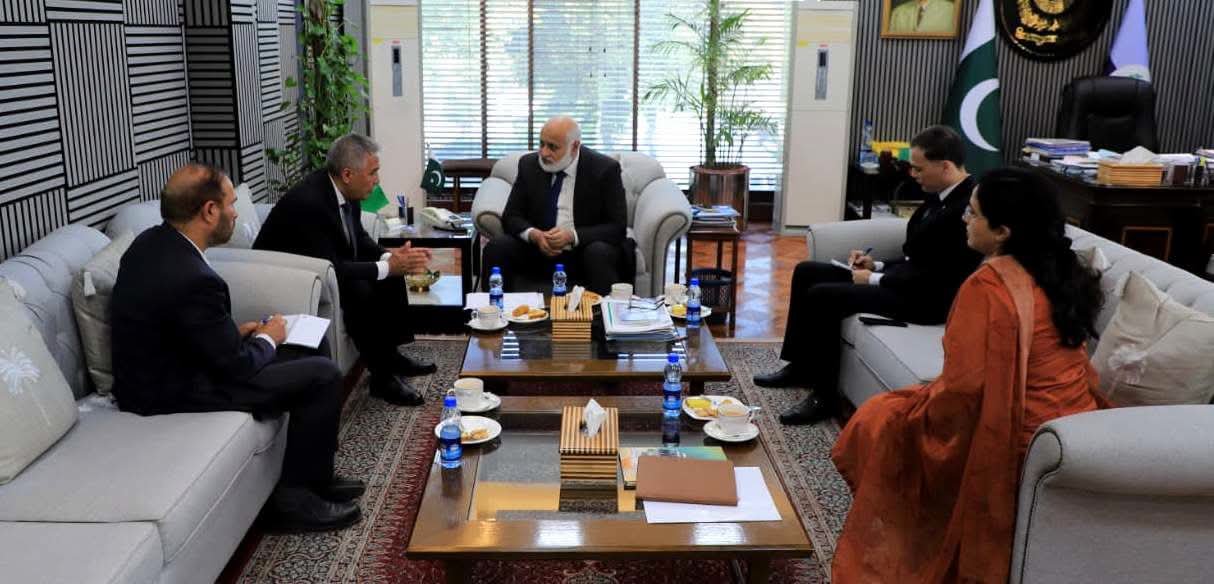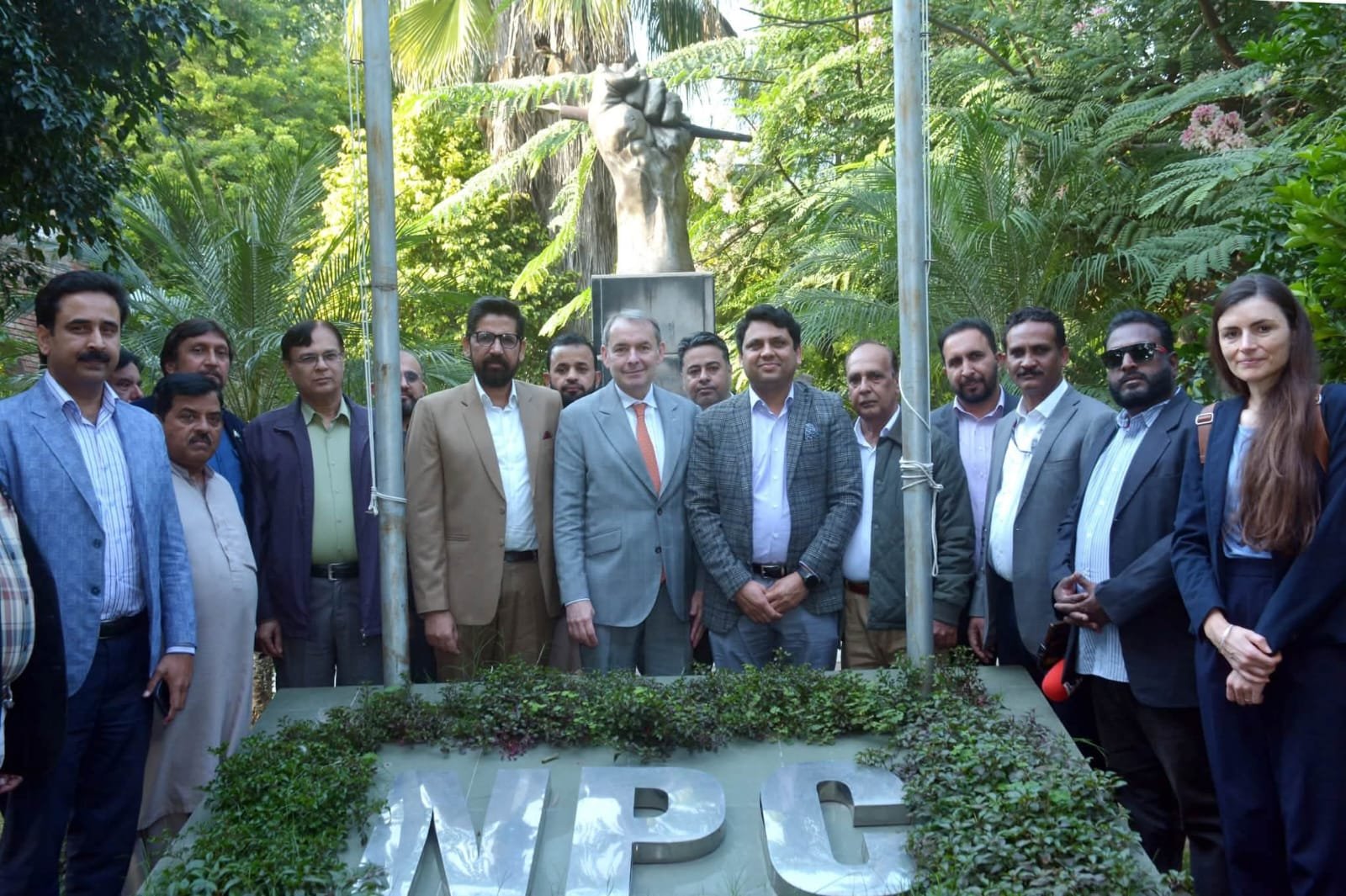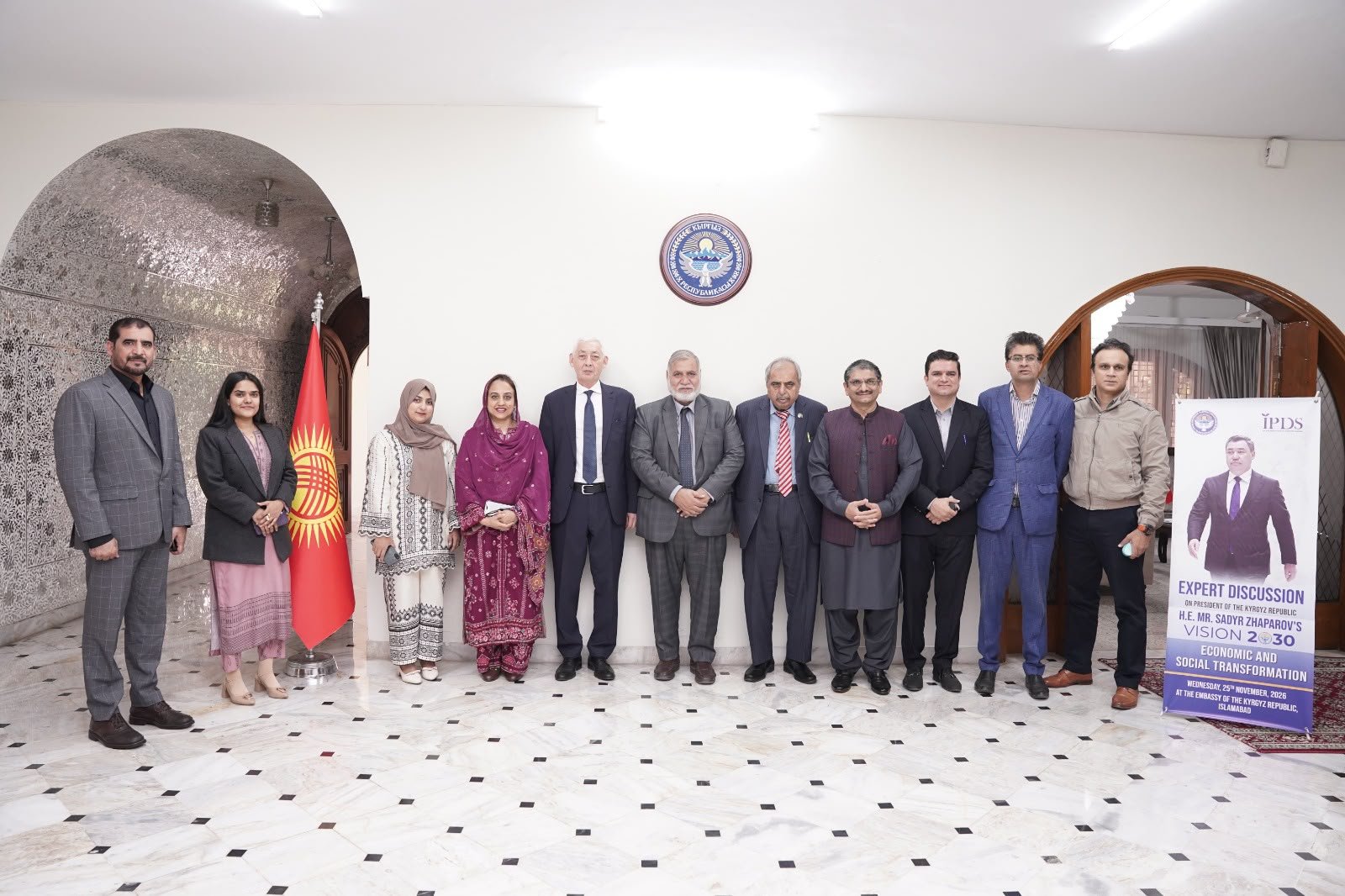
Islamabad, The Europe Today: Investing in people, not just infrastructure, is the defining strength of Sadyr Zhaparov Vision 2030, according to scholars, diplomats and business leaders who met at the Embassy of the Kyrgyz Republic in Islamabad on Wednesday. They said the new national roadmap marks Bishkek’s shift from building institutions to empowering its citizens.
The expert session, “President of the Kyrgyz Republic H.E. Mr. Sadyr Zhaparov’s Vision 2030: Economic and Social Transformation”, was jointly hosted by the Embassy and the Institute of Peace and Diplomatic Studies (IPDS). Speakers reviewed the agenda President Zhaparov announced on 21 October 2026, formally known as the “National Development Program of the Kyrgyz Republic until 2030”, which sets out the state’s priorities for the coming five years.
From Institution-Building to People-Building
The clearest summary of the shift came from Professor Dr. Muhammad Munir, Dean of the Faculty of Social Sciences and Humanities at Muslim Youth University. He said Kyrgyzstan spent recent years laying institutional foundations and that Bishkek has now turned its full attention to human capital.
Healthcare is the strongest example, he said. Sadyr Zhaparov Vision 2030 treats spending on health as an investment in the nation’s people, not as one more line of public expenditure.
A Record That Builds Confidence
Mr. Aibek Tilebaliev, Chargé d’Affaires and Minister-Counsellor of the Kyrgyz Embassy, set the context with a look back at what the country has achieved since 2021. He described the settlement of long-running border questions with Uzbekistan and Tajikistan as one of the most significant milestones of that period.
He credited President Zhaparov’s sweeping administrative reforms with driving a threefold rise in GDP from 2021 to 2024. He also reaffirmed that Pakistan and Kyrgyzstan are bound by deep historic, political, economic and cultural ties.
Economy First, With Finance as the Engine
Moderating the session, Dr. Farhat Asif, Founder and President of IPDS, described the dialogue as a timely look at where Kyrgyzstan is heading. She said the Vision makes economic transformation its central aim. Connectivity is woven into that wider plan rather than pursued for its own sake, human development is treated as a core pillar, and the financial sector serves as the engine that makes progress possible.
Small Businesses, Big Signal
Dr. Shahid Hassan, President of the Kyrgyzstan Trade House in Pakistan, said the rapid growth of small industry in Kyrgyzstan over the past few years is strong evidence of the government’s people-first priorities.
Why a Pakistan-Kyrgyzstan FTA Matters
From a logistics and tourism viewpoint, Mr. Ramiz Ali Rabbani, Managing Director of Best Trans (Pvt.) Ltd, made the case for a Free Trade Agreement between the two countries. He said such a deal would bring gains to both economies and cut shipping costs for Kyrgyz firms that route cargo through Pakistani seaports. That would give landlocked Kyrgyzstan a cheaper, shorter route to world markets.
One Message, Many Voices
Wrapping up, Dr. Farhat Asif said every speaker had arrived at the same conclusion. In President Zhaparov’s historic address, she said, the human being sits at the heart of every goal.
To mark the occasion, Mr. Tilebaliev presented each expert with a handcrafted Kyrgyz wall hanging, a traditional art form that reflects the country’s cultural identity.
With trade routes, ports and people-to-people links all on the table, the Islamabad session suggested that Sadyr Zhaparov Vision 2030 could also open a new chapter in Pakistan-Kyrgyzstan cooperation.