Hamburg, The Europe Today: An international maritime tribunal on Saturday rejected Argentina’s bid to temporarily stop oil drilling off the British-held Falkland Islands. The ruling hands an early legal win to the United Kingdom in a dispute that has reopened the wounds of the 1982 war.
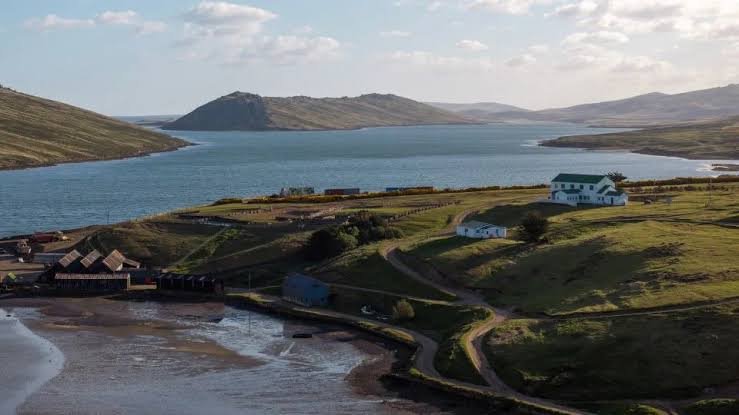
The International Tribunal for the Law of the Sea voted 18-3 against freezing work on Sea Lion. The $2.1 billion oil project is led by Israel’s Navitas Petroleum and Britain’s Rockhopper Exploration. The Falklands lie about 300 miles (480 kilometres) east of the South American mainland.
In a ruling read in Hamburg, Germany, the judges found that Argentina’s case could not be decided without first settling the underlying sovereignty dispute over the islands, which Britain has held since 1833. That question, they said, falls outside the scope of the UN Convention on the Law of the Sea, the treaty that governs the world’s oceans.
Shadows of the 1982 War
The standoff over drilling in the South Atlantic has revived bitter memories of 1982. That year Argentina’s military junta invaded the islands, starting a 74-day war that killed 649 Argentine troops, 255 British soldiers and three islanders.
London Hails "Vindication"
British officials welcomed the decision as proof that the islands’ future is not open for debate, and urged Buenos Aires to drop its wider campaign of economic pressure.
"This outcome is a vindication of the U.K.’s robust legal defense and strategy," UK Foreign Secretary Ed Miliband and Attorney General Ellie Reeves said in a joint statement. "The U.K. has no doubt of our sovereignty of the Falkland Islands, our sovereignty and sovereign rights over the surrounding maritime areas, and the right of self-determination of the Falkland Islanders."
In a 2013 referendum, all but three voters in the territory of about 3,500 people chose to remain British. Argentina rejects the result, arguing that the population was settled there illegally and cannot decide the territory’s fate.
Milei’s Government Claims a Silver Lining
President Javier Milei’s government found a positive side to the defeat. It argued that by linking the case to sovereignty, the tribunal had in effect recognised a dispute that London has long refused to negotiate.
The ruling is only preliminary, the first round in what could be a long legal battle. "This decision is not the last word," Milei’s office said. Foreign Minister Pablo Quirno called the ruling "a historic step" and vowed to press on "with more determination than ever."
Opposition Calls It an "Utter Failure"
Not everyone in Argentina saw reason to celebrate. Germán Martínez, who leads the left-leaning Peronist opposition bloc in the lower house of Congress, called the government’s legal strategy an "utter failure" and demanded Quirno’s resignation. He compared the government’s upbeat spin to the junta’s insistence in 1982 that Argentina was winning the war.
Inside the Courtroom Battle
Argentina had asked the tribunal to halt work on Sea Lion until an arbitration panel rules on the full dispute. It argued that every barrel taken from the seabed would be lost to Argentina for good.
Britain countered that Argentina’s challenge was a sovereignty claim disguised as a maritime case. The judges agreed. They found that all of Argentina’s arguments, including those about environmental risks from drilling, depended on the competing claims to the archipelago.
Milei Escalates Sanctions Campaign
Milei vowed on Saturday to keep punishing companies working on the project, which he has called a "clear and present danger" to Argentina’s claims over the islands.
His government announced five new sanctions cases, this time against Israeli pension and investment funds holding shares in Tel Aviv-listed Navitas. That brings the number of firms, shareholders and suppliers targeted so far to more than 60. "Those who participate in the illegitimate exploitation of our resources will have to face the consequences," Milei’s office warned.
Argentina has also filed criminal complaints at home against Navitas and other companies. It has sent strongly worded warning letters to about 180 companies and individuals in 30 countries with links to oil activity around the islands. Last month, Navitas said it was replacing two contractors that had pulled out because of Argentina’s threats.
"A Good Day for the Falkland Islands"
The ruling brought relief to the islands. They once scraped by on sheep farming, grew prosperous by selling fishing licences to foreign squid fleets, and have waited decades for offshore oil to pay off.
"This is a good day for the Falkland Islands," the islands’ Legislative Assembly said in a statement. "Sea Lion will transform our economy and give future generations a more secure and self-reliant Falklands."
Drilling at the field, about 137 miles (220 kilometres) north of the islands, is due to begin in March 2027, with first oil expected a year later. Britain committed to that timeline before the tribunal, which gives arbitrators time to take up the case before any oil is pumped.