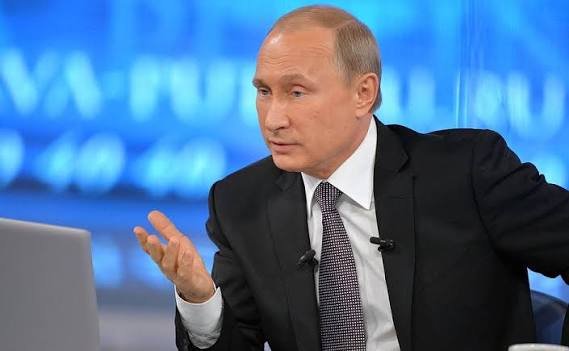
Moscow, The Europe Today: Russian ministries are setting up special teams to deal with citizens’ complaints before they ever reach the Putin Direct Line. Kremlin Spokesman Dmitry Peskov announced the move, which means the annual televised marathon is no longer only a stage for public questions. It now also pushes the state to fix problems in advance.
Peskov spoke in an interview with Vesti journalist Pavel Zarubin. He said a wide range of government ministries now take part in the arrangement. The model started last year with the Ministry of Health.
“There is an agreement with the whole range of ministries — such practice was launched last year with the Ministry of Health — which create a special ‘response’ team during Direct Line preparations, and they take measures without waiting for the Direct Line,” Peskov said.
Why the Putin Direct Line Is Changing How Moscow Works
For years, the Putin Direct Line has been one of the most closely watched events on Russia’s political calendar. Each year, huge numbers of people send in questions and complaints. They cover everything from broken roads and unpaid wages to hospital shortages and housing disputes. In the past, many of these cases only got attention after they came up live on air.
The new approach turns that around. The ministries’ response teams now go through incoming appeals while preparations are still under way. They act on problems straight away instead of waiting for a question to make it onto national television.
Peskov said the bigger aim of the Putin Direct Line is to help build a lasting system for solving citizens’ problems, not just one-off fixes on camera.
“Not to Solve Manually Issues of Every Citizen”
The Kremlin Spokesman openly admitted that no government can personally deal with every complaint from every citizen.
“It is very difficult to solve questions of every citizen all year round. The task of the authorities is not to solve manually issues of every citizen but create a system enabling these problems to be solved,” Peskov added.
His comments suggest the Kremlin sees the Putin Direct Line as a diagnostic tool. The thousands of appeals point to where government services are failing, and the ministries are expected to fix those weak spots at the root.
From Health Ministry Pilot to Government-Wide Practice
The Ministry of Health tested the response-team model first, last year. It has now spread across many ministries. That suggests the Kremlin thinks the trial worked well enough to roll out to other parts of government.
Healthcare is one of the most common subjects in citizens’ appeals to the President. If the model works in that sector, other ministries may be able to clear large backlogs of complaints in areas such as social support, infrastructure, education and housing.
What the Putin Direct Line Means for Ordinary Russians
For ordinary Russians, the change could mean faster answers. A citizen who sends in a question may get help before the broadcast even starts, not weeks or months later. It also signals that ministries are expected to take every appeal seriously, whether or not it appears on screen.
Observers will be watching the next Putin Direct Line closely to see if the response teams lead to fewer repeated complaints and quicker results on the ground. The Kremlin’s message is that the event should be measured by what changes after the cameras are switched off, not only by what is said on air.