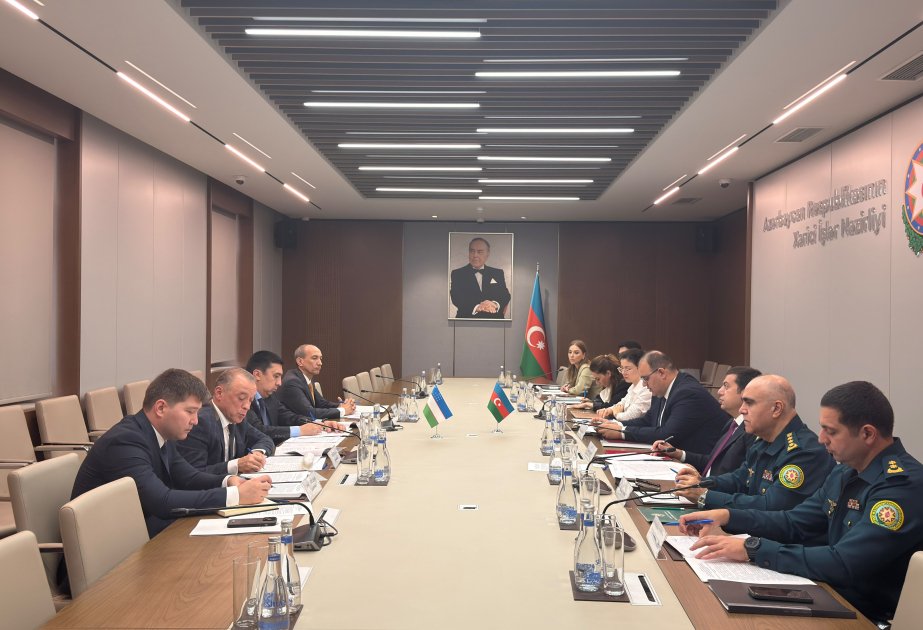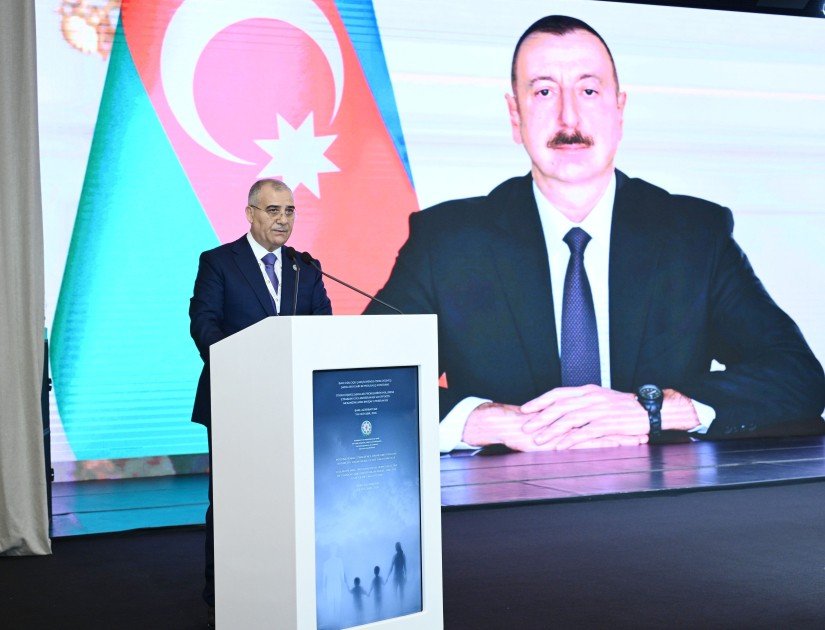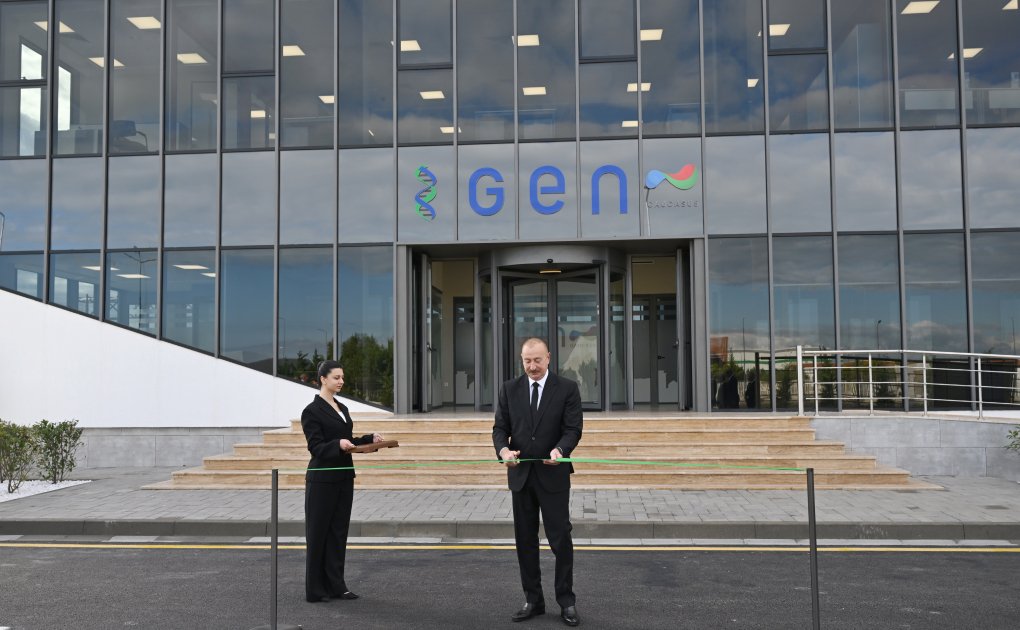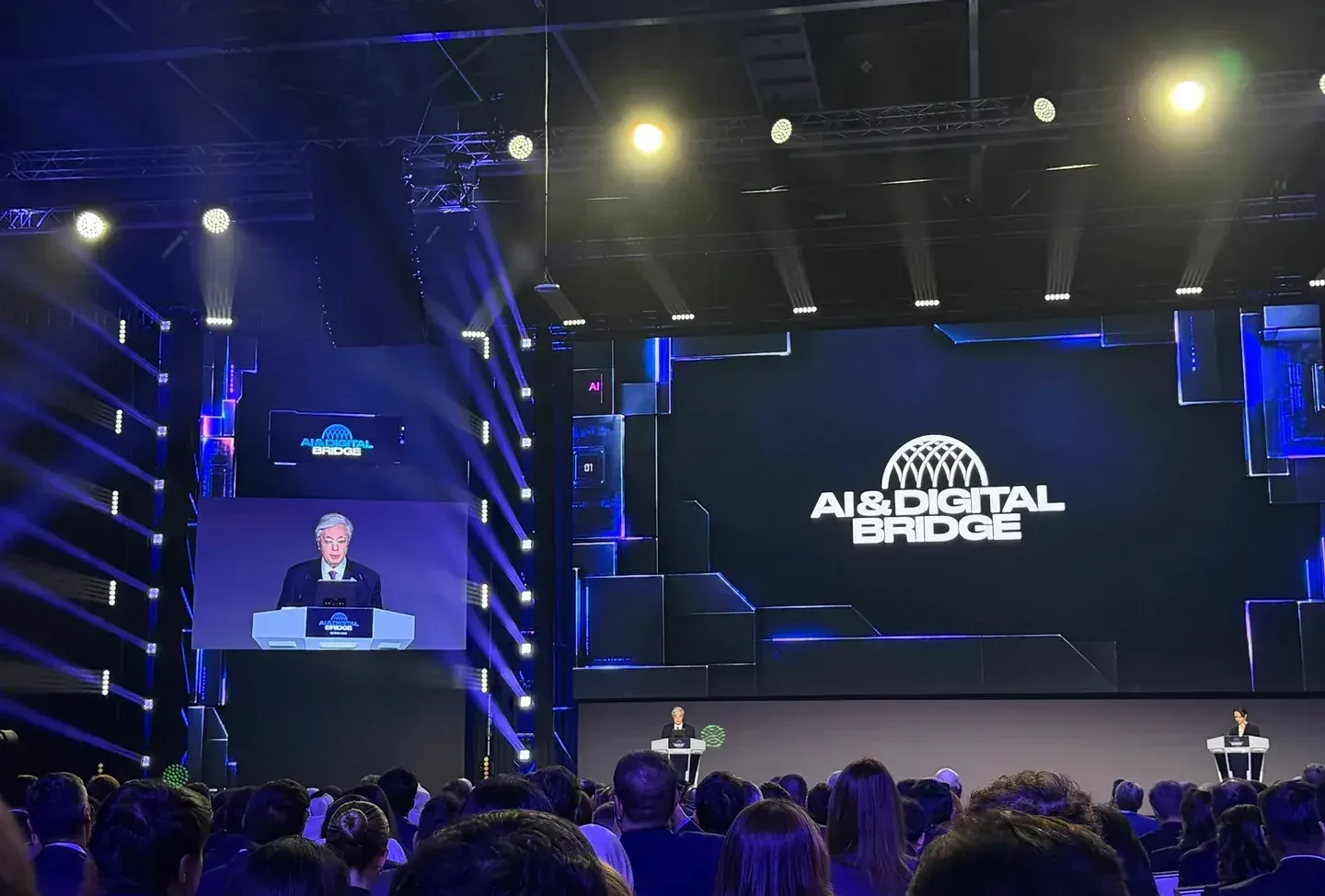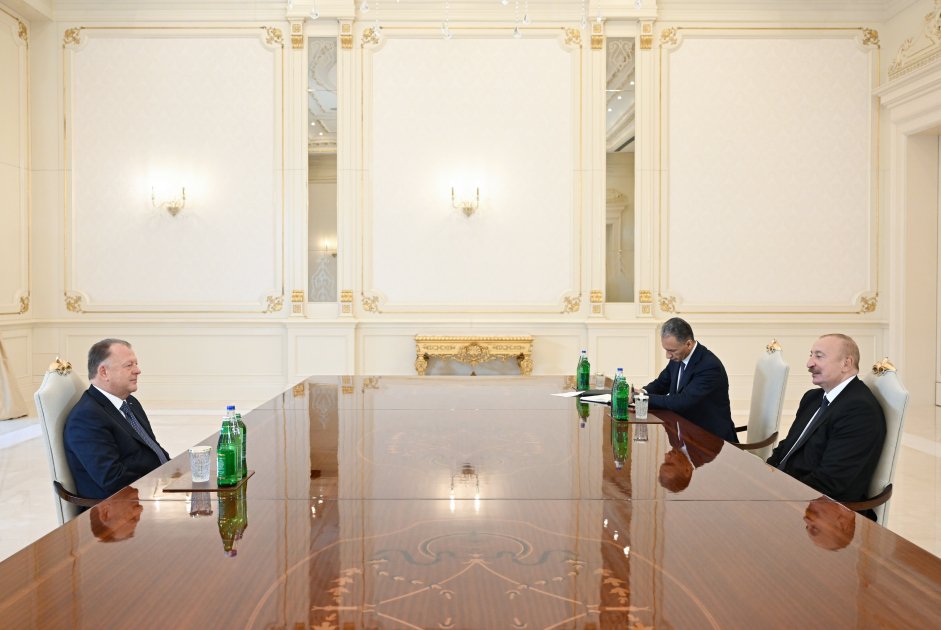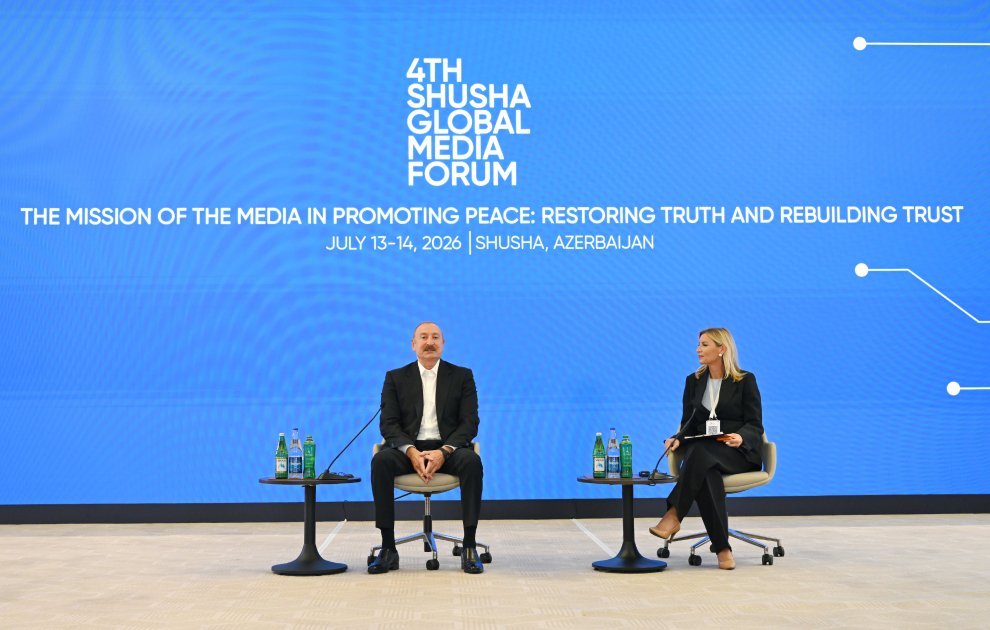
Shusha, July 14, 2026 – The Europe Today: The opening ceremony of the 4th Shusha Global Media Forum, held under the theme “The Mission of the Media in Promoting Peace: Restoring Truth and Rebuilding Trust,” took place in Shusha on July 13. President of the Republic of Azerbaijan Ilham Aliyev attended the forum, where he engaged with participants by answering questions on a range of regional and global issues, highlighting the vital role of responsible journalism in fostering peace, restoring truth, and rebuilding public trust.
Moderator: Your Excellencies, distinguished guests, members of the media, a very warm welcome to you all to the fourth Shusha Global Media Forum. And, first and foremost, we must extend a huge thank you to the President of the Republic of Azerbaijan, His Excellency Ilham Aliyev. Thank you so much for being with us here today. Thank you for your patronage, and we are very much looking forward to a very open and honest conversation with you a little later on.
The forum today brings together 160 guests from 53 countries, including representatives from 30 news agencies, over 60 media agencies, and 10 international organizations. And over the past four years, the forum has brought together nearly 600 media representatives from 81 countries. Some very impressive figures there.
Mr. President, how does it feel to have the forum now in its fourth year?
President Ilham Aliyev: Well, first of all, it’s a big honor to host such a distinguished audience here again in Azerbaijan, in Garabagh, in Shusha. The idea of the forum was to create an atmosphere for media representatives from different parts of the world to address the issues of interest, mutual concern, and also to get acquainted with Garabagh, with Shusha. As time passes, I am sure many of our guests who visit us regularly see the development of Garabagh, and they see the reconstruction. The first time, probably, when they came, they saw only ruins, but now they see cities. They see people who live in the new apartments, in the new houses. So it’s a combination of various factors. First, every time, every year, the topic of the forum just reflects the current challenges. Second, the atmosphere is very friendly, very positive, and many people from different media outlets, I’m sure, have become good friends after meetings in Shusha. And, of course, an important factor for us is to gather this big group of people, those who influence the decision-making process, those who influence public opinion in their countries and beyond, to see that when Garabagh is back to its roots, when the owners of these lands are back, then the real development happens.
Moderator: Well, thank you so much. It’s very impressive to see how the forum has evolved over the last four years. So thank you so much. Well, just to set the scene a little bit for you, we gather at a time, of course, when information travels faster than ever. Yet trust is increasingly difficult to earn. Journalists and policymakers today are very much navigating an era shaped by misinformation, by division, by AI, and rapidly evolving digital platforms. Which is why conversations and forums like this are ever so important, of course, and why this year’s theme is “The Mission of the Media in Promoting Peace: Restoring Truth and Rebuilding Trust.”
As a very quick introduction, my name is Laura Buckwell, and I am a broadcast journalist for Euronews. Thank you so much for having me. As you can all imagine, we have a very full agenda over the next couple of days, and yes, we’re going to be starting with this open dialogue with the President. And for the next couple of hours, we are going to be opening up the floor to you all for any questions that you might have. I have a long list of people and names that I’m going to be calling on, and we have a very generous amount of time to get those answered. So when I call your name, however, please do make sure you keep your questions brief and to the point, as we do have quite a lot to get through today. Additionally, if there’s anything that you would like to share on your social media platforms, you can use our hashtags, which are #ShushaGlobalMediaForum and #GMF2026.
So we’re going to be starting off with our first media representative. I’m delighted to now turn to Mr. Ken Moriyasu, who is a Senior Fellow at Hudson Institute. There he is. Hopefully, we have a microphone ready.
Ken Moriyasu: Thank you, Mr. President. I’m Ken Moriyasu from Hudson.
Azerbaijan occupies a unique geographic position linking Central Asia, the South Caucasus, Türkiye, and Europe. But recent disruptions in the Red Sea and the Strait of Hormuz have reminded the world of the vulnerabilities of maritime trade. Do you believe we are entering an era in which overland corridors will become as strategically important as sea lanes? And if so, how do you see Azerbaijan’s role evolving over the next decade? Thank you very much.
President Ilham Aliyev: You know, we have been working on connectivity issues for quite a while. So maybe actively for more than ten years, trying to turn the advantages of our geographical location into a real platform for multinational cooperation, and there were various factors which could allow us, or not, or prevent us from becoming one of the international transportation destinations. The first was the physical infrastructure, which was missing, and we had to build it, which has been done. The second was interaction with our neighbors, because without that, you will never become a transit country. If you have bad relations with your neighbors, it means that nothing will come back and forth. And also we needed to establish broad international cooperation across the vast geography of Eurasia, to the East and to the West, to the North and to the South, from Azerbaijan, and to lead the process as we did, for instance, in implementing our energy projects, where Azerbaijan was the initiator, the main financial contributor, and the organizer of multinational cooperation, which today also helps many countries to tackle the issues of energy security.
So the same approach we apply to connectivity, and as I said, the physical infrastructure is done. And now we are only working on the issues of how to expand it, because we did not expect that our geography would be so needed in recent times. Interaction with neighbors to the East and to the West is excellent, whether it’s with the countries of Central Asia or our immediate neighbors like Georgia and Türkiye, and Europe. And to connect all that, of course, we needed to initiate many steps that could enable the corridor to be efficient.
Yes, the situation in the Middle East now makes this corridor more attractive, and if only you looked at the flight radar map during the hot period of the standoff, you would see that a very narrow corridor was going through Azerbaijan, and the same can be applied to maritime transportation across the Caspian and land transportation. So all these factors definitely increase the importance of Azerbaijan. And fortunately, we have been ready to handle a growing number of cargo shipments. Now we are expanding our facilities. Our trade seaport, though it is now the biggest on the Caspian with 15 million tons, will be upgraded to 25 million tons.
We are now building 10 vessels at our shipyard in order to be able to transport cargo to and from Europe. Our close relations with the countries of Central Asia and the European Commission, together with our location in the center, in the middle of these two destinations, really create a big advantage. And, of course, the policy of Azerbaijan, which was always aimed at cooperation, at addressing the concerns of our neighbors, and also at encouraging them to be ready to address our concerns and create a positive atmosphere. What I was talking about, the atmosphere here in Shusha at the Media Forum, is the same thing that we are trying to create, and I hope we have managed to create it among many international actors.
Moderator: Thank you so much. What a great question to start off our dialogue. Thank you so much once again to Mr. Ken Moriyasu. Thank you. We now move over to Mr. Yusuf Özhan, who is the Vice President and Editor-in-Chief of Anadolu Agency. Yes, please do get a microphone over here, if we have one, just here in the second front row. There we go.
Yusuf Özhan: Mr. President, thank you so much for having us here today. I don’t know if this is an English idiom, an authentic English idiom, but in Turkish we have the expression “being the two halves of an apple.” So the nations of Türkiye and Azerbaijan are the two halves of an apple. And what would be your message to the people of Türkiye? Thank you so much.
President Ilham Aliyev: You know, my message to two countries, Türkiye and Azerbaijan, is only one of friendship and brotherhood. I think, and I’m sure that the people of Türkiye and Azerbaijan share this view, that these are the closest among all the countries of the world. If you look at the level of cooperation—political, economic, energy, connectivity, and people-to-people—you will see that probably no other two countries in the world are so close to each other, so supportive of each other, and so friendly toward each other than Türkiye and Azerbaijan.
And this is a big asset for our peoples, for our countries. Together, we are much stronger. This is also an important factor for regional stability and cooperation, including what I was just elaborating on, connectivity. And this is an important factor in security, because here in Shusha, five years ago, the President of Türkiye and I signed the Shusha Declaration, which actually elevated our relations to the level of an alliance.
So we are not only brothers and friends; we are allies. And if something unfortunate or bad happens to one of us, the other will be there with all of its potential, including its military, to defend our brothers. And this really is a very rare case where we see that ethnic roots, common culture, and common history create a platform for countries to be so close politically. I’m sure you know many cases where the same, relatively similar roots and the same linguistic, how to say, heritage do not create such a platform. On the contrary, people who sometimes speak almost the same language fight with each other. People who share the same religion kill each other, and therefore, the example of Türkiye and Azerbaijan is one which should be examined and followed by neighbors. The neighbors should behave exactly like Türkiye and Azerbaijan.
Moderator: Thank you so much. What a wonderful question again, and an impressive statement there from the President. Thank you so much. Moving on now, we have Mr. Cristian-Augustin Niculescu-Țâgârlaș, who is a senator, lawyer, and a member of the Parliamentary Friendship Group with Azerbaijan-Romania.
Cristian-Augustin Niculescu-Țâgârlaș: Excellency, I would like to confess that this is my third visit to Azerbaijan, and last year at the same time, I had the privilege of climbing Heydar Peak, one of the highest and most beautiful mountain peaks of your wonderful country. I am impressed not only by Azerbaijan’s natural beauty, but also by the remarkable progress your country is making in multiple areas, such as innovation, digital governance, and renewable energy. In recent years, Azerbaijan has gone through a remarkable process of development, strengthening its strategic position on the regional and international levels, and the relationship with the European Union is an extremely pragmatic one, focusing on energy security, regional connectivity, and trade.
By liberating its occupied territories, Azerbaijan has restored its territorial integrity within its internationally recognized borders, and this achievement, Mr. President, was based on your leadership in resolving this issue. You have also positioned Azerbaijan as one of the key regional actors. Your country, being a relevant member of the international stage, through its active involvement, contributes to cooperation, promotes dialogue, and builds bridges between regions. At the same time, the relationship between the Azerbaijani Parliament and the Parliamentary Assembly of the Council of Europe, of which I am a member, is one that requires a revival, given that for various reasons a deadlock has been reached, which unfortunately has resulted in the withdrawal of the Azerbaijani delegation from the Parliamentary Assembly of the Council of Europe for the time being.
Expressing my belief that the differences between the two sides will be overcome and the Azerbaijani delegation will return to its place inside PACE, I would like to ask you, Mr. President, how you see the improvement of this relationship, considering that it is mutually beneficial. In your opinion, what steps will be taken towards closer cooperation with the European institution? Thank you, Mr. President.
President Ilham Aliyev: First of all, thank you very much for your kind words about Azerbaijan, and thank you for your personal contribution to the friendship between our countries.
You mentioned several important aspects of our relations with the European institutions, including the European Commission and the Parliamentary Assembly of the Council of Europe. And as you know, there is a big difference between the relations with one and the other.
With the European Commission, though, we did not have easy times during the previous Commission, especially due to the destructive role of the former head of European diplomacy, Mr. Borrell, who actually ruined, or almost ruined, relations between the European Commission and Azerbaijan. And now it’s obvious why. Because he was strongly influenced by some corrupt figures, including former judge of the International Court Mr. Ocampo, who in his comments publicly acknowledged that Mr. Borrell was on his payroll, and the money for Mr. Ocampo was coming from a Russian-Armenian oligarch, who is now under house arrest in Armenia.
So it’s a big chain of an anti-Azerbaijani group, which existed in the European Commission. But it’s good that Mr. Borrell is now out of politics, hopefully forever. And with the new Commission, our relations have started to improve, especially after we’ve seen that there is a big mutual demand for a reset, and we supported that. I can just tell you that during several months of this year, we had several important visits from Brussels: in March, the President of the European Council, Mr. Costa; in May, the head of European diplomacy, Madame Kallas; and in July, the President of the European Commission, Madame Ursula von der Leyen.
And in our public comments, both they and I have made it clear that both sides are satisfied with the level of cooperation. And the areas of partnership which you described, of course, are important, but our bilateral framework is much broader. With respect to the Parliamentary Assembly of the Council of Europe, unfortunately, we see an absolutely different picture, and I personally regret that because I was the first head of the Azerbaijani delegation when I was a member of Parliament in 2001, and for two years I was working there. And as you know, there are four sessions throughout the year.
So for me, it’s not a pleasant situation that it happened, but the reason why it happened is very important in order to answer your question: What should be done in order to find a way out of the deadlock? Until the liberation of 100% of our territories from separatist and Armenian occupational forces in September 2023, Azerbaijan was never under any sanctions in PACE. In September 2023, when we used our legitimate right of self-defense and liberated the territory from the remaining separatists, the Parliamentary Assembly of the Council of Europe decided to punish Azerbaijan. And in January 2024, they called into question the credentials of the Azerbaijani delegation and also deprived the Azerbaijani delegation of its voting right. So that was not because of the so-called human rights issues. If it had been about that, it would have been done probably much earlier. It was just punishment for us for what we’ve done in order to restore our sovereignty. And after that, the Azerbaijani delegation made a very wise decision. They stopped attending the meetings, because if we don’t have the voting right, why should we be there?
And we, by the way, did not vote for the judges of the European Court of Human Rights, and that’s why Azerbaijan does not recognize the decisions of the Court, because we don’t know who these people are. We did not vote for them, and for more than two years we have been discriminated against. And I can tell you openly that we, in our government, were seriously evaluating a complete departure from the institution, not only freezing our membership in PACE but also leaving the Council of Europe as a whole.
But I was approached by the Secretary General of the Council of Europe, Mr. Alain Berset, and I was asked not to do it, and to try to find a way to improve the situation, so I put that on hold. But unfortunately, since that time, nothing has happened. There are some very strange and ultimatum-like demands from PACE to Azerbaijan, which are absolutely unacceptable. It was not us who ruined relations; it was them. They deprived us of our voting right without any legitimate grounds. So what should be done is that they should restore the voting rights of the Azerbaijani delegation, and after that, the Azerbaijani delegation will come back. It should be exactly as I said, not vice versa.
We did not do anything wrong to them. Therefore, it was they who made that unjust move, and it should be they who step back, find the courage, and admit that they made a big mistake. You know, on many occasions I have expressed my view on that: if Azerbaijan leaves the Council of Europe completely, no one in the country will even notice it. So being there or not being there doesn’t change a lot here.
To be there is better, probably. I don’t know, maybe. And we are not looking for confrontation, especially when not only the Parliamentary Assembly of the Council of Europe but also the European Parliament attacks us regularly, again without any grounds. I think it’s kind of an obsession with Azerbaijan. In five years, they have adopted 13 resolutions attacking Azerbaijan, and none of them is important to us, and none of them influences anything here. So, of course, it’s better to have normal relations with these institutions rather than this confrontation. But again, it was not our choice. We joined the Council of Europe voluntarily in 2001.
At that time, it was a different organization, and in general, Europe was different at that time. We were entering that Europe with those aspirations, with those hopes that membership there would help us to resolve our main issue, to resolve the Garabagh conflict, and to restore our sovereignty. So again, I think I have taken too much of the audience’s time on this issue.
But taking into account your comprehensive question, I would like to inform you and the audience about what happened and what should be done. We are ready for normalization, but they should make the first step. Thank you.
Moderator: Thank you so much for such a detailed question and such a detailed answer as well. Thank you so much. Right, we move on now to Mr. Ramiz Yunus, who is a professor of political science at Khazar University.
President Ilham Aliyev: He represents the United States.
Moderator: Okay, from the United States.
President Ilham Aliyev: Yes, yes, he has lived there for many years.
Ramiz Yunus: Dear Mr. President, it’s a great honor for me to meet you once again in the Garabagh region of Azerbaijan. Thank you very much for your invitation to this important international event. I have two questions. My first question is about the relationship between Azerbaijan and the United States. Mr. President, the Section 907 amendment against Azerbaijan was adopted by the U.S. Congress more than 30 years ago. What is your assessment of this amendment today, and do you see a realistic chance for its repeal under the current administration of President Trump? My second question. Today, Azerbaijan is widely recognized as a middle power and the leader of the South Caucasus. In your view, Mr. President, what is the main difference between a small state and a middle power in today’s world? Once again, thank you very much, Mr. President.
President Ilham Aliyev: Thank you. Thank you very much. First, on the 907 amendment. First, you know it very well, but maybe not everybody knows about it. That was a very unfair move by the United States Congress towards Azerbaijan back in 1992, when the Freedom Support Act was adopted by the U.S. Congress in order to support the newly emerged countries after the collapse of the Soviet Union by providing them with financial assistance, and Amendment 907 was introduced by pro-Armenian senators. By the way, President Biden was one of them. He was a senator at the time, and probably this explains why we had so many difficulties with the Biden administration.
So that amendment prevented Azerbaijan from having access to America’s financial assistance. The reason for that, as it was described, was that Azerbaijan was blockading Armenia. First of all, it was not true. We were not blockading Armenia. It was Armenia that occupied our territory, and the occupied territories lay between Armenia and Azerbaijan. So if not for the occupation, there would have been no so-called blockade.
And second, it was, of course, very painful for us at that time because the country was very poor, and we were the only former Soviet Union republic that was discriminated against by the United States Congress. Today, this amendment is completely outdated. First, because Azerbaijan and Armenia initialed a peace agreement at the White House in the presence of President Trump.
Second, Azerbaijan unilaterally lifted all the transit restrictions for Armenia, and now, since we did it, more than 40,000 tons of different cargo have been transported to Armenia from Russia, from Kazakhstan, and from other destinations.
Moreover, Azerbaijan itself started to supply oil products to Armenia, and it’s already, as far as I remember, more than 10,000 tons. Especially now, when many countries are suffering from limited access to fuel, Armenia has a reliable source in Azerbaijan. If not for that, probably today they would have been looking for gasoline and diesel all over the world.
So this once again demonstrates that this amendment is completely outdated and should be repealed completely. But unfortunately, despite the firm position of President Trump—and by the way, during our meeting last August in Washington, at the White House, President Trump signed a waiver of this amendment in my presence for one year—and it doesn’t work now, its symbolic meaning, its political meaning, is still there.
And I think the sooner this amendment is totally repealed by Congress, the better for all of us: for Azerbaijan, because we will no longer be discriminated against, and for the U.S. Congress, which will demonstrate responsibility and the ability to admit its mistakes and also to act in accordance with the current geopolitical situation. So we hope that it will happen. But nevertheless, I can tell you that with today’s administration, Amendment 907 doesn’t play any negative role.
You asked about relations between the United States and Azerbaijan. I would say relations between the Trump administration and Azerbaijan are excellent, and we are very glad that these relations have been elevated to the level of a strategic partnership.
And my historic meeting with President Trump last August in Washington, and then our meeting in Davos in January this year, the invitation to Azerbaijan to be a founding member of the Board for Peace initiated by President Trump, the visit of Vice President JD Vance, the signing in Baku with the Vice President of the Joint Declaration on the Establishment of a Strategic Partnership, and many other factors demonstrate that our relations are now at their peak, at an unprecedented level, which we never had before. And today we are working actively to implement all the provisions of the Strategic Partnership Declaration.
Particularly, those working groups that have been established are working very actively on trade and investments, on digital transformation and AI, on energy security and connectivity, and on defense and defense sales. The United States lifted all the embargoes on the supply of weapons to Azerbaijan, and right after that, the same was done by the United Kingdom and by the members of the European Union. So this, I think, characterizes very well the spirit of our bilateral relations, the framework, and also the potential for the future.
With respect to your second question about a middle power, yes, I have read some analytical articles, and I am also aware of some experts’ opinions about Azerbaijan already becoming, or having already become, a middle power. Though I think a gathering like this can also help to identify exactly what the criteria are for a country to be considered a middle power. There can be various criteria, and a single criterion has not yet been elaborated. But to my mind, this terminology means recognition of a country’s potential, its ability to defend its national interests, regardless of what big powers think or do, its ability to resist with all its potential when someone wants to hurt it.
Definitely defense capability, and not only defense capability that is demonstrated at military parades, but on the battlefield. And, of course, one of the important factors, to my mind, is the ability to influence, with your only word or with your only statement, events that are happening beyond your boundaries, and Azerbaijan has demonstrated that on many occasions. And also I think one of the factors that can be applied to this terminology is responsibility: responsibility for what is happening inside your country, and responsibility, to a certain degree, for the whole region. And I think—and probably the team will also add to these criteria later—but I think all that I mentioned can be applied to Azerbaijan, and probably that’s why many experts call us a middle power, and I don’t mind, frankly speaking.
Moderator: Another great question, and yes, a lot to take away from that. So thank you so much.
Moving on now, we have Dr. Zaid Al-Nawaiseh, who is the Secretary General of the Ministry of Government Communication, Jordan.
Zaid Al-Nawaiseh: Mr. President, thank you for giving us the opportunity to participate in this fourth important Global Forum. When I return to my country, Jordan, I will take with me the warmest impressions of this beautiful country, which is developing at a remarkable pace, and of its people, who are always smiling, kind, and hospitable. At the same time, we take pride in the relations between our two countries under the patronage of Your Excellency and His Majesty King Abdullah II, and we sincerely hope that these ties will continue to grow stronger.
Mr. President, as part of its continuous efforts to strengthen and promote Islamic solidarity, your country will host the 16th Summit of the Heads of State and Government of the Organization of Islamic Cooperation (OIC) next year, as well as the OIC Conference of Information Ministers. My question is this: In your opinion, how will these high-level events, which Azerbaijan regularly hosts, contribute to strengthening Islamic solidarity, particularly against the backdrop of the current tensions facing the world in general and our region in particular? Thank you, Mr. President.
President Ilham Aliyev: Yes, as you mentioned, our relations with His Majesty the King are brotherly relations, and relations between our countries also are very close. You probably know that just a couple of days ago, I hosted the Minister of Foreign Affairs, Deputy Prime Minister of Jordan, who had extensive talks with his colleague, and then we also exchanged views during our meeting about the future development of our relations and also regional security and regional challenges. So I’m sure that relations between Jordan and Azerbaijan will successfully continue in the future, because a great deal of work has already been done.
You are absolutely right. Next year we will host the Summit of the Organization of Islamic Cooperation. It’s a big responsibility for us, especially at these turbulent times. Azerbaijan has always strongly advocated solidarity among the Muslim countries, and numerous events held in Azerbaijan and numerous initiatives that we put forward have actually served the cause of solidarity, mutual understanding, and unity. We will see how things develop prior to the summit. But unfortunately, now we don’t see much solidarity. On the contrary, we see an aggravation of tensions, we see mutual accusations, and we see wars in different parts of the world, not only in the Middle East and the Gulf, and this is very disappointing. Because solidarity within the Organization of Islamic Cooperation, I think, is the main factor for security and stability. If there is more solidarity, more mutual understanding, there will be fewer difficult times.
The role of Azerbaijan has always been highly appreciated, and we have played an important role at different times with different actors. And our role has always been constructive, result-oriented, and aimed at the reduction of tensions. We, by the way, demonstrated this capability during the times when we chaired the Non-Aligned Movement. As you know, members of the Organization of Islamic Cooperation are also members of the Non-Aligned Movement. The Movement’s 120 countries fully supported Azerbaijan’s chairmanship, and we were elected by the unanimous decision of all the countries. By the way, our chairmanship was even extended for one year, again by the unanimous decision of all the countries. So that was a recognition of our very positive role in bringing closer those who stand far away from each other. The same potential was very helpful when we had to agree on important decisions while chairing COP29. That was even more difficult because there were very contradictory views, opinions, and clashes. But again, it happened. So COP29’s legacy today is an important factor for all the future COPs and the green agenda. So, we will use all the capacity at our disposal during the time prior to the summit and at the summit to demonstrate this unity. We will do our best. To what degree we will succeed is difficult to say. And what the world and our region will look like next summer is also difficult to say. But hopefully, countries like Jordan, like Azerbaijan, and other like-minded countries whose agenda is peace, stability, and security, will join their efforts in order to achieve good results.
Moderator: Thank you so much. Right, moving on, we go over to my colleague in Boston. Thanks, Jane Witherspoon, Managing Editor of the Middle East, Central Asia, and the South Caucasus at Euronews. Over to you, Jane.
Jane Witherspoon: Thank you, Laura. Mr. President, it’s always a pleasure to be here in Shusha with you. Thank you once again for inviting us to be part of this wonderful event. You just spoke earlier about recent visits here to Azerbaijan by Ursula von der Leyen and, of course, António Costa. With regard to gas exports, we see that Azerbaijan now supplies gas to 16 countries, 14 of which are in Europe. And now that you’re supplying gas to both Austria and Germany, why are those two countries so important? And secondly, how do you see relations with the EU further developing? You said earlier that relationships like this are mutually beneficial.
President Ilham Aliyev: Thank you very much. Very glad to see you again. Thank you for being with us. Yes, we started to supply Germany and Austria this year, and this is a part of our overall strategy to expand our presence in the global and, particularly, the European gas markets. The European market is a premium market, the market with the best prices. Therefore, we are very interested in expanding our capacity. Yes, we supply gas to 16 countries by pipeline, and we are number one in the world in terms of the geography of pipeline gas supplies.
And more is to come. We still are in negotiations with some members of the European Union, both to start supplying gas and to increase our supply. So we have both requests. And in today’s energy market situation, gas from a reliable source, from Azerbaijan, a predictable source and an alternative source, is more important than it was probably 10 years ago. We have the potential to increase our production and exports. Just a few months ago, we inaugurated production from the new gas field, ACG Deep Gas, as we call it. And production from existing fields will grow based on the working program and the investment portfolio.
Plus, a lot is being done in the field of renewable energy, and renewables are already saving us a lot of gas and will save us even more. Because by 2032, we plan to have 8 gigawatts of capacity from renewable sources. And that will save us several billion cubic meters of gas, which today we use to produce electricity. So all that will also be available to our consumers. So, we have these two important factors: gas, with its production profile growing, and the market. So, we need to upgrade what is in between, particularly the transportation infrastructure.
Our gas infrastructure was designed and built based on the scenario that existed before the 2022 Russian-Ukrainian war. And the capacity of the pipeline was built based on our production profile, the forecast profile, and our strategy for the rate at which to extract gas from the fields. Because it can be extracted in 10 years or in 100 years, and it depends on whether it is more beneficial for us to prolong the process and to have this curve relatively stable throughout decades, or just to invest and extract more.
But when the Russia-Ukraine war started, the demand for Azerbaijani gas grew tremendously, and we’ve been approached by the European Commission to do the maximum we could in order to increase production rapidly, and we did it. And, by the way, these figures were announced during the visit of the President of the European Commission, that we increased gas supplies to the European Union by 65% since 2022, and this will grow.
So, expansion of the existing transportation infrastructure is necessary, but the stumbling block is the European Green Agenda, and European banks are not eager to finance fossil fuel projects.
Therefore, it’s a question of where to borrow funds in order to expand the capacity of the pipeline. And also another question, probably even more important, is long-term contracts. And that’s also what we discussed with Madame Ursula von der Leyen, that we need long-term contracts. Because in order to increase production dramatically, we need to invest heavily, and if at a certain point we are told, “Thank you, goodbye, we don’t need your gas any longer,” then what are we going to do?
So these are two important factors, and also diversification. Because we started to supply gas to a market that we could not even foresee, namely Syria. And we can expand from Syria to neighboring countries, where there is a big demand. So for us, it is very important in relations with our European partners to have long-term contracts and also to work jointly on the expansion of the existing gas transportation system.
And with respect to relations with the European Commission, I already spoke about that. We are very satisfied. And I think that this frequency of visits by high representatives and leaders of the European Commission is unprecedented, because from March to July, we had the President of the European Council, the President of the European Commission, and the head of European diplomacy. And all the visits went pretty well, with very good results and very detailed discussions, not only on our bilateral issues but also on what’s happening on the global agenda. Welcome back, Jane, to Garabagh.
Moderator: Thank you so much for such a detailed answer there. Right, we move on now to Mr. Joshua Klein, Chief Investigative Reporter covering U.S. politics and Middle East affairs at Breitbart News.
Joshua Klein: Mr. President, thank you for being here.
President Aliyev, President Trump has repeatedly argued that American strength and diplomacy helped reshape the South Caucasus. From your perspective, what did President Trump do differently from previous U.S. administrations that made peace possible? And where do you see the U.S.–Azerbaijani relationship heading in the years ahead? Thank you.
President Ilham Aliyev: Yes, there is a big difference between what President Trump has done and is doing and what his predecessors did. Because unfortunately, during the period of occupation, which lasted for almost 30 years, American administrations, along with the other co-chairs of the OSCE Minsk Group, were mainly pursuing the policy of freezing the conflict, not liberating Azerbaijani territory based on the resolutions of the Security Council of the United Nations, which they themselves adopted. But their goal was to freeze the situation and to use it as leverage over Azerbaijan and also, to a certain degree, over Armenia. All of them were working in a very synchronized way, and all the activity of the OSCE Minsk Group was aimed not at the resolution of the conflict but at making the occupation endless.
President Trump’s approach was quite different. He is a person who loves peace, a person who brings peace to many places. As he himself says, he brought peace to eight conflicts, and this is his character, this is his vision, and this is his policy.
So, in our case, his role was very important when Azerbaijan and Armenia were in the final stage of negotiations on a peace agreement. President Trump and his team stepped in, and they created such a framework that peace became possible.
They totally understood our concerns with respect to peace. They clearly understood the necessity of the Zangezur Corridor, which will connect Azerbaijan with its Nakhchivan exclave. And they worked very efficiently, also in order to persuade Armenia that they needed this peace as well. And at that historic meeting at the White House, the Armenian Prime Minister, President Trump, and I signed the Joint Declaration, and also, in the presence of President Trump, the ministers of foreign affairs of both countries initialed the peace agreement. As I said, President Trump, in my presence, signed a waiver of the restrictions and sanctions, and also we signed a document to establish a joint working group to prepare a Strategic Partnership Agreement within six months.
And exactly six months later, it was done. In my experience, this was the first time that American officials kept their word so strictly. So, from August to February, and then Vice President Vance came to Baku, and we signed the Strategic Partnership Declaration.
So, this is amazing. This is unbelievable. This is something that we could only dream about. We always wanted to have good relations with the United States, but because of the Armenian lobby and other stereotypes, because of the misperception of Azerbaijan and the underestimation of Azerbaijan and its capacity, it did not work.
And as I said, when President Biden was a senator, he was one of the initiators of sanctions against Azerbaijan, and that was his vision for the region: a region divided by conflicts and by confrontation, where it is always easier to achieve one’s goal. But President Trump is an absolutely different character, a different person. He wants peace, and he sees peace as an opportunity. And now, when peace is already established between Azerbaijan and Armenia, there are a lot of opportunities. Now, TRIPP—he gave his name to the corridor that connects Azerbaijan with its Nakhchivan exclave. And as far as we have information, practical work on the ground will start, hopefully, this year. So, this will completely change the connectivity map of the region. This will lead to security in the South Caucasus. We need that badly, and this will lead to cooperation in the South Caucasus in a good spirit. So, we are very grateful to President Trump himself personally, to his team, and to Steve Witkoff and Aryeh Lightstone, whom I particularly want to name because they played a crucial role, together with the President, in bringing Azerbaijan and Armenia to peace.
Moderator: Thank you so much for your question. Right, we move on now to the Head of Public Sector and NFP Sales at LinkedIn for the EMEA and Latin America regions, Mr. Seamus Clancy, who is with us here today.
Seamus Clancy: Thank you. Good morning, Mr. President. I’m Seamus Clancy. I lead the government business for LinkedIn. We’ve recently centralized our Central Asian operations here in Azerbaijan through our local partner, the HR Institute.
I’ve been working with the Azerbaijan government, AZCON, UBOC, and ABB Bank for the last two years or so, and I’ve noticed the inspiration to diversify the economy. So I have a question. In your opinion, what’s the number one thing the country needs to focus on from the perspective of its workers and people? And how does a company like LinkedIn become a partner in that journey?
President Ilham Aliyev: Partner like whom, sorry?
Seamus Clancy: LinkedIn.
President Ilham Aliyev: Well, we have quite a number of issues on our agenda. It’s difficult to name just one: one, two, three, four. The global agenda is development, sustainable development, and both the reconstruction and restoration of Garabagh. The finalization of all our projects, which will lead to new transportation routes and connectivity, is one of them. One of the main topics on our agenda is digital transformation and the development of AI. And I issued, relatively recently, a special decree establishing a commission, a joint working group, and a council to address these issues. Energy security definitely will continue to dominate the global trends.
Though we can consider this, for the country, as a completed task, as I said, demand for our energy resources will grow, including renewables. We have enormous renewable energy potential. Only here in Garabagh, we already commissioned 340 megawatts of hydro, and another 340 megawatts of solar capacity will be finished in one year. So the export of electric energy to the European market is one of the main topics on our agenda because, again, the European market needs additional resources. We have extra capacity.
Of course, regular day-to-day business is presenting the country, so we need to do it without any disruption to demonstrate what has been done, our achievements, and our challenges.
Probably number one, under the current circumstances, is security and defense capability, because we see that security and threats—they are, unfortunately, part of life in our region. This is not something that we read about in books, but something we live with.
So many issues are on our agenda. So probably the best way to characterize it is this: strengthen our capability to defend our national interests, and establish more practical and effective relations with as many countries as possible. Thank you.
Moderator: Great question on diversification. Thank you to Seamus Clancy.
We move on now to Ms. Layal Alekhtiar, who is a host at Al Arabiya.
Layal Alekhtiar: Good morning. Thank you, Mr. President. It’s always a pleasure to see you again. I’ve been here in Baku and in Shusha before, and I can see the huge improvement that has been made in Shusha. Congratulations, first of all. As you can see, the situation in the Middle East right now is unprecedented. During this tough time, given that you are a neighbor of Iran, do you think lasting peace can be achieved with Iran? First of all. And second, what are your future plans to protect your border from this wider escalation that is taking place not only in the Middle East? It seems that the whole world is involved right now in this war between Iran and the United States.
President Ilham Aliyev: Thank you very much. Very glad to see you again. Thank you for coming. And, of course, we are situated right in the center of wars. We have one neighbor that is at war to the north, and one neighbor that is at war to the south. And we are just in between. And, of course, it’s a great concern to protect our country and to facilitate, if possible, the finding of a peace solution. Yes, we believe that peace is possible, and I think so do not only we, but also the mediators, the countries that are trying to do their best to stop this confrontation and bloodshed. Particularly, I would name Pakistan and my great friend Prime Minister Shehbaz Sharif and Field Marshal Asim Munir. They really did a great job mediating between the United States and Iran and achieved great success.
Unfortunately, it did not last long. But I hope that this current eruption of conflict will not last long. So, I’m sure that peace is possible. Otherwise, it is very difficult to live when you don’t believe in that.
I think what will be important is what the region will look like after peace is achieved. And here there are various scenarios and various options, and many countries are pursuing, of course, their strategic views. And as far as Azerbaijan is concerned, we only want peace beyond our borders, because when you have peace inside your country and conflict around the borders, you never feel safe.
We have lived in peace in Azerbaijan for less than a year. We lived at war for 30 years. There was the First Garabagh War, then different types of confrontations during the so-called ceasefire period, and then different eruptions, and then the Second Garabagh War. So we could not imagine life without war. So only for less than one year have we lived in peace, and we see the benefits for development, for investments, for psychology, and for the mood of society. It has very many implications, and, of course, we would like to see peace to the south and to the north established as soon as possible. But peace must be just and fair and based on international law, and not based on someone’s ambitions and agenda. So international law is a universal platform for any peace. For instance, if we look back at our war with Armenia, we were always on the side of international law. We were defending ourselves. Our territory was occupied in the early 1990s, and then we tried to resolve the conflict peacefully. It did not work.
Then we used force to restore our sovereignty. We did it, and we didn’t go further. We stopped, and this is very important. And I think one of the important moments after the hot period of confrontation is over is to stop. And this is not easy, and we understand it, and we lived with this wound in our heart for 30 years. But we stopped when it was necessary to stop.
We stopped so as not to make the war endless. We could have had other options, but the responsibility and wisdom lay in stopping, because if we had not stopped, the war with Armenia would have continued. Maybe it would have become a kind of slow-moving process. At some point it would speed up, at some point it would slow down, and people would die.
So the same should be done in the Middle East. When the hot period of confrontation is over, the members of the Gulf Cooperation Council and Iran should stop. Of course, we will never forget what the Armenians did to our people, how they destroyed our cities, how they killed innocent women and children, and how they committed genocide in Khojaly. We will never forget it.
But at the same time, we understand that peace is the ultimate objective. So, I think there will be many implications: psychological, emotional, and attempts to fight back, to take revenge. My message to our neighbors is to be responsible and to stop as soon as possible and try to normalize relations, and not to escalate this process into a global conflict. This is a big danger, and I call for responsibility. And I hope that the mediation efforts of our friends in Pakistan again will result in the cessation of the confrontation.
Moderator: Thank you so much. Great question. So, we move from Europe to the U.S. to the Middle East, and now we move over to Africa. Mr. Cedrick Monzia Aundu is the Director General of Voice of Congo, who is with us here today and has our next question.
Cedrick Monzia Aundu: Mr. President, I am a journalist from the Republic of the Congo. I would like to express my deep gratitude to Azerbaijan and the Baku Initiative Group for creating an international platform for peoples and communities whose voices are marginalized, whose views are deliberately misrepresented, or who are excluded from the global media agenda. France has long portrayed itself as a champion of democracy, human rights, and freedom of expression. However, the legacy of colonialism in its overseas territories and many other regions is still deeply felt, and local communities continue to face serious challenges whenever they seek to promote the truth. Their dignity, cultural identity, political rights, and right to self-determination are often filtered through dominant narratives, while independent voices are marginalized. Moreover, those who seek to support these communities and cooperate with organizations such as the Baku Initiative Group are unfairly labeled as practitioners of hybrid warfare simply because they challenge entrenched colonial narratives and bring uncomfortable truths to the attention of the international community.
Today, control over information can be as powerful as political or economic control. Mr. President, in your view, how can independent media professionals move beyond merely reacting to events and instead play a genuine role in reshaping colonial and neo-colonial narratives while building a stronger and more convincing international platform for peoples whose rights, history, and aspirations have long been misrepresented or silenced?
President Ilham Aliyev: Thank you. You know, when we were admitted to the Council of Europe, as I already said, I was the first head of the Azerbaijani delegation and came to Strasbourg. And one of the first things our delegation heard from the leadership was that human rights cannot be an internal issue for any country. So we were good students, and we learned that. And now, when the Baku Initiative Group raises the issue of colonial inequality or colonial rule, it and even the Azerbaijani government are being accused of interfering in the internal affairs of France. We are not, because issues of human rights are universal issues, and the Baku Initiative Group is an NGO, maybe the first and the most efficient one, which brings this issue to the global agenda.
Because for many years, the so-called overseas territories of France, which are de facto colonies, were under suppression. Different illegal things were taking place there, including nuclear tests. How many nuclear tests were held in Polynesia? Maybe 100, or maybe 200, or maybe more. And so many people were affected by that. So many people lost their lives or lost their health. And when the Baku Initiative Group raises this issue, it unfortunately is unfairly accused of waging some kind of hybrid war. This is absolutely unfair. I think the role of independent media is very important.
You touched upon a very important issue. For many years, those very low voices, which were heard raising the problems in New Caledonia, Polynesia, Martinique, and other places, were suppressed by a consolidated campaign. They were suppressed, they were blackmailed, and I was even informed that some of the participants in the international events held by the Baku Initiative Group were detained. They were detained, by the way, in Switzerland, and not only in France. Some of them were put in prison, and these people are talking about human rights and are trying to teach the world what democracy is. So, you know, the boomerang is a very efficient weapon. You have to take it into account. I mean, those who wanted to attack Azerbaijan underestimated us.
But again, this issue is far beyond the activity of the Baku Initiative Group. I think the important role of the media, exactly as you said, once again, thank you for that, is that the media should find enough courage, I would say, to act against this colonialism, because it’s not about our relations with France.
You know, our relations with France, yes, they were, to a certain degree, damaged by France’s position on our sovereignty and the decisions made in France, like the recognition of the so-called Nagorno-Karabakh Republic. Even now, they have a so-called embassy of the non-existing Nagorno-Karabakh Republic in France. But these are very small things. It’s not about our relations with them. It’s about the core issue of international behavior. You cannot, in the 21st century, have a colony that is situated 10,000 kilometers away from you when its people do not want you there. People want to live their own lives. There are much smaller countries, much smaller than New Caledonia or any of the others, which have statehood, which have their voice in the United Nations, and which have their flag. Why shouldn’t they have it?
I think it’s an important litmus test for countries, their attitude to this issue, and for civil society. And I think that if there were more groups like the Baku Initiative Group in different parts of the world, they could create a kind of coalition of these NGOs, and this coalition could be more vocal in addressing these issues and helping to put an end to this suppression.
It’s not only New Caledonia; there are a number of such cases, even in Europe. Look at Corsica; it’s right in the center of Europe. People want to have their own lives. They want to protect their language. They want their identity to be respected. They don’t want to occupy the territory of France. They just want to live on the land of their ancestors with dignity and without any external rule or external domination.
You know, one of the reasons why we are very sensitive to these issues is that we lived as a colony. We were colonized in the 19th century and lived as a colony. And then, when the Soviet Union was established, we were not independent; we were part of the Soviet Union. A republic? Yes, but without any real rights. So, we have in our historical memory what it is to be colonized and what it is to be free.
And if you look at Azerbaijan, for instance, during the period of colonization in the 19th century, the 20th century, and compare it with today’s Azerbaijan, it is day and night. They only took our resources. Billions of tons, not barrels—billions of tons of oil were extracted from Azerbaijan, and when the Soviet Union collapsed, we found ourselves without natural gas and without electricity.
And until now, we are cleaning all those polluted areas in the suburbs of Baku, spending billions to clean up what those who extracted our wealth did to our nature. And in these more than 30 years, Azerbaijan, as has already been said, became a middle power. And this is the benefit of independence. When the Soviet Union collapsed, I remember many analysts in Russia saying, “Oh, these republics—they will die. They will not be able to live without the center.”
But what happened? All of them live a normal life. Some are prosperous, some less so, but none of them died. And this is an advantage. So that’s why we advocate independence for New Caledonia, for Polynesia, for Martinique, and for Sint Maarten, so that they may be free. And again, it has nothing to do with our relations with France.
It is misinterpreted, and sometimes it is used against us. And I hope that my message will be properly received and also heard in Paris, because we are now in a process of normalization.
They criticize us; we criticize them. This is normal. It’s not a kind of attack; it’s a kind of working relationship between two sovereign nations, and each of them stands at the same level. No one is higher than another, and no one can dictate to another what to do. But to express your view, your concern, and to criticize, I think it’s absolutely normal. I wish you success. Thank you very much.
Moderator: Thank you so much. Here’s a great question on the impact of information control, very fitting with our topic here over the next two days.
Right, we move on now to Dmytro Gordon, journalist and founder of Media Gordon Ukraine.
Dmytro Gordon: Esteemed Mr. President, first of all, on behalf of millions of Ukrainians, allow me to thank the friendly people of Azerbaijan and you personally for your compassion and purely human sympathy for the terrible tragedy that has befallen beautiful Ukraine at the hands of Russia. Exactly one year ago, in this very hall, I asked you: what would you advise Ukraine? You answered then: never agree to occupation. A year has passed, and much has changed. Today the whole world sees Crimea effectively surrounded by land, sea, and air. Today the whole world sees one of the world’s richest oil-producing countries with multi-kilometer queues for gasoline. We see that the front line has essentially not moved and remains unchanged. We see Ukrainian drones and missiles striking a vast territory from Moscow and St. Petersburg to Siberia. In this new situation, what would you advise Ukraine today? And I will perhaps ask one more question: what would you advise Putin today, who, in my opinion, no longer has any good options left?
President Ilham Aliyev: Thank you. I am glad to see you again. Thank you for accepting our invitation and visiting Garabagh once more. I also thank you for your kind words about the attitude of the Azerbaijani people toward Ukrainians and Ukraine. This comes from the bottom of our hearts. Regarding last year’s question and my recommendation, I think neither the Ukrainian people nor the Ukrainian authorities needed my advice, but I would repeat it today as well: never agree to occupation. And that is exactly what Ukraine is doing — it does not agree to occupation. Although there were difficult moments during this year, and we saw, know, and heard about pressure from certain circles pushing for a cessation of hostilities that would essentially consolidate the occupation. But neither the people of Ukraine nor its leadership agreed to this.
As for advice to the other side, if they ask me, of course I would give it. But right now, I think it would not be entirely appropriate to give such advice in response to your question. However, regarding my assessment of the situation and the prospects for continuing military hostilities, I think it does not differ much from yours. I believe that the understanding should have come long ago that this war must be stopped — and stopped immediately. This is Azerbaijan’s position, and it is my personal, purely human position — the position of a person who led and continues to lead a country that was occupied and has now liberated itself from occupation. I think this is quite a rare experience in history: the experience of both occupation and attempts to force us to agree to hand over, roughly speaking, Garabagh. As I have said many times, the Minsk Group, led by the United States, France, and Russia, only wanted to take Garabagh from us — and not only Garabagh within the former administrative borders of the Nagorno-Karabakh Autonomous Region, but also the entire territory of the Lachin and Kalbajar districts — and hand it over to Armenia, expecting us to agree. In return, they promised us the return of five districts located to the east of where we are now. But neither I nor anyone in Azerbaijan would ever have agreed to this. But this was the consolidated position of the three leading countries, at least given that they are the permanent members of the UN Security Council, and I use this term deliberately, of the world. Opposing that position was quite difficult. When the Second Garabagh War began, they all demanded that we stop immediately. They tried to intimidate us, threatened us, called us—some very insistently, others less so. But they all wanted us to stop so that everything would remain as it was. At one point, some of them told us: “All right, you have liberated Fuzuli, but stop there.” We had to employ various diplomatic mechanisms. I sent our foreign minister to numerous meetings in Moscow, Washington, and Europe. The goal was to prevent Azerbaijan from restoring its territorial integrity. But that goal was not achieved, because it is impossible to break the will of the people. It is impossible to defeat a nation that strives for independence and the preservation of its identity. It is impossible to subjugate such a people or impose someone else’s will upon them. This is something that those who still advocate the continuation of military hostilities should understand.
I am aware of President Zelenskyy’s position. He has spoken about it publicly, and when he visited us in April, we discussed the matter in detail. His proposal was for an immediate cessation of hostilities along the line of contact. I do not know to what extent this proposal is still relevant—it is difficult for me to say—but, in any case, he has not publicly withdrawn it.
Therefore, I believe that, in any case, Azerbaijan’s position remains unchanged. We have always supported, continue to support, and will continue to support Ukraine’s territorial integrity, its sovereignty, and the inviolability of its internationally recognized borders. The borders of no state should be changed by force or without the consent of that country’s people. In this regard, our position has been consistent and firm. As for the Ukrainian people, we are always ready to help in any way we can. I do not want to say much more on this subject. We are not doing this in order to talk about it. It simply comes from the heart. This applies not only to the state, but also to ordinary people and commercial companies. It is a shared desire to help those who are in need, those who have suffered, whose territorial integrity has been violated, and to assist them in whatever way we can.
Thank you once again for coming.
Moderator: Thank you so much. Another great question. There, we move on now to Mr. Roman Gurevich, who is the CEO of Gurevich Communications, a global communications firm. He is also the Honorary Ambassador of the World Jewish Agency Sokhnut in Azerbaijan.
Roman Gurevich: Good morning. Thank you very much, Mr. President, for the opportunity to participate in the work of this wonderful and very influential forum. For me, every visit is a very touching and deeply emotional experience.
I wanted to ask: In recent years, Baku has become an increasingly important center of international influence and a center of constructive diplomacy, and this is recognized throughout the world. This applies not only to the economy — when, so to speak, the Middle Corridor runs through Azerbaijan both by sea and by land, and it is developing. This is also about politics. This is when leaders of very different countries, who cannot talk to each other, turn to Baku with a request, so to speak, to help them achieve some result. Countries such as the United States of America, Iran, Israel, Türkiye, and Syria — they all recognize that Azerbaijan can help them and can influence the resolution of fundamentally important issues.
My question is this: What is there in the land of Azerbaijan, in Azerbaijani political culture, and in the leadership of Azerbaijan that gives the country this strength to become a recognized international center for solving the most difficult issues — especially between countries that do not trust each other, yet, for some reason, trust Azerbaijan? Thank you.
President Ilham Aliyev: Thank you for your words. Your question also reflected your assessment of our role. However, one could probably speak about this for a very long time — there are a multitude of factors.
But I think the first place I would give is to trust and confidence in the sincerity of Azerbaijan. Because in all the cases you mentioned, and many others, I believe everyone who turned to us regarding participation in normalization efforts believed and understood that we have no hidden agendas. And that is indeed the case — there never have been. We have always sincerely wanted to help wherever we can.
This line of conduct of our state is quite well established. If there is an opportunity to help, we must help. If not, we must say so honestly. There was a time when we did not have the opportunity to help; now we do — both materially, politically, and in other forms.
Therefore, I think trust is key. First, that confidential information will not leak anywhere — and it does not leak, at least not from us.
And second, the sincere belief that we will be honest with all those who cannot find a common language among themselves. There have been many such cases, both in the distant past and in more recent times.
This, of course, is very gratifying. It shows that we have built such trusting relations that allow us to be useful to certain countries simply by discussing important issues and reducing tensions. And this is also becoming a factor in regional politics. Therefore, today Azerbaijan’s role in regional affairs — at least in regional affairs — is naturally growing. This role is positive and constructive, and we will continue to do everything possible to provide assistance wherever we can.
I think another important factor is this — and I already touched upon it briefly. The Non-Aligned Movement has 120 countries, many of which do not like each other very much, and some are even at war. Yet they all voted unanimously for Azerbaijan when we were elected, and again three years later. Because when we were elected, one could say we ran a campaign and spoke well about ourselves, but over those three years we fulfilled everything we had promised. And when, three years later, there were difficulties in choosing a new chair, they turned to us and said: “Let’s extend your term.” And again, it was unanimous. The same thing happens in the regional format as well. Trust in us is based on our honesty and, as we say in Azerbaijani, being “ağzıbərk” — I don’t know how to translate it exactly into Russian… something like “keeping one’s mouth shut.” I think this is what earns us such an attitude.
Moderator: Thank you so much. Another great question.
Now, we move on to our next guest, Mr. Alexey Naumov, who holds an M.A. in Political Science and International Relations and is a leading expert at the Russian International Affairs Council. Over to Alexey.
Alexey Naumov: Mr. President, thank you very much for the opportunity to be here. This is probably my tenth visit to Azerbaijan, which has practically become a second home for me, and my second visit to Garabagh. It is truly inspiring to see the transformation that has taken place in just a couple of years. Thank you very much.
Mr. President, you have repeatedly said that relations between Azerbaijan and Russia are based on mutual support, mutual understanding, and friendship. President Putin has also said that relations with Azerbaijan are now good and that, despite the objective difficulties that existed, there are grounds to believe that they have fortunately been overcome for the benefit of our peoples. Mr. President, how do you assess relations between Russia and Azerbaijan today, and what role do you see for Russia in the new South Caucasus, which is currently undergoing one of the most important stages of its development? Thank you very much.
President Ilham Aliyev: Thank you. I would like to reiterate that we value our relations with Russia. We have also taken note of the statements made by Russian officials, including President Putin, that relations between our countries are developing very positively. You mentioned the difficulties. Yes, we all know about them. But what is important is that this period is now behind us. I would say that our relations have been fully normalized. Contacts are maintained at various levels—between governments, through members of government, the co-chairs of the intergovernmental commissions, the ministries of foreign affairs, and the Presidential Administration. So, in this regard, I believe everything is progressing well, and we are pleased about that.
Relations between Russia and Azerbaijan are important both in the bilateral format and in a broader geographical context. They encompass traditional areas of cooperation as well as new ones that may emerge. Transport, of course, plays a very important role, as do trade and humanitarian cooperation.
As for Russia’s role in the South Caucasus, it is difficult for me to speak about it, because that is a concept that Russia itself must formulate, if it has not already done so. The South Caucasus has changed fundamentally. In this context, one could say that the Second Garabagh War served as the catalyst, shifting many of the assumptions that had long been regarded as established and unchangeable.
Subsequent developments in the South Caucasus—including the full restoration of Azerbaijan’s sovereignty, Armenia’s aspirations toward Europe, and everything connected with that process—make it necessary, in my view, for both analysts and statesmen to rethink the region as a whole. Without direct contacts and a proper understanding of developments on the ground, this will be very difficult, because the old approaches to perceiving the South Caucasus have become completely outdated. This is an entirely different region from what it was five years ago, with new centers of influence and, once again, differing aspirations.
Perhaps these trends are now much more visible than before, although those who have long studied the region undoubtedly saw them emerging. Therefore, for any external actor, building relations with the South Caucasus as a whole is a very difficult task, because the region is not consolidated. It is not integrated politically, economically, or in terms of transport. We are still at an initial stage.
These are the same messages I conveyed to my European colleagues when we observed a clear imbalance in the West’s approach toward Armenia. This raised questions for us because we know the geography, the economic potential, and everything else, and we also know our own value. Yet Armenia was being presented as almost the region’s main transport hub. Naturally, this raised serious questions. A country with virtually no experience as a transit state was suddenly being described as the principal hub. It was simply unclear what exactly was passing through it.
That was the imbalance. You see, this imbalance was, naturally, driven by political considerations and attempts to draw Armenia to one side. Everyone needs to move away from this approach and stop viewing the South Caucasus as an arena for geopolitical competition.
In any case, in Azerbaijan we have achieved this. We did not allow ourselves to be drawn into geopolitical intrigues, nor did we allow any external players to use us for their own purposes — whether against someone else or against who knows whom. Now, I think our neighbors need to do the same — not just in words, but in deeds. And all those who are truly interested in this region and want peace and cooperation here must build individual formats of cooperation with all the countries of the South Caucasus.
Only when the normalization process with Armenia is completed, when direct transport links between Azerbaijan and Armenia are established — not as they are now, but genuinely direct ones, through the Zangezur corridor or other routes — and when the South Caucasus is politically ready for a trilateral format, then the situation will be different. Until then, a sober assessment of each country’s potential — economic, political, military, demographic, and others — is important so that proper emphasis is placed correctly and there are no later disappointments from having bet on the wrong side again. And most importantly, everyone who wants to cooperate should proceed first and foremost from the understanding that this must be a region of peace and interaction, completely free from geopolitical competition — to the extent that any region can be free from it.
Alexey Naumov: Is the “3+3” format still alive?
President Ilham Aliyev: No, no. We initiated it, as they say, at the very beginning, proceeding from the idea that the countries of the region should deal with the region’s affairs themselves. But I think no one has returned to this topic for a long time. It’s good that you mentioned it.
We initiated it as a post-conflict platform to achieve full settlement and the complete restoration of our sovereignty. At the time we initiated it, part of Garabagh was still under occupation.
As events developed and alliances in the South Caucasus changed, our assessment of this cooperation format naturally evolved as well. At the current stage, I believe it is important to have a full-fledged six-sided or five-sided format — we know that Georgia has not joined — with a very clear agenda. It should not become another Minsk Group, acting like an umbrella dealing only with Azerbaijani-Armenian issues. No. We should deal with issues concerning the entire region: Russia, Iran, Türkiye, Armenia, and Azerbaijan — on an equal footing. This concept is currently the basis of our approach. If other capitals share the same perception, then I think a five-sided meeting, at least at the level of foreign ministers, will be in demand.
Moderator: Thank you so much. Another great question, this time on relations between Russia and Azerbaijan. Thank you so much.
Right, we now move on to Ms. Tamara Chigogidze, who is from Radio Holding Fortuna, Georgia. Over to you.
Tamara Chigogidze: Hello. Mr. President, thank you very much for inviting us to this wonderful country.
This is the second time I’m here. I was here about 15 years ago, and I see tremendous progress here. So my compliments to you.
First of all, I would like to ask you a question today about the radio industry. Today, radio, the world’s most trusted and resilient medium, is facing new challenges.
As car technology continues to evolve, it is creating serious concerns for both radio broadcasters and listeners. I would like to draw your attention to the fact that there are a growing number of newly imported electric cars that are being sold without FM radio, or with FM radio much harder to find on a car’s display. Many broadcasters and regulators across Europe are working on policies and legislation to ensure that FM radio remains available and easily accessible in new electric cars. Would the government of Azerbaijan support cooperation between the government, regulators, broadcasters, and the automotive industry to ensure that FM radio remains available and easily accessible in all new cars as a matter of public interest and emergency communication? Thank you very much.
President Ilham Aliyev: Thank you very much. I fully support that. I didn’t know, by the way, that there is no FM radio in electric cars. Frankly speaking, I listen to the radio only when I am in the car. But I am in the car very often because I travel around the country mainly by car. Every time I go, I listen to the radio, mainly to music. Just to be very frank, because the news is enough for me from other sources. So, I cannot imagine a car without a radio. Without this feature, I will not go anywhere.
So, whatever is necessary for us to join, if there are any initiatives, just let us know, and we will fully support them. And thank you for your kind words about our country. And for a neighbor, I think 15 years is too much. I hope you will come regularly to Azerbaijan, especially now that we have a train. Thank you.
Moderator: Very, very good to know, and yeah, brilliant question. Thank you for bringing it back to the media industry, of course, as well. Right, we move on now to Yoshiki Kishida, I hope I got that right, who is the Executive Director of International Affairs at Jiji Press, who is with us today.
Yoshiki Kishida: Mr. President, thank you for giving us this opportunity, and I would like to express my appreciation for Azerbaijan’s assistance in facilitating the evacuation of Japanese nationals from Iran during the military conflict. Japan also appreciates Azerbaijan’s support in supplying crude oil to Japan. Looking ahead, what do you see as the potential for further expanding Azerbaijan’s crude oil exports to Japan? And besides the energy sector, in which areas do you expect to expand our economic cooperation and receive assistance from Japanese companies in the near future? Thank you.
President Ilham Aliyev: Yes, the supply of crude oil to Japan now, I think, has more importance than before, because with this disruption of the traditional supply routes, oil from Azerbaijan plays a more and more important role.
With respect to your question about the assistance, actually, we are in favor of fruitful cooperation, and I think both countries already have a good history of partnership. Sometimes it was more dynamic, sometimes it was less so. But nevertheless, we have good experience in cooperation in different areas. Many Japanese companies have worked in Azerbaijan as contractors on very big industrial sites.
I was personally involved in some of the inaugurations of major power plants, which were built by Japanese companies as contractors. We don’t have many investments from Japan, but probably that will also happen. So I think that we can cooperate in quite a broad range of issues: energy, technology, and potentially maybe the defense industry. Because I know that Japan is developing its defense industry. We do the same, so we can exchange experience and maybe create some joint manufacturing.
So once again, we had a good experience in previous years with commercial ties. I would say that now there are fewer projects between us. Probably over the last five or six years, we have not seen much diplomatic traffic between us after the Second Garabagh War.
But I think the potential is there, and we need just to have more meetings between governmental officials, business circles, and companies to identify the additional advantages of cooperation.
Moderator: Thank you so much. There is always hope for the future, of course. There we go. So, moving on now, we are delighted to have with us Ms. Liu Shuchen, who is a correspondent at the Baku bureau of Xinhua News Agency.
Liu Shuchen: Hello, Mr. President. First of all, thank you for giving us the opportunity to participate in this forum.
I have two questions. First, last year relations between China and Azerbaijan were elevated to the level of a comprehensive strategic partnership. In the current international environment, which areas do you consider priorities for deepening bilateral cooperation?
Second, what new opportunities do you see for further cooperation between China and Azerbaijan in strengthening regional connectivity and developing the Middle Corridor? Thank you very much.
President Ilham Aliyev: Following my state visit to the People’s Republic of China last year and the signing of the Declaration on a Comprehensive Strategic Partnership, cooperation across all areas has intensified significantly—political, economic, transport, and others. We are very pleased with this development and attach great importance to it. Today, more Chinese companies are operating in Azerbaijan. Some have already made major investments, while others are participating in various infrastructure projects.
During my state visit, I met with the executives of many of China’s leading companies, and I am pleased that their operations in Azerbaijan are already yielding results. They work very efficiently, quickly, and to a very high standard.
We have also opened a new chapter in our cooperation—defense cooperation. Azerbaijan has already procured certain military products from China. Some of them were displayed during the parade marking the fifth anniversary of our Victory, some are still in transit, and others are currently under discussion. Therefore, we are very interested in expanding cooperation in the field of military-technical support.
As for the Middle Corridor, cargo volumes from China transiting through Azerbaijan, as well as cargo destined for Azerbaijan, continue to grow. As I mentioned earlier, we are nearly doubling the capacity of our trade port, largely in anticipation of increased transport volumes from China as well as from the countries of Central Asia. There is already a strong track record of cooperation in this area, as well as multilateral collaboration with many of the countries located along the corridor.
I should also note that Azerbaijan is implementing numerous solar energy projects. Although Chinese companies only recently began investing in this sector, all the solar panels installed in Azerbaijan under contracts with non-Chinese companies are of Chinese origin. In other words, every solar panel you see in Azerbaijan, regardless of which company invested in the project, was manufactured in China. At present, manufacturers from no other country can compete with Chinese producers in terms of both price and quality. It is therefore no coincidence that a major Chinese company is now implementing an investment project to build a solar panel manufacturing plant in Azerbaijan, which will also produce for export.
Another important recent development in bilateral cooperation is the joint production of electric buses by BYD, which can now be seen on the streets of the city. We have buses in two colors: electric buses are green, while conventional buses are red. Naturally, the more green buses we have, the better.
So there are many projects underway. We are very pleased with the way our relations are developing, and we are also pleased that there is only a short interval between political decisions taken at the leadership level and the implementation of concrete projects. In this respect, Chinese companies stand out favorably compared with many others. With some companies, negotiations last for many months, if not years, and then the process of establishing production facilities is also delayed. In this case, everything proceeds exactly according to schedule. So I, as well as all the agencies cooperating with Chinese companies, are very satisfied. Thank you.
Moderator: Thank you so much. Another brilliant question there.
And yes, we have moved from Russia to Georgia, to Japan, to China, and now we move on to Argentina. So we would like to welcome Cecilia Degl’Innocenti, who is the Foreign Editor of Perfil, Argentina.
Cecilia Degl’Innocenti: Mr. President, nice to meet you, and thank you for inviting me. This is my first time in Azerbaijan. I came all the way from the South Atlantic, so thank you for your time. So, Mr. President, Azerbaijan is a strong defender of the principle of territorial integrity after the Garabagh conflict. Argentina also invokes that principle in the Malvinas Islands sovereignty dispute with the United Kingdom, of course, in line with the UN resolutions calling on both parties to resume bilateral negotiations. So, I would like to ask you, Mr. President, what message would you send to the Argentine people on this issue? Thank you.
President Ilham Aliyev: Thank you very much. I know how sensitive this issue is, and even when I was a student and was working on my diploma paper, the topic was the Anglo-Argentine conflict because it took place, I think, in 1981, and I was graduating in 1982, so it was very fresh. So I wrote about 30 pages analyzing what happened. I think the good thing is that, despite the situation, both countries, I mean, the UK and Argentina, maintain good relations, except probably in the coming days when you will have a clash in the semifinal. But it’s not the first one. I remember there was one before, and I think it’s good to address this issue in the spirit of good faith through negotiations, and, of course, in line with the norms of international law and the relevant United Nations Security Council or General Assembly resolutions, to address the fundamental issues of territorial integrity for any country.
As you mentioned, Azerbaijan is a strong defender of this principle. It was definitely driven by the fact that our territorial integrity was violated. But even when we fully restored our territorial integrity and sovereignty, we did not step back from this position. We never approach this issue from the point of view of political preferences or relations with countries. We treat this issue from the point of view of justice and international law. And my message is, again, to defend your rights, to defend your sovereignty. The same message I gave last year to our friends in Ukraine. And thank you once again for coming such a long way. I wish your team success in the coming days.
Moderator: Okay, right. We now move over from Argentina to Pakistan. We have Adil Shahzeb, who’s the Head of Pakistan TV, with us here today.
Adil Shahzeb: Excellency, thank you very much. As we have a saying now in Pakistan, when someone doesn’t smile in Azerbaijan, you say, “You must be from Pakistan.” So you see a big smile on everyone’s face. From bonding to brotherhood, we have stood by each other, and we always will. Of course, now the people-to-people connection has massively grown, and credit goes to you and your team. My question is about peace. Your Excellency, you have rightly mentioned that Prime Minister Shehbaz Sharif and Field Marshal Asim Munir have tirelessly worked. And I, being the head of the state broadcaster, witnessed this firsthand, from the first process, which was in Islamabad. And trust me, our delegates literally did not sleep for almost 24 hours. So without Pakistan, I don’t think we would have achieved this ceasefire. For us, it has been a roller coaster journey. So, what message would you like me to take back to Your Excellency Prime Minister Shehbaz Sharif and your brother, Field Marshal Asim Munir? And also, what can be done to achieve long-lasting peace, especially in the region? Thank you.
President Ilham Aliyev: Well, my message is best wishes and, of course, to encourage them to continue these tremendous efforts. I called my dear brother, Prime Minister Shehbaz Sharif, and congratulated him on that deal, which was achieved mainly because of the mediation efforts of Pakistan. And once again, it demonstrates the great international respect for your country. It was the only country that managed to mediate and that took this responsibility.
We also followed the developments, and we saw that full devotion to this issue was demonstrated by the Prime Minister, the Field Marshal, and their teams. So I’m sure that, taking into account the recent developments and new tensions, they will do their utmost once again to facilitate the cessation of the standoff. And I think that no one except Pakistan can do it. I hope, and I am sure, that they will succeed again in helping to bring peace to the Middle East. And this is another indication of the capacity of your country, the capability of your leaders, and the broad international respect that you have gained, not only because of that, but also in general.
Adil Shahzeb: Just one more comment. Because when we travel abroad as officials, there is no objection to our travel. Every time I travel on official business, they ask me one question: “Are you really going to come back to Islamabad?”
President Ilham Aliyev: You are more than welcome. Stay here for as long as necessary.
Moderator: Thank you so much, Mr. President. You’ve very generously given us two hours of your time so far. I know time is running out. We do have a couple more questions, if that’s okay with you. So, let’s move over now to Mr. Jahongir Olimov, who is a correspondent at Sevimli TV Channel. I hope I’m saying that right. Sevimli TV Channel. There we go.
Johongir Olimov: Salam alaikum, Honorable President. I will try to ask my question in the Azerbaijani language. Honorable President, I visited Garabagh four years ago. At that time, the reconstruction work in this region was being carried out rapidly. Today, returning to Garabagh, to the city of Shusha, which is the cultural center of the entire Azerbaijan and the Caucasus, I have witnessed tremendous changes. Thanks to your political will and the hard work of the great Azerbaijani people, this beautiful city, this beautiful Garabagh, is restoring its historical position. Allow me to congratulate you on this occasion.
Now, to my question. Over recent years, the relations between Uzbekistan and Azerbaijan have reached a very high level. This has given a powerful momentum to the relations between the entire Central Asia and the Caucasus. A vivid confirmation of my words is Azerbaijan’s inclusion into the format of the Consultative Meetings of Central Asian Leaders. Today, international political experts even refer to the “Central Asia + Azerbaijan” format as the Greater Central Asia. How do you assess this rapprochement between our regions, and how do you view the role of the President of Uzbekistan in this process? Thank you.
President Ilham Aliyev: Thank you. Friendly and brotherly relations lie at the foundation of Uzbekistan-Azerbaijan ties. Our personal friendship with the honorable President Shavkat Miromonovich has raised these relations to an even higher level. I must note that it was precisely the President of Uzbekistan who was the first to assist us in the restoration of Garabagh. A beautiful, large school named after Mirzo Ulugbek was built in the city of Fuzuli, and together with Shavkat Miromonovich, we celebrated the opening of that school. That is to say, other brotherly states later presented us with gifts as well—Kazakhstan, Kyrgyzstan, Turkmenistan—but the very first assistance came specifically from Uzbekistan.
Every time I am in Uzbekistan, I am reassured of how close and connected our peoples are. When you see the written words, there is no need for any translation. Our languages are also very similar. Naturally, there is a slight difference in pronunciation, but in principle, everything is understood. We are united by very profound historical ties, and the development of relations with Uzbekistan is one of the top priorities for us. I should also mention that Uzbekistan did not conclude its brotherly mission solely with the school. The first major industrial enterprise in the city of Khankendi—a garment factory—was also opened through Uzbek investment, and once again, together with the honorable President Mirziyoyev, we visited that factory.
Many economic and industrial projects are currently being implemented. Both Azerbaijani and Uzbek investments are being made. We established a joint investment fund valued at 500 million U.S. dollars. This investment fund is engaged in the implementation of various projects in both Uzbekistan and Azerbaijan. Today, Azerbaijan’s oil company, SOCAR, is investing in a very important exploration field in Uzbekistan, and I hope that in the near future it will bring us good tidings and glad news. This is because energy security issues, particularly gas supply, are vital for many countries today, and I hope that the exploration work at the Ustyurt field will conclude with positive results.
As for the Azerbaijan-Central Asia format, President Mirziyoyev has exceptional merits and a special role here as well. Azerbaijan has already joined this Consultative Council as a full member. I had been invited to the summits twice as an honorary guest, but most recently, a unified Azerbaijan-Central Asia Consultative Council was established. This makes us very proud and very happy. I can say that this is a unique occurrence. Because from a geographical standpoint, we are, of course, located in the South Caucasus. However, the cultural, historical, and ethnic ties are so strong, and the political relations are so multifaceted, that the friendly Central Asian countries decided to accept us.
Today, this will also have a positive impact on geopolitical and geo-economic relations. Because in this way, Central Asia and Azerbaijan are uniting into a single economic and political space. At the same time, this holds immense significance for the implementation of connectivity, transport, and logistics projects. Of course, I can say that the foresight and strategic vision of President Shavkat Mirziyoyev have played a very important role here. Taking this opportunity, I would like to congratulate our Uzbek brothers on all the achievements they have made. I visit Uzbekistan frequently, and I will probably visit this year as well. Every time I see the innovations there, I am deeply pleased. I know that under the leadership of President Mirziyoyev, the brotherly Uzbek people and state are moving forward successfully and confidently. I say to you as well, “Welcome!”
Moderator: Thank you so much. Another brilliant question there.
Right, we have Mikhail Gusman, who’s the Chairman of the World Information Agencies Union and former Deputy Director General of TASS. Welcome.
Mikhail Gusman: Dear Ilham Heydarovich, Mr. President, I promise that my question will not be as toxic as it was last year. I’m almost certain it won’t be so.
You know, I am participating in this forum for the fourth time and have had the honor of asking you questions at every forum. I would like to note one very important point. In 2024, when I asked you—after returning from the Republican Party convention—about your prediction regarding the future President of the United States, you identified the winner correctly and also accurately predicted the development of Azerbaijani-American relations.
Last year—and I remember both the question and, of course, your answer—you said that the most important qualities of your foreign policy are honesty and openness. In fact, everything you have said today has once again confirmed that.
Before asking my question, I would simply like to inform you of something, Ilham Heydarovich. Perhaps you are not aware of it. Back in 1986, when I was sent to Moscow to work at the Committee of Youth Organizations, the then-party leader of the republic told me: “Keep in mind that we are sending you on a business trip.” I would like to report that my 39-year business trip has come to an end. I have returned to my homeland. I am happy to be back and will be happy to have the opportunity to work here, contributing to my country in the field where, perhaps, I know something.
As for my question, it is a very important one for me, especially today. You have spoken today about the successful and impressive development of relations with the United States, about relations with Russia returning to the spirit of the agreement signed in 2022, as well as relations with Europe and China.
At the same time, you said: “Who can know what next summer will bring? There is a war to the north, and shells are falling nearby.” In your view, what poses the greatest strategic threat to Azerbaijan’s stability in the medium and long term? At first glance, it may seem that the country can now take a breath and that everything is going well. Nevertheless, what do you see as the strategic, potential threats facing Azerbaijan? Thank you.
President Ilham Aliyev: Thank you. But before answering your question, I would like to say a few words for those who may not know Mikhail Gusman. He is a worthy son of the Azerbaijani people. As he mentioned, he spent nearly 40 years on assignment in Russia, but he never severed his ties with Azerbaijan. He was always with us, always rejoiced in our successes, and shared our concerns during difficult times.
During the Second Garabagh War, he practically lived here, reporting from the front line. Those reports reflected his character, his attitude toward his people and his country, and they also greatly helped us break through the information blockade.
In this respect, he is speaking here today on behalf of those who have suffered. For those who may not know, last year, because of a single question he asked me at this very forum—if I’m not mistaken, he was sitting in the same seat—he was removed from the position he held at the organization to which he had devoted decades of his life, an organization he essentially led and for which he did a great deal to develop TASS as an international news agency.
We had other people from Russia who also suffered consequences last year, although I do not see one of them here today. Perhaps he has already been arrested? God forbid. I wish him good health. One person lost his job simply for asking the President of Azerbaijan a positive question, while another was designated a foreign agent merely because he made positive remarks about Azerbaijan. So, Alexey, be careful. But that was just by way of introduction.
As for potential risks, I have spoken about this on many occasions. Fortunately, we have neither existing nor potential internal risks. All the risks we face originate beyond our borders.
As for political risks, they are negligible. Nor do we expect risks associated with ideological subversion. There have been many such attempts in the past, but none has succeeded. Both the Azerbaijani state and society remain firmly committed to the principles enshrined in our Constitution.
Physical risks do exist, however, and today no one can be fully insured against them. Given today’s realities and the modern methods of warfare, virtually no country—with very few exceptions—can consider itself completely secure. Naturally, the main risk for a country situated between two states at war lies in the unpredictable consequences of those conflicts, both during the fighting and in the post-war period.
War itself is a great tragedy, but a prolonged war carries risks no less serious than the military actions themselves. The post-war period—how countries emerge from it, how they cope with its consequences and complications—is something that is very difficult to predict.
Therefore, for us today, the only real risk lies in certain attempts to draw Azerbaijan into various adventures. Such attempts were made in the past as well, although they were mostly political in nature. We always managed to resist them successfully, and they practically came to an end. Today, however, they have taken on a more serious and more threatening character.
So, defending ourselves is something we are well accustomed to. Confronting a consolidated community is also nothing new to us. Strengthening our security, protecting our borders, and enhancing our systems for countering threats are tasks I have been engaged in since 2003, at least as far as I am concerned. And I will probably continue doing so for as long as I have the strength.
This process will never come to an end. You noted what we spoke about a year ago, and yes, one could theoretically take a breath, but there is simply no such opportunity. Even back in 2020, following our Victory in the Second Garabagh War, we didn’t pause for a single second. Truthfully, there was neither the time nor even the desire to celebrate—because if you celebrate like that, you risk missing everything that comes next.
We immediately began preparing for the subsequent phases. And after 2023, when explicit threats and attempts to sanction Azerbaijan emerged, we have been fighting back practically non-stop to this very day and across various fronts.
Returning to the criteria of a ‘middle power’—I probably missed one more crucial metric earlier: the capacity to successfully defend oneself on multiple fronts simultaneously. I prefer not to compare our conflict to any other, but in most cases, a country has a specific group of nations supporting it while another nation or bloc attacks it. In our case, things were entirely different. We had to fend off pressures both physically and politically from all directions, and this dynamic is still unfolding today.
Therefore, there will be no quiet life. Let no one count on that—including you. As someone who has suffered, you certainly deserve some rehabilitation. Shusha is a resort city, so I wish you to spend more time here and remain after the forum concludes.. I am very glad to see you in good health. I once told Ramiz Yunus: Vətəninizə xoş gəlmisiniz! (Welcome to your Homeland!). To you, I say the same: Xoş gəlmisiniz, xoş qayıtmısınız! (Welcome, and welcome back!).”
Moderator: Thank you so much. Yes, I mean, we are sadly running out of time, but I’d love to get a few more questions in, if I may.
And we’d now like to hand over to Mr. Adil Saifullin, who is the Chairman of the Board of Qazcontent JSC. Welcome.
Adil Saifullin: As-salamu alaykum, Mr. President, honorable Ilham Heydar oglu.
First of all, I would like to thank you for such a hospitable welcome and for excellent organization of this forum.
Today, Kazakhstan and Azerbaijan enjoy the highest level of bilateral cooperation. They also serve as an prime example of how our countries—so-called “middle powers”—can independently forge new logical and economic corridors. A prime example is the Middle Corridor across the Caspian Sea, which has already become an important link between Asia and Europe.
My question is this: what role do you assign in this process to the strategic partnership with Kazakhstan and your personal interaction with President Tokayev? Thank you.
President Ilham Aliyev: I am very grateful to President Tokayev for his assistance in the restoration of Garabagh. The Children’s Creativity Center in Fuzuli is named after the great son of the Kazakh people, Kurmangazy. Together with Kassym-Jomart Kemelevich, we inaugurated this center, and we are very thankful for such support from the fraternal Kazakh people in rebuilding the liberated territories.
Of course, our personal relations with President Tokayev are an important factor both in the bilateral format and in regional cooperation. We have a very broad agenda. We interact closely as two countries located on opposite shores of the Caspian Sea. In essence, without active cooperation between Kazakhstan and Azerbaijan, no major transport project in our region or in the Caspian region as a whole is possible.
We are pleased with the parallel efforts being made to create and expand infrastructure. I have already spoken about Azerbaijan’s work in this area. I know that a great deal is also being done in Kazakhstan to expand port infrastructure.
A joint cooperation format already exists between Kazakhstan, Azerbaijan, Georgia, and Türkiye, where very important issues are being discussed and resolved — including tariff policy, digitalization, simplification of customs administration procedures, and many others.
In 2024, in Baku, we signed an agreement with the Presidents of Kazakhstan and Uzbekistan on the construction of an energy cable along the bed of the Caspian Sea. The feasibility study is currently being prepared. At the same time, on a bilateral basis with Kazakhstan, we are working on the construction of an optical fiber cable that will connect Kazakhstan and Azerbaijan. This cable will link a very extensive geography and will play a crucial role in the future in the development of digitalization, artificial intelligence, data centers, and other areas.
Kazakh oil has begun to be transported in certain volumes through the territory of Azerbaijan. So, the two countries are closely cooperating in this region. We are also pleased with Kazakhstan’s successes under the leadership of its President — its dynamic development. Recently, I had the opportunity to visit the historic city of Turkistan and was deeply impressed by how carefully the historical heritage is preserved and how the memory of great ancestors is honored. I am very glad that our relations are developing so successfully, and I wish the fraternal people of Kazakhstan new achievements. You are most welcome.
Moderator: Thank you so much. And yes, as mentioned, we are running out of time. Just two questions left. We’re going to head back over to Africa, and then we’re going to bring it back home.
So let’s head over to Mr. Muhoro Pius W, who is the Director of K254 Media Africa. Welcome.
Muhoro Pius W: Your Excellency President Ilham Aliyev, allow me first to express my appreciation for the fact that Africa has been participating in Azerbaijani affairs, including COP29, the first to the fourth Shusha Global Media Forum, as well as the recently concluded World Urban Forum.
So my question concerns African affairs. Africa is a continent with over 54 countries, and none of those countries is a permanent member of the UN Security Council. We don’t know who speaks for Africa in the African security process. The African continent has experienced a deficit in peace and security, including in Sudan, the Sahel, the Democratic Republic of the Congo (DRC), eastern DRC, among others. So, what should we expect going forward regarding peace, cooperation, and mediation in Africa? Thank you.
President Ilham Aliyev: With respect to the reform of the United Nations Security Council, you know that this issue has been discussed from time to time, but without any visible progress. Azerbaijan has its own position on that. And as the Chair of the Non-Aligned Movement, we actually put forward our own variant of the reform because it must be inclusive and representative.
So our suggestion was that, on a rotation basis, one permanent seat should go to the Non-Aligned Movement, and, for instance, the current Chair of the Movement should be a permanent member with veto rights. One seat should go to the Organization of Islamic Cooperation, because Muslim countries are also not represented there, also on a rotation basis, and one seat should go to the African Union, with the country holding the current chairmanship having the seat. So this would be a fair balance in the Security Council.
We know that some countries are seeking membership, but there should be criteria as to why this country and not another should be included if reform ever happens, and it will be very difficult to establish such criteria. Population cannot be a criterion, nor can economic potential. Therefore, our suggestion is based, first, on inclusiveness. It would be on a rotation basis, as, for instance, the majority of the Security Council is now on a rotation basis, but in this case, those seats would have veto rights.
Because it should happen; otherwise, the United Nations will continue to lose its potential and continue to be sidelined by other centers of power with respect to the resolution of conflicts and international relations.
With respect to your other question, of course, we all want peace, and peace in Africa is as important as peace in any other place. I think that one of the reasons there are still hotspots is external interference. If external interference ends, then peace will come very soon, and, of course, a lot will depend on the responsibility of the main actors involved.
Our relations with the members of the African Union are growing, by the way. When we were Chair of the Non-Aligned Movement, we provided humanitarian support, primarily during the COVID period. Eighty countries, a large number of them from Africa, received support from us.
So, thank you for being with us at the forum, and please convey our greetings to your friends.
Moderator: Thank you so much. Great question there.
Right, for our final question this morning, and for the session here this morning as well, we are going to bring it back home, and we are going to throw it out to Mirshahin Aghayev from REAL TV, Azerbaijan.
Mirshahin Aghayev: Thank you. Mr. President, Shusha is the cultural capital of Azerbaijan, as we all know. For four years now, Shusha has also been the capital of the world’s media and intellectual thought. This is by no means a coincidence. I will simply recall a few events statistically. The territorial integrity of the Republic of Azerbaijan has been restored, the state sovereignty of the Republic of Azerbaijan has been ensured, the OSCE Minsk Group has been dissolved, and the historic event of the President of the Republic of Azerbaijan signing a document together with the President of the United States and Nikol Pashinyan has taken place. This was followed by the appeal for peace made by the Azerbaijani leader to the world at the UN General Assembly. All of these are great events that can bring happiness not just to one person or one nation, but to all of humanity.
There is one feature that distinguishes you from all the leaders of the world. The name of this feature is that you are the only leader in the 21st century, and Azerbaijan is the only country that has achieved victory. This grants you certain universal rights and privileges.
My question is as follows: What is the appeal and message of the Republic of Azerbaijan — the only victorious country — and of President Ilham Aliyev — the only victorious president — to humanity from Shusha, at today’s Forum, for a new historical era? With great pleasure and responsibility, I will listen to this message and appeal, and I ask all my colleagues and guests present here to take the most active part in disseminating this appeal. Thank you.
President Ilham Aliyev: To be honest, addressing all of humanity would be somewhat arrogant on my part. As you know, I have always tried not to lose my modesty, even though I have been in this position for almost 23 years. During these years, Azerbaijan has come a long way, as our people know well, and perhaps you know this better than anyone. Because you are one of the people who knows modern Azerbaijani history most deeply and closely.
From the early 1990s, and perhaps even earlier, all our painful periods have passed before your eyes. You covered the First Garabagh War and the Second Garabagh War. Therefore, I say once again that it is difficult to find another person in Azerbaijan who knows this history as well as you do and who has conveyed it to the Azerbaijani public and the world.
My appeals can only be addressed to the Azerbaijani people. I have made many appeals to the Azerbaijani people at different times — both during the occupation period, during the war, and after the war. Of course, these appeals differed in content because we were in different situations.
During the occupation, my appeal, during numerous meetings with former internally displaced persons (IDPs), was for them not to lose hope. I urged them to keep their resolve firm and to believe in me, assuring them that we would return to these lands. I have spoken about this several times, and taking this opportunity, I can say again that as the years passed, I saw their hopes gradually fading. The sorrow and despair in people’s eyes became more noticeable. Yet, I could not tell them when or what would happen. I simply told them to believe, and they did believe. For 17 years—which is no short period—they waited, believed in my words, and generally always supported the work being carried out.
My appeals during the war are events of recent history; I do not wish to repeat them. The post-war period was a very difficult one. Though not as arduous as the war itself, it was still highly challenging because the results of the war had to be accepted by the international community. There were powerful states, circles, and individuals who did not want to accept them. They organized various intrigues either to strip us of our victory, to render it incomplete, or to keep Azerbaijan in a dependent position once again—all to prevent Azerbaijan from achieving the full restoration of justice. We remember all of this very well.
My appeals then were—as I have already mentioned—that we should not just celebrate the Victory in this war, but rather be more active, because there is still much work to be done. A group of former IDPs believed these words again and waited for the day to come when they, too, would return to their ancestral lands. The day before yesterday, I met with a group of them in the villages of Galaderesi, Guneykhirman, and Kuzeykhirman. I told them that when the war ended in 2020 and we triumphed, these lands were still under occupation. But you believed that the day would come when we would return to these lands as well, and that day did come, at the right time.
Although my appeals have differed in substance, I can say that their core theme remains unchanged: we can only rely on ourselves. I have already spoken about this today. Despite the fact that Azerbaijan has had immense natural resources for many long years, none of them played any role, in the truest sense of the word, in the development of the Azerbaijani people or the development of the Republic of Azerbaijan, which was not independent at the time. We contributed more to the all-Union budget than we received. There were only two such republics. We gave and received nothing in return. Our oil was taken from us. The city of Sumgayit had turned into an ecological disaster zone. Consequently, when the Soviet Union collapsed, everything was left in ruins, and our lands were lost.
We must rely only on ourselves and the state. Our unity must never be shaken. Why do I say this? Perhaps saying this today might not sound entirely logical because it is difficult to find a picture similar to the unity present in Azerbaijani society today. This is because it is a unity that comes from the heart, from the minds of the people. It is as if two rivers merge into one. That is what this unity is—both in the heart and, so to speak, in thought.
However, we must look to the future. The world is changing, and we have discussed this. New threats and new provocations are emerging. If anyone thinks that the forces opposed to us will leave us alone, that will not happen—it will never happen. This struggle must be permanent—a struggle to protect our rights, a struggle to preserve our national identity, and to keep our independence in our own hands.
There are many examples where certain countries and their leaders take shelter under someone else’s wing, believing this will protect them. But in the end, they become victims—victims of great games. Our people have seen occupation, they have seen destruction, they have seen Victory, and today they both witness and participate in this period of restoration and revival. Therefore, these words of mine are directed toward future generations, toward the young generation, so that the Azerbaijani people may live forever as a proud nation, as a victorious nation. National identity must stand above all else; national dignity must stand above all else. You can suffer defeat—such events do happen—but you must never bow, you must never break. You must never reconcile with the occupier, and you must never live under the dictation of the occupier. If necessary, even if you die, you must live with dignity and instill this in your children, grandchildren, and great-grandchildren. Therefore, our future development will depend on the younger generation 20, 30, or 50 years from now. They must be as devoted to the Motherland, as steadfast, resolute, and strong as we are, so that Azerbaijan may always stand high.
Moderator: Yes, as you said, it is very much all about the next generation.
We cannot thank you enough for giving us your time here. It’s been a very good, solid two and a half hours. I mean, for me, it’s gone very, very quickly. But thank you so much for your time, and we really have gone completely around the world here with the international media as well. So, yes, thank you so much. Ladies and gentlemen, thank you so much.
Let’s hear it for the President of the Republic of Azerbaijan, His Excellency Ilham Aliyev.
Thank you.