Rome, November 3, 2026 – The Europe Today: Vietnam and Italy have agreed to further strengthen their Strategic Partnership and expand cooperation across key sectors, including trade, investment, defence, technology, renewable energy, culture and education.
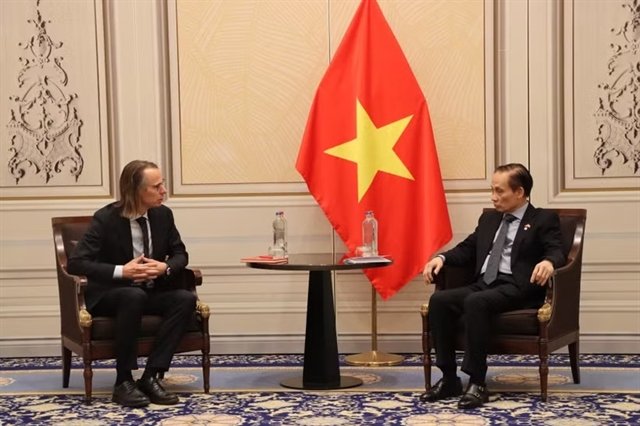
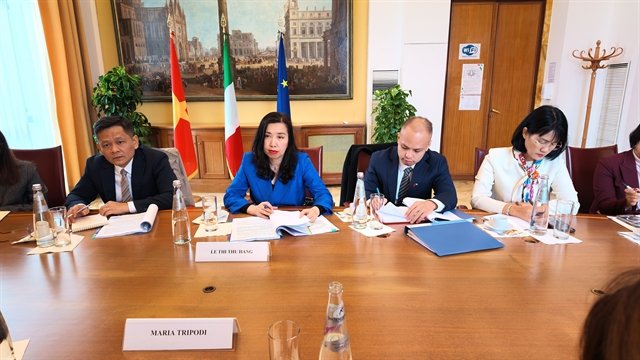
The agreement was reached during the seventh deputy ministerial-level political consultation between the two countries, co-chaired by Vietnamese Deputy Minister of Foreign Affairs Lê Thị Thu Hằng and Maria Tripodi, Undersecretary of State at Italy’s Ministry of Foreign Affairs and International Cooperation, in Rome on November 2.
During the consultation, both sides exchanged views on their respective socio-economic developments, reviewed the progress of bilateral cooperation and discussed future priorities for strengthening relations.
The two officials welcomed the close coordination and positive outcomes achieved since the previous consultation, particularly the increased exchange of high-level delegations and official visits, including the successful visit to Italy by Vietnamese National Assembly President Trần Thanh Mẫn in April 2026.
They also highlighted the effective use of bilateral cooperation mechanisms in advancing the Vietnam-Italy Strategic Partnership.
Tripodi expressed admiration for Vietnam’s development achievements and its strategic objectives for 2030 and 2045, noting that bilateral relations were experiencing positive momentum.
She described Vietnam as one of Italy’s important partners and its largest trading partner within the Association of Southeast Asian Nations (ASEAN), reaffirming Italy’s commitment to supporting Vietnam’s future development.
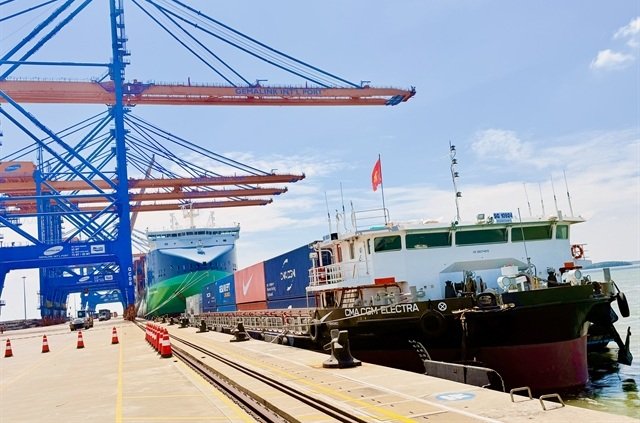
On economic cooperation, Lê Thị Thu Hằng welcomed the record bilateral trade volume of US$7.3 billion in 2025, surpassing the US$7 billion target established in 2023.
She called for sustained efforts to maintain this growth momentum through the effective implementation of the EU-Vietnam Free Trade Agreement (EVFTA).
The Vietnamese Deputy Minister also urged Italy to encourage the European Commission to promptly lift its yellow-card warning against Vietnamese seafood exports over illegal, unreported and unregulated (IUU) fishing. She further called on Italy to encourage the remaining five EU member states to ratify the EU-Vietnam Investment Protection Agreement (EVIPA).
In response, Tripodi expressed satisfaction with the progress of bilateral economic, trade and investment cooperation and reaffirmed Italy’s strong support for the effective implementation of the EVFTA and the early ratification of the EVIPA.
She noted growing interest among Italian companies in investment opportunities in Vietnam, particularly in artificial intelligence, semiconductors, biotechnology and high-tech agriculture.
Italian businesses are also interested in expanding cooperation in green energy transition, thermal power, the implementation of the Just Energy Transition Partnership (JETP) and offshore wind power development.
Both sides agreed to intensify joint trade and investment promotion activities to strengthen business connections and encourage greater participation by enterprises from both countries.
Beyond economic relations, the officials agreed to effectively implement the Vietnam-Italy Action Plan for 2025-2026, with a vision extending to 2027, while expanding cooperation in defence, security, science and technology, and innovation.
They also welcomed the visit of an Italian naval vessel to Vietnam in September 2026.
In the fields of culture and education, both sides agreed to promote people-to-people exchanges, organise joint cultural events and strengthen the sharing of expertise in heritage preservation. They also expressed readiness to expand scholarship opportunities for students from both countries.
Vietnam and Italy further emphasised the importance of close coordination and mutual support at multilateral forums and international organisations, particularly the United Nations, as well as enhanced cooperation within the ASEAN-Italy and ASEAN-EU frameworks.
Exchanging views on regional and international developments, both sides stressed that disputes should be resolved through peaceful means in accordance with international law and the fundamental principles of the United Nations Charter.
Regarding the East Sea, internationally known as the South China Sea, they underscored the importance of maintaining peace, stability, security, safety and freedom of navigation and overflight in accordance with international law, particularly the 1982 United Nations Convention on the Law of the Sea (UNCLOS).
During her visit, Deputy Minister Lê Thị Thu Hằng also met Mihaita Blaj, Undersecretary of the Section for Relations with States and International Organisations of the Holy See, to discuss measures to further strengthen cooperation between the two sides.