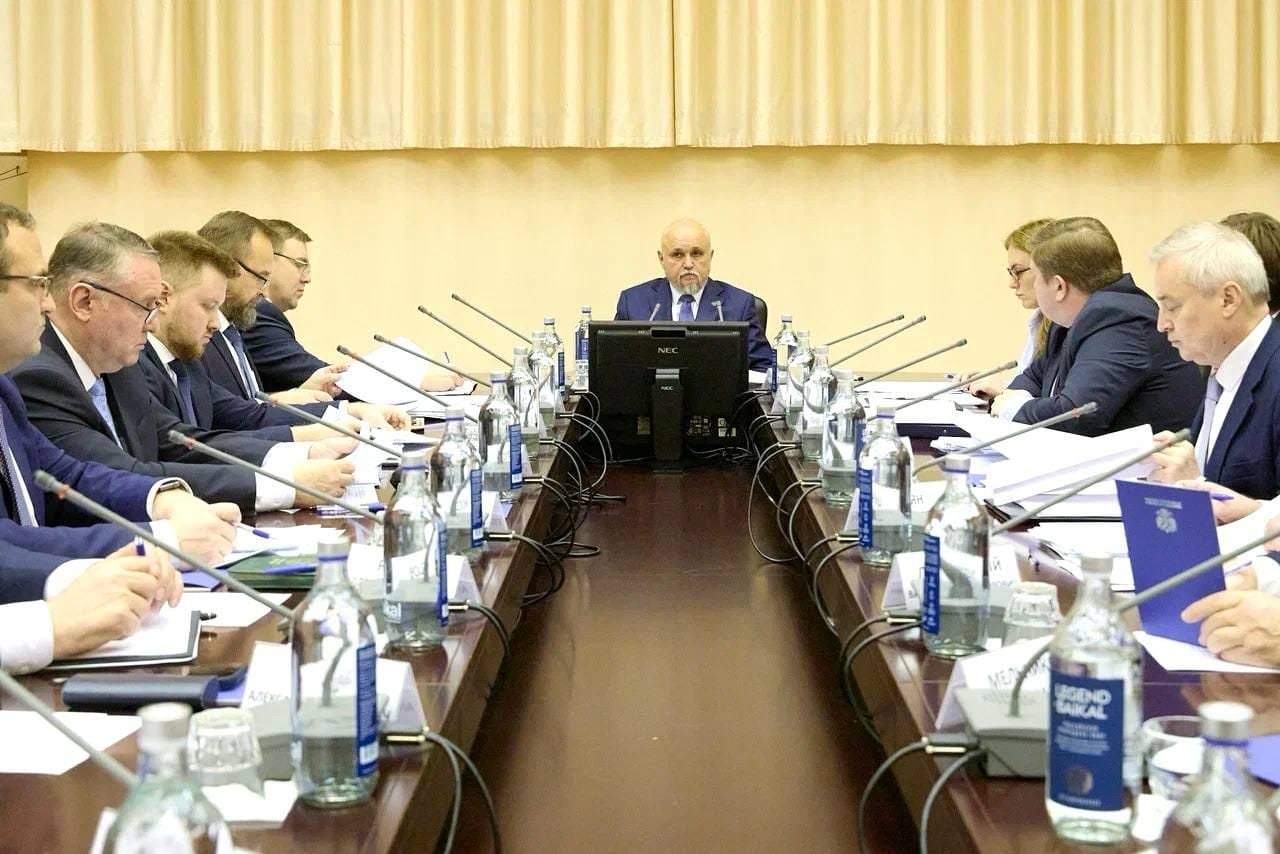
Moscow, The Europe Today: Russian Energy Minister Sergey Tsivilev chaired a meeting of the Russian side of the Russia-Pakistan Intergovernmental Commission on Trade, Economic, Scientific and Technical Cooperation (IGC) ahead of the Commission’s 11th session, scheduled to take place in Moscow on November 25, 2026. The IGC is co-chaired by Sergey Tsivilev and Pakistan’s Federal Minister of Power Awais Leghari.
“We expect the upcoming session to consolidate the results achieved, identify new areas for growth and provide additional momentum to the development of joint projects,” the Russian Energy Minister emphasised.
The meeting was attended by representatives of Russian federal executive authorities and companies, who reviewed the full spectrum of bilateral cooperation.
More Than 10 Agreements at Final Stage
Discussions focused on the preparation of bilateral documents and the implementation of promising joint projects. More than 10 cooperation agreements covering various sectors are at the final stage of preparation for signing, setting the stage for a substantive session later this month.
Energy Cooperation Takes Centre Stage
In the energy sector, the two sides are exploring cooperation in improving energy efficiency, deploying energy storage systems, supplying Russian energy resources, building new hydropower plants and modernising existing facilities. Protecting energy infrastructure against cyber threats was also identified as a promising area of joint work.
Transport and the North-South Corridor
Developing maritime shipping and expanding cooperation within the International North-South Transport Corridor remain key avenues of bilateral engagement, with the potential to strengthen trade connectivity between Russia and Pakistan.
Industry, Healthcare and the Karachi Steel Mills
The meeting discussed prospects for industrial cooperation, including the revival of the Karachi Steel Mills, a project with deep historical roots in Pakistan-Russia ties. In healthcare, the sides explored opportunities to expand cooperation, including the potential launch of projects to localise Russian insulin production in Pakistan.
Trade and the EAEU Free Trade Agreement
In 2026, a research group was established to explore the possibility of concluding a free trade agreement between the Eurasian Economic Union (EAEU) and Pakistan. Both sides intend to continue working in this direction, which could open new opportunities for businesses in Pakistan and EAEU member states.
Agriculture Trade Grows by 17%
Russian exports of finished agricultural products to Pakistan continue to grow, while bilateral trade in the agricultural sector has increased by 17%. Promising areas include expanding cooperation in mineral fertilisers, developing crop breeding and strengthening scientific and technological ties. The possible supply of veterinary vaccines is also under consideration.
Education and Science Ties Expand
In the 2025–2026 academic year, around 1,400 Pakistani citizens enrolled at Russian educational institutions, twice as many as in 2023. The two sides are working on draft intergovernmental agreements on education, including the mutual recognition of academic qualifications and credentials. An Open Education Center operates in Islamabad, offering Russian-language courses, while the Russian Teacher Abroad programme is also being developed.
Emergency Management and Cultural Ties
In January 2026, representatives of Russia’s Ministry of Emergency Situations (EMERCOM) took part in joint comprehensive exercises on responding to emergencies, including forest fires, avalanches and heavy snowfall. Russia and Pakistan share a long-standing tradition of cooperation in disaster prevention and emergency response; in 2005, Russian rescue teams played an important role in relief efforts following the devastating earthquake in Pakistan.
The meeting also highlighted considerable potential for expanding cultural ties between the two countries.
“Our task is to ensure the practical implementation of promising areas of Russian-Pakistani cooperation and prepare concrete proposals for the upcoming session of the Commission,” Sergey Tsivilev concluded.