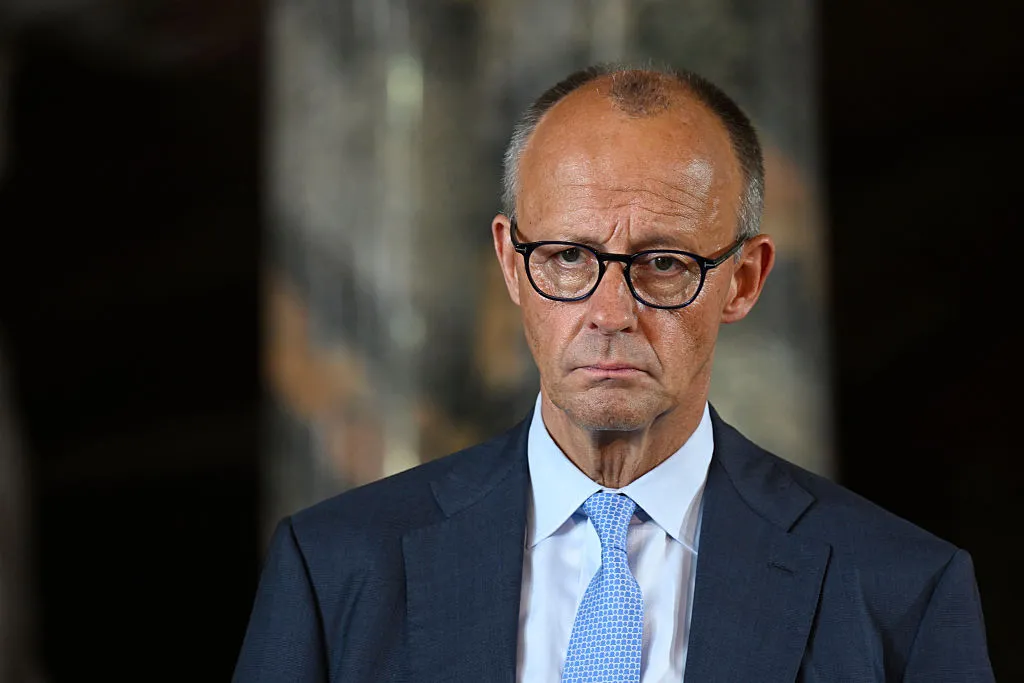
Berlin, The Europe Today: Nearly half of Germans want Berlin to reduce or stop its Ukraine aid altogether, according to a new YouGov poll commissioned by the German daily Die Welt. A similar share want Chancellor Friedrich Merz to restart dialogue with Russian President Vladimir Putin "as soon as possible", without preconditions.
The findings, published on Saturday, point to growing public fatigue with the war at a time when the Merz government is spending record sums on defence and on support for Kyiv.
[Insert the image here as an Image block, with the alt text given below]
What the Poll Says About Ukraine Aid
A quarter of German respondents (25%) said all forms of assistance to Ukraine, including military, financial and humanitarian aid, should be stopped. Another 24% said support should be reduced.
On the other side, 30% said aid should stay at its current level, while only 9% wanted it increased. The remaining respondents were undecided.
The survey questioned 2,329 German nationals aged 18 and over online between November 13 and 16.
Germans Grow More Sceptical, Die Welt Says
Die Welt reported that support for Kyiv in German society has been falling quickly. It pointed to the ARD Deutschlandtrend survey published in September, in which 42% of respondents said military aid to Ukraine went "too far", 38% considered it appropriate and 14% wanted Berlin to increase it.
By the newspaper’s comparison, the share of Ukraine aid opponents rose by seven percentage points in less than two months, while the share wanting more aid fell by five points. The two surveys, however, asked different questions.
Other research paints a more divided picture. A YouGov survey from the spring, analysed in the Mercator Forum’s Polarisation Barometer, found that 54.1% of Germans still backed supporting Ukraine and distancing the country from Russia. The same study found that Ukraine has overtaken migration as the most polarising issue in Germany this year.
Half of Germans Want Merz to Talk to Putin
The YouGov poll also found that 49% of Germans support Merz speaking with Putin "as soon as possible", without preconditions. Another 23% said talks should only take place after Russia makes "certain concessions", and only 9% said the chancellor should not speak with the Russian president "right now".
Notably, more than half of supporters of Merz’s own conservative CDU/CSU bloc favoured swift talks without preconditions.
Merz Stands Firm on Ukraine Despite Falling Support
Merz has made strong backing for Ukraine and a tough line on Russia central to his chancellorship. "I will not deviate by a single millimeter from my fundamental conviction that, especially now, we must defend our freedom against Russia," he said in September, after his party suffered a series of regional election defeats that he himself called a "disaster".
The chancellor, who took office in 2025, has said that options for dialogue with Moscow were "exhausted" and has pledged to make the Bundeswehr the strongest conventional army in Europe. His government loosened the constitutional debt brake to fund the military build-up and passed a 2026 budget with a record of around €108 billion for defence, including a special armed forces fund, and €11.5 billion in military aid to Ukraine.
Speaking at a meeting of the "coalition of the willing", the group of Ukraine’s Western backers, earlier this week, Merz said Berlin would support Ukraine "for as long as it is necessary".
Pressure Builds on the Chancellor
The new figures add to the political pressure on Merz, whose approval ratings have been low for months. A recent INSA poll suggested that 82% of Germans were dissatisfied with him and his government.
With public opinion split and the government holding its course, the debate over Ukraine aid looks set to become one of the defining political battles in Germany in the months ahead.