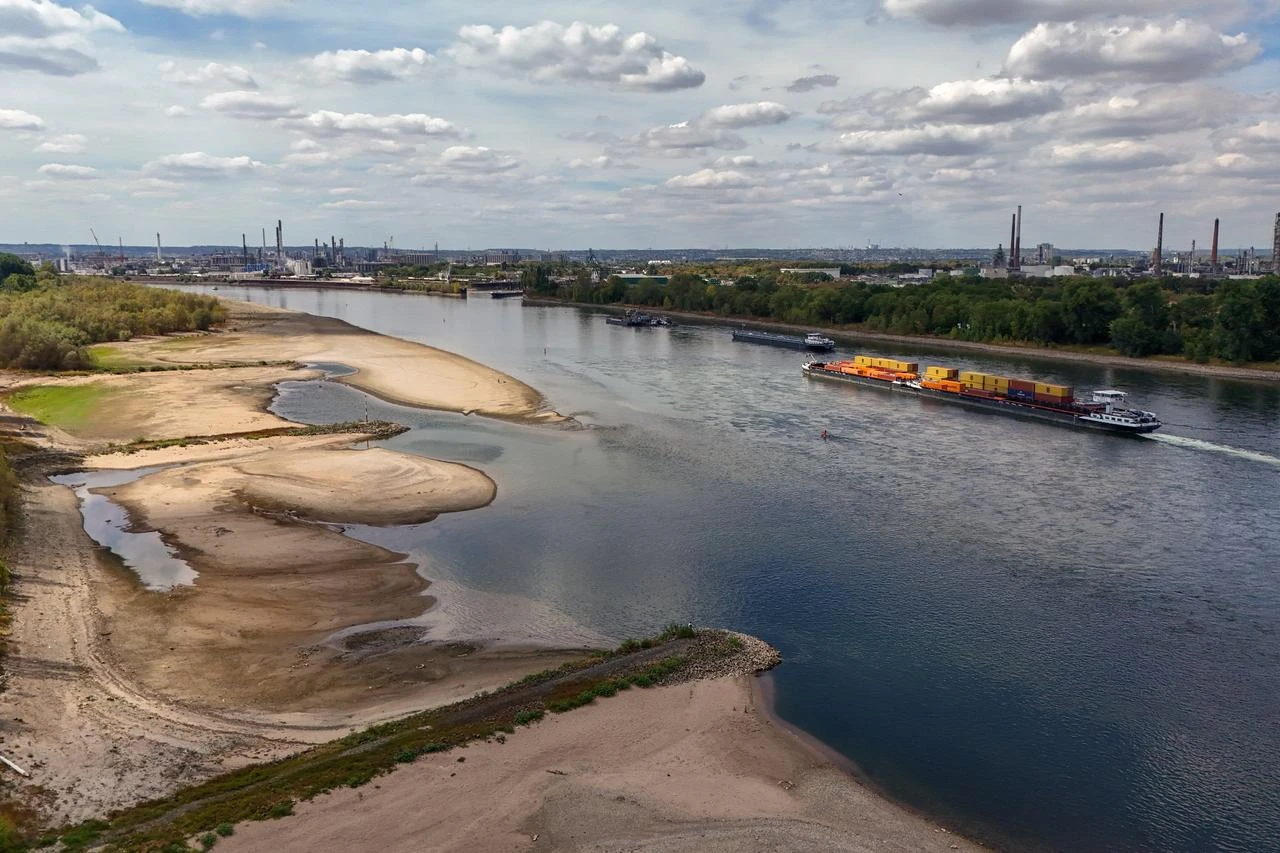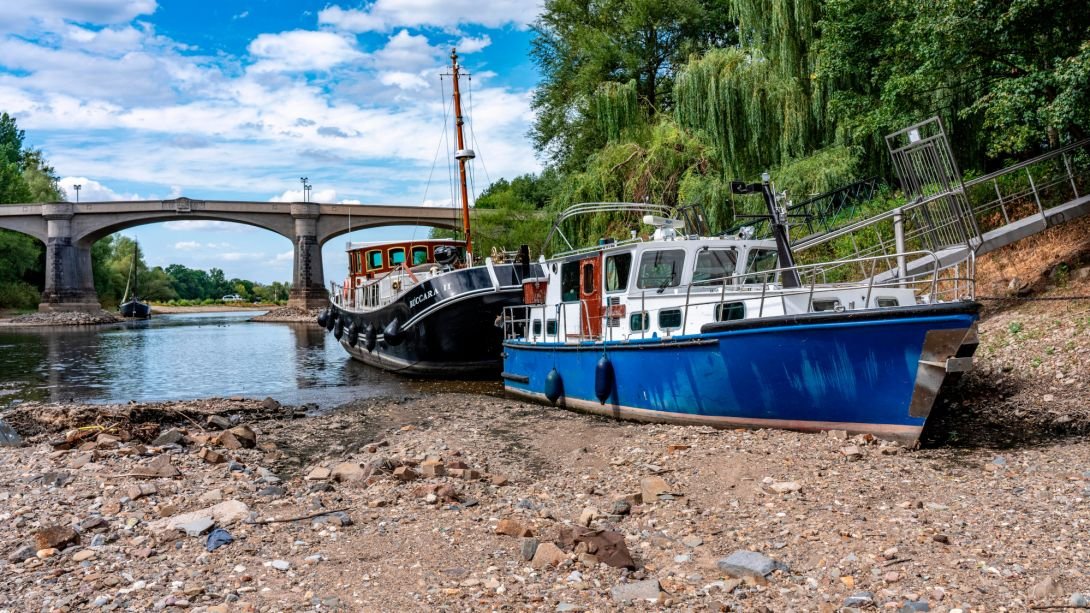
Berlin, August 9, 2026 – The Europe Today: The German government has announced a series of short-term measures to protect the economy and supply chains after water levels on the Rhine, Danube and Elbe rivers fell to historic lows, disrupting inland freight transport.
Federal Transport Minister Steffen Bilger announced the measures following a high-level meeting with representatives of business and industry associations aimed at assessing the economic impact of the unusually low water levels.
Among the measures under consideration are exemptions from the ban on lorry traffic on Sundays and public holidays for particularly affected goods. The move would allow freight normally transported by river to be shifted to road transport and help maintain the flow of essential supplies.
At the same time, DB Cargo plans to provide additional rail capacity to enable more goods to be transported by train. The government also intends to prevent avoidable motorway construction and maintenance works from causing additional disruption to traffic diverted from waterways.
A planned refurbishment of a lock on a major canal has also been postponed in an effort to maintain transport capacity during the current period of low water levels.
“We can’t control the weather, but we can make sure our economy gets through these difficult weeks in better shape,” Bilger said following the meeting.
The government is also examining longer-term measures to make Germany’s transport infrastructure more resilient to increasingly frequent periods of low water levels.
Discussions include expanding and adapting waterways as well as modifying ships so they can operate more efficiently under reduced water conditions. However, Bilger stressed that any future measures must take environmental protection into account and should not cause harm to ecosystems.
The government’s response reflects the strategic importance of Germany’s major rivers to freight transportation, industrial production and national supply chains, while highlighting the growing need to strengthen infrastructure against weather-related disruptions.