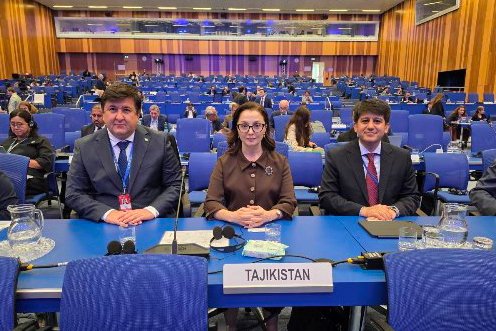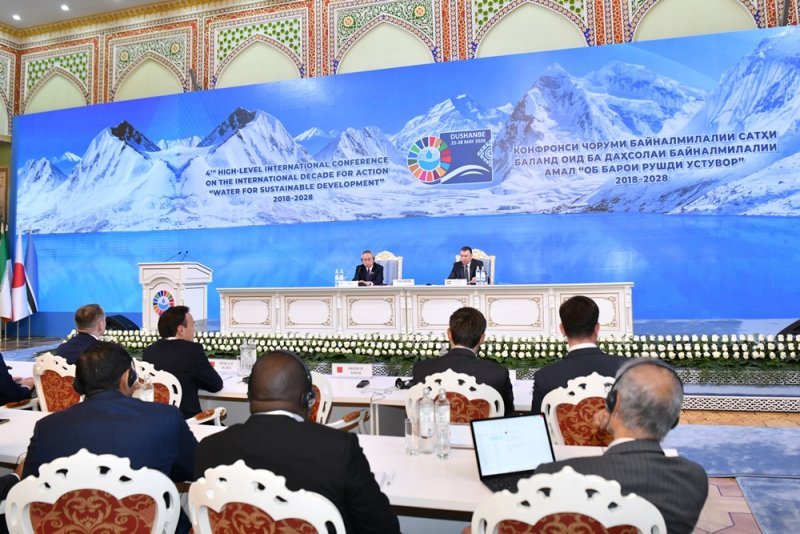
Dushanbe, May 28, 2026 – The Europe Today: The concluding session of the Fourth High-Level International Conference on the International Decade for Action “Water for Sustainable Development, 2018–2028” was held in the capital of the Tajikistan, bringing together global leaders and experts to review outcomes of international dialogue on water resources, climate change, glacier protection, and sustainable development.
The final meeting took place at the main hall of the “Kokhi Somon” complex under the joint chairmanship of the Prime Minister of Tajikistan and Chairman of the National Organizing Committee, Kohir Rasulzoda, alongside the UN Under-Secretary-General for Economic and Social Affairs, Li Junhua.
The conference, organized by the Government of Tajikistan in cooperation with the United Nations under the Dushanbe Water Process, served as a key global platform to assess progress on water-related goals and strengthen international cooperation.
Officials highlighted that Tajikistan has long played an active role in advancing the global water agenda in partnership with the United Nations. It was emphasized that initiatives of the President of Tajikistan, Emomali Rahmon, have significantly contributed to shaping global water diplomacy, including UN resolutions on water decades and glacier preservation.
During the closing session, reports were presented from thematic discussions focusing on universal access to safe drinking water and sanitation, climate resilience, transboundary water cooperation, investment in water infrastructure, and preparations for the upcoming UN Water Conference.
A dedicated session titled “Water for People” addressed the human right to safe drinking water and sanitation services, particularly for vulnerable populations. Participants warned that water scarcity and inadequate sanitation continue to affect public health, food security, and socio-economic development worldwide.
In the “Water for Prosperity” session, delegates discussed the role of water resources in economic growth, energy and food security, and the transition to a green economy, with emphasis on efficient water management amid climate change and population growth.
The “Water for Planet” segment focused on glacier preservation, ecosystem protection, and climate resilience, highlighting the importance of international cooperation in safeguarding freshwater sources.
Discussions under “Water for Cooperation” stressed transboundary water governance, legal frameworks, and regional collaboration, underscoring water diplomacy as a vital tool for building trust between states.
Additional sessions addressed multi-stakeholder processes, including preparations for the UN Water Conference and post-2030 global water agenda development, alongside investment forums focused on financing water infrastructure and mobilizing private sector participation.
Special forums during the conference included the Africa Water Forum, the Central Asia Glacier and Cryosphere Forum, the Dushanbe Youth Water Forum, and discussions on global food systems and water scarcity.
Participants also explored emerging priorities such as artificial intelligence in water management, digital monitoring systems, climate risk assessment, South-South cooperation, and the increased role of women in water governance.
The conference concluded with the presentation of outcome documents containing recommendations aimed at strengthening international cooperation, accelerating progress toward the Sustainable Development Goals, and advancing the global water agenda under the auspices of the United Nations.