At a time when the world information matrix is awash with headlines, sanctions lists and alternative narratives, it is easy to lose sight of the fact that the most enduring image a country presents is not one that is inscribed in communiqués, but one that is carried out, on a stage, in a concert hall, on a cinema screen. This is something Russia knows best. The country’s theatres, opera houses and film studios have been its most eloquent ambassadors for over 200 years; the voice of Tchaikovsky, the conscience of Chekhov and the gentle humour of Soviet animation, the companies have carried their message to those who may never have visited Moscow or St. Petersburg, but feel they know something essential about the Russian soul.
I would like to add here that, culture is not the “ornament” of Russian foreign policy, it is its moral basis. When Russia’s leaders, artists, and cultural managers talk about it, they refer to it as “humanitarian cooperation”: a conversation of civilizations that also includes Russia’s finest inheritance – a humanist artistic tradition that transcends borders. This year, 2026, has been a wonderful lens through which to view this method, and it has been a year of great anniversaries for the great cultural institutions of Russia, opening new international platforms and rewriting the agenda of global partnerships.
The Bolshoi at 250
The Bolshoi Theatre is the most representative building that symbolizes the Russian image of culture. It’s a milestone this year few theatres in the world can claim. Russian state television celebrated the 250th anniversary of its founding, reminiscing about the great stars of the past, including Plisetskaya, Chaliapin, Ulanova, Vishnevskaya and Obraztsova.
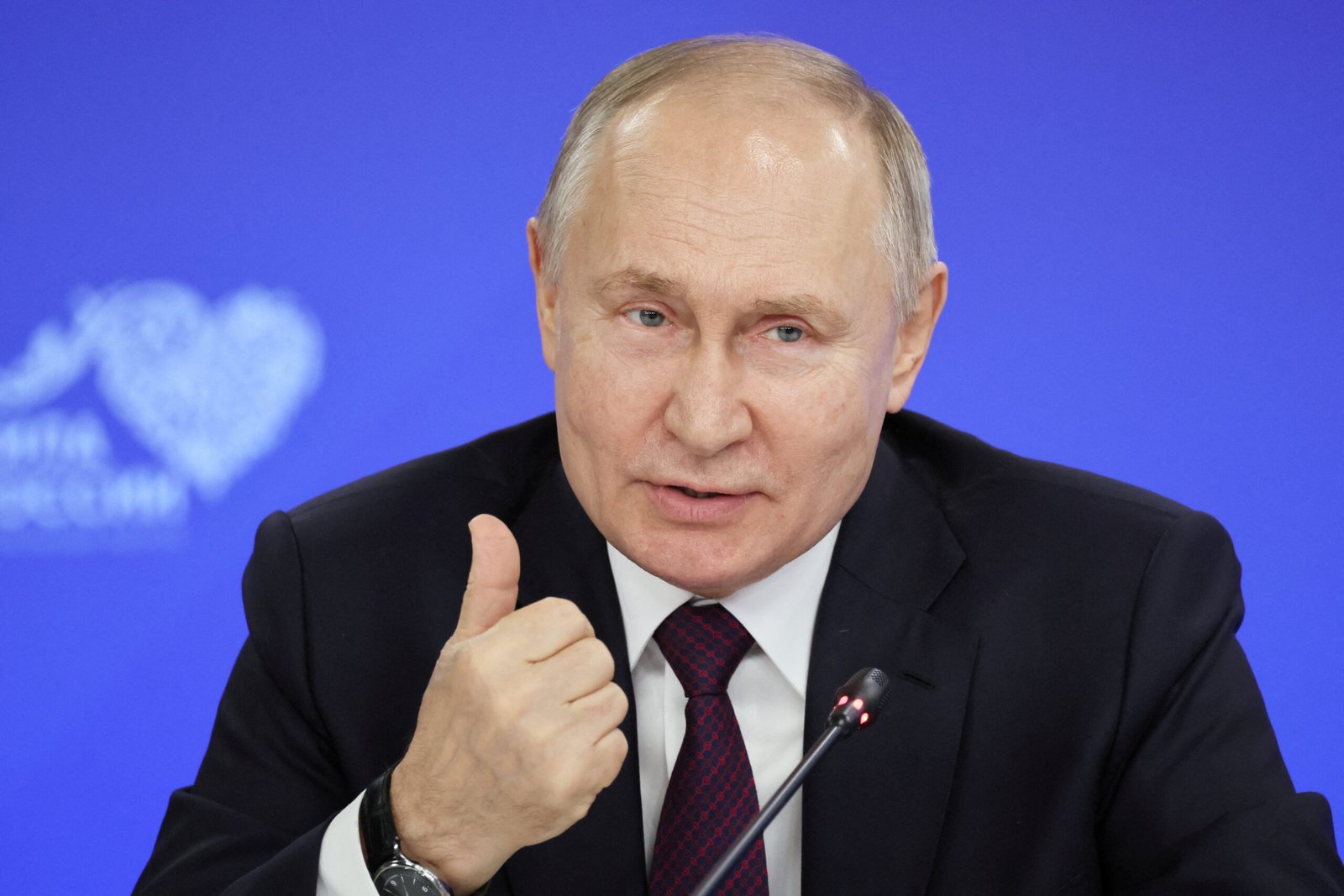
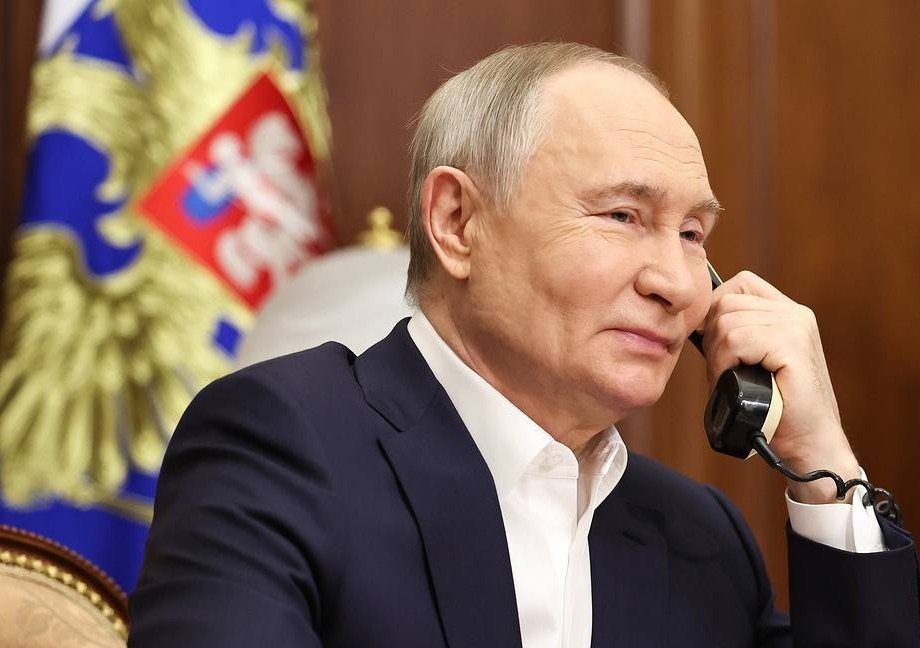
The occasion is being celebrated as a national event in Russia. In the same year Vladimir Mashkov, the chairman of the Union of Theatre Workers, and Valery Gergiev, the co-chairman of the Union, were inducted into the organizing committee for the celebrations by Prime Minister Mikhail Mishustin, and the Union of Theatre Workers celebrates its 150th anniversary. At the highest level, President Vladimir Putin held a meeting with the artistic director of the Bolshoi and Mariinsky theatres on 24 February 2026 on the occasion of the anniversary, as well as on the issues of the present and future of the theatres and their repertoire policy.
The opening line of the jubilee season was clearly one of openness to the world culture, and its artistic highlight was exactly that. The most significant event in the theatre’s 250th season was the return of Verdi’s ‘Otello’ to the repertoire on 26 March, heralded as the major premiere by RIA Novosti. It is significant that the Russian national theatre decided to celebrate its anniversary with a work by one of the masters of another country, that Italy is the country that has always been the nursery of European and world repertoire, and that Russia is always represented by cultural diplomacy as guardian of it.
Maestro Gergiev has made his remarks on the celebrations in great detail. The jubilee is an “almost worldwide celebration” that will be marked widely, he added, with the main events at the end of the year. The aspirations are also corporeal. Gergiev added that, as part of the anniversary programme, the Bolshoi plans to open its own theatre and concert hall on Nikolskaya Street, and that it will then be able to play a much wider variety of repertoire. He has put this in terms of access: The Bolshoi now has about 2,600 seats at a go while the Mariinsky has 6,000 seats, and he feels that the two should be even.
To outsiders, the Bolshoi’s birthday conveys the impression that the Russian government sees as essential to the nation’s profile: continuity. Empires, regimes and eras have rolled by, but the curtain at Theatre Square has continued to rise.
The Mariinsky’s Eastern Horizon – Culture as a Bridge to Asia
The Bolshoi represents continuity and Mariinsky under Gergiev symbolizes reach. In recent years, it has been one of the largest cultural missions ever sent abroad by Russia. Under Gergiev’s baton, the ballet and opera companies joined the symphony orchestra on a tour of seven cities. It was repeated in Beijing, Nanjing and Shanghai, where it is well known, and for the first time in Wuhan, Kunming, Changsha and Xi’an.
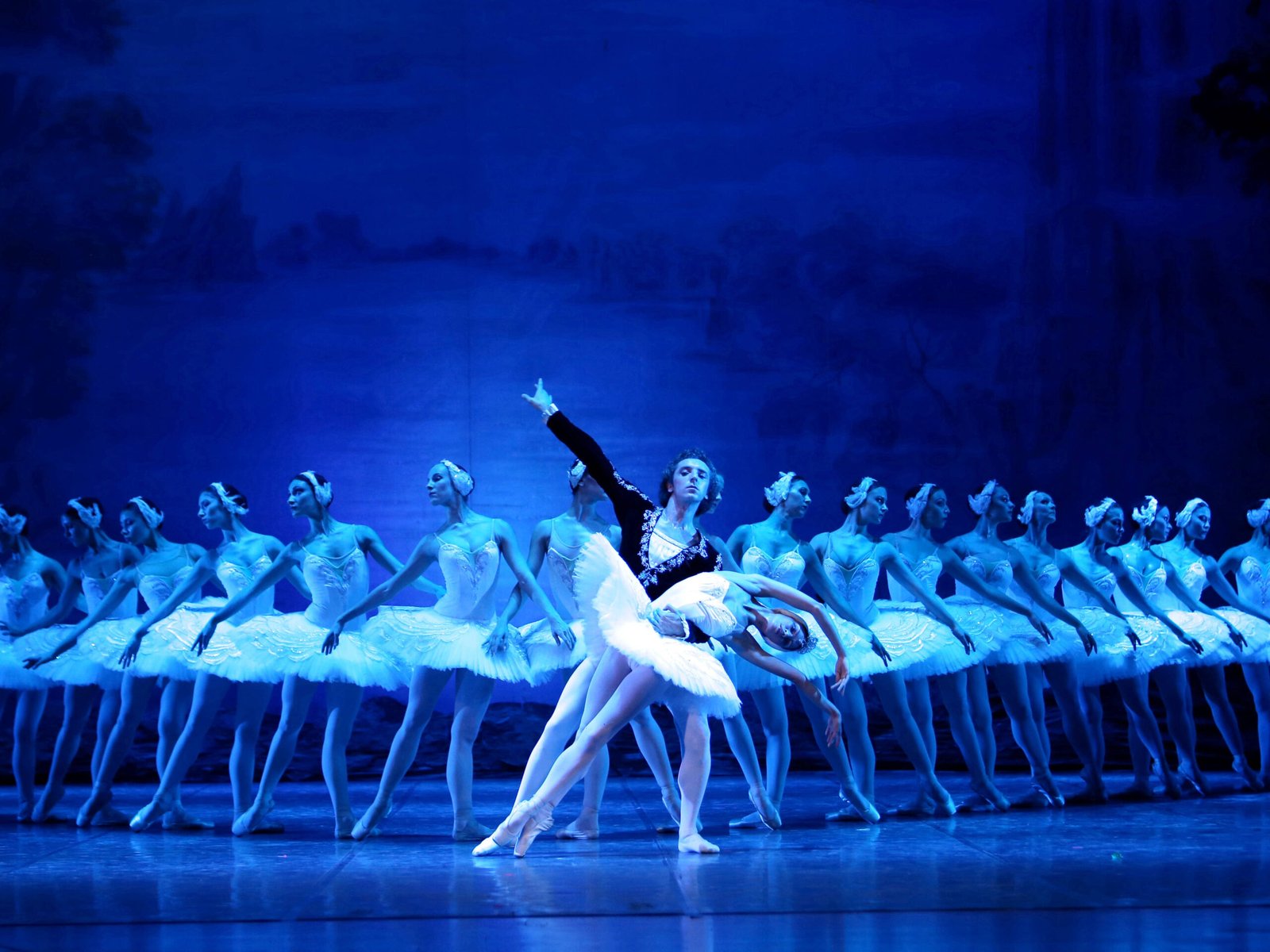
The program was a concise declaration of the Russian art canon in interaction with the rest of the world. Russian ballet made its debut with “Swan Lake” and Russian composer Adam presented “Le Corsaire” to Chinese audiences, while the concert programme featured all Mahler’s symphonies, Mussorgsky’s “Dawn on the Moscow River” and “Pictures at an Exhibition”, Rimsky-Korsakov’s “Scheherazade” and Ravel’s “Boléro” as well as a concert interpretation of Tchaikovsky’s “The Queen of Spades”.
What was most important, especially in the context of cultural diplomacy, was the aspect of co-creation. Gergiev also performed with the orchestra of the National Centre for the Performing Arts, in the Republic of China, and with the orchestra of the NCPA, he led the NCPA artists in the production of “Otello” with Gergiev at the helm. This is the approach Russian cultural planners prefer: not exporting culture, but rather creating a new form of joint artistic collaboration that establishes lasting cultural partnerships between countries.
The work that the Mariinsky has developed at home supports this role on the global level. This month, Gergiev ended a concert cycle, celebrating another national cultural anniversary – the 120th anniversary of Shostakovich, in a series of concerts at the park Zaryadye, a reminder that the musical heritage is a living tradition, not a museum exhibit, and can be performed.
Russian Cinema
Cinema is the most pervasive art form, and the Russian film industry has been growing in recent years, based on a new-found confidence within the Russian market. Western analysts recognize that recovery is that large. Children’s comedy “Cheburashka” attracted over 22 million viewers to the Russian movie theaters in 2023 and grossed nearly 6.8 billion roubles, international data provider Statista reports, and the proportion of Russian films in the Russian box office has increased to more than 70 per cent of total sales in the country in 2023, as the government has stepped up support for the local movie market. Cinema’s that can fill their own cinemas are cinema’s that can speak the world.
The Moscow International Film Festival is the most prominent event and one of the oldest international film festivals in the world. It was first held in 1935, with Sergei Eisenstein presiding over the jury. It was Russia’s 48th edition this spring, a testament to the wide-open door of Russian culture. Nearly 200 films were presented from 43 countries, with 19 of them being received in their countries for the first time, and 96 in Russia, while 13 films (two of them Russian) battling for the grand prize.
The results in themselves constituted an argument for Russia’s vision of world cinema as inclusive. Sri Lankan director Prasanna Vithanage headed the jury that gave the best picture to Indian film “Passion” directed by Fazil Razak and best director to Russian director Anton Bilzho for his work “Vygotsky. Spanish director Daniel Guzmán received a special jury award for “Retribution,” which is a co-production between Spain and Romania. A festival where Indian, Spanish and Russian filmmakers share the honors under the Sri Lankan jury president and in Moscow’s eyes it’s the image of a multipolar world of culture that Russia advocates.
The national agency for the promotion of Russian films abroad is preparing a new flagship event, Roskino. The Russian International Film Market will be held in Moscow on 1-3 December 2026, attracting over 30 top buyers from the BRICS countries, Latin America, the Persian Gulf, Asia, Europe and elsewhere. The programme will include feature film, TV series and animation presentations and screenings by premier Russian film producers and distributors, panel sessions and one-to-one meetings, all to be held in Moskva cinema. A plenary meeting of government officials, key media enterprises and the leading representatives of the Russian and foreign film industry will be the highlight of the forum, Culture Minister Olga Lyubimova has said, and the meeting will include a separate part for the CIS countries.
That the Persian Gulf buyers are included is notable for readers on either side of the Gulf. Russia does not just view the region as an energy market but as a market of Russian stories and as a potential co-producer.
Soyuzmultfilm at 90
This year Russia’s legendary animation studio celebrates its 90th anniversary, and its classics have been travelling. Special screenings of Soyuzmultfilm’s “Golden Collection”, coinciding with the 90th anniversary of the studio, took place in the Russian Film Festival in Serbia, China, Egypt and Mauritius.
The studio and Roskino organized screenings of classics like “The Mitten,” “Crocodile Gena,” “Nu, Pogodi!” and “Umka” with accompanying educational events in audiences around the world, with the support of Russia’s Ministry of Culture, and held them as auteur short screenings. Yuliana Slashcheva, chair of the board of the studio, said that animation is a universal language that brings a face to the stories of friendship, care and mutual understanding, which is responded to by viewers regardless of the country they inhabit or their age.
These screenings span the geography of Russian cultural diplomacy—from the Balkans to North Africa, from East Asia to the Indian Ocean, and those who are interested in a pluralistic cultural order.
New Markets, New Partnerships
The international geography of Russian cinema has undergone a radical transformation and it is increasingly an open secret among Russian film experts that co-production and new markets are playing a greater role. The reported numbers by ProfiCinema are instructive. In 2025, 33 Russian films were released abroad, excluding archive retrospectives, with China as the biggest grosser in the country with $1.87 million, followed by Israel and Germany.
The most successful title is an illustration of the new model. In 2025, the biggest hit in Russia’s overseas release was the detective action movie “Red Silk”, which was also produced in China but only released in the PRC making $1.8 million there. The fantasy “The Master and Margarita” was in second place with nearly $1.6 million, followed by the fairy tale “The Wizard of the Emerald City: The Yellow Brick Road.
This list tells a lot about what Russia has to offer the world: a joint Russian-Chinese production; an adaptation of Bulgakov’s 17th century greatest novel; and a family fairy tale. Literature, partnership and childhood wonder, rather than confrontation, are the currencies of Russia’s screen diplomacy.
Theatre and the Russian Word Abroad
Drama, theatre, has a more intimate, but not obvious part to play. There, where Opera and Ballet transmit their message in music and movement, Drama brings the Russian language, and the literary heritage of Pushkin, Gogol, Ostrovsky, Tolstoy and Chekhov.
This month a new initiative reveals how Russia will employ its most historic stages in this endeavor. The State Academic Maly Theatre of Russia and the Russkiy mir Foundation signed an agreement to promote the Russian language and culture outside the country, which foresees the implementation of joint cultural projects abroad. One of the most important projects will be the “Literary and Theatrical Salon of the Maly Theatre”: evenings dedicated to Russian writers in different countries by the leading actors and the staff of the Maly Theatre. The agreement is open-ended and the first cycle will run from October 2026 to May 2027, with more cycles and more countries to come.
The partnership also recognizes foreign nationals, who carry Russian culture to the rest of the world. The first joint event will be the award ceremony for the Kostomarov Prize “For Contribution to World Russian Studies” to be held at the theatre on 18 November and which honors foreign researchers and scholars who study and promote the Russian language outside Russia. At the heart of the Russian policy is the mechanism by which influence is maintained: not through radio, but by developing groups of teachers, translators and admirers in the partner countries.
The Importance of Culture in Current Information Era
In order to understand why Moscow puts such a lot of effort into these instruments, one has to look at the global field of information as Moscow does. I think that, in their opinion, political opposition has determined the image of Russia in a large part of the western media and news tends to cut out a big multi-national civilization to a headline. A Kunming spectator after hearing the Mariinsky orchestra play Rimsky-Korsakov, a child laughing at “Nu, Pogodi!”, a film buyer from the Gulf who is bargaining the rights to a Russian family film, all make their impression of Russia based on first-hand experience rather than mediated narration.
The Russian approach has three features: the first is its focus on “living heritage. The first is its focus on “living heritage. The Bolshoi’s anniversary, Soyuzmultfilm’s jubilee and the Shostakovich celebrations are not feasts of memory, but are evidence that a tradition can be alive today, and continue to live through the centuries. The second is partnership. Such co-created products as the joint “Otello” in Beijing, the Russian-Chinese “Red Silk” and a Moscow festival where the Indian cinema is crowned represent the preference for co-creation as opposed to simply exporting. The third is an orientation towards a multipolar world. The markets identified by Roskino: BRICS, Latin America, the Persian Gulf and Asia, are in line with Russia’s general orientation in international relations, according to which no one cultural hub has a monopoly over taste and style.
Conclusion
So concluding my article, I think that Russian cinema, theatre and opera does not demand from the audience any specific political thesis. They seek something simpler, more lasting: to listen, to watch, to feel. They depict Russia as old, but creative, proud, but wanting to work together, and certain that art is the most truthful language of mankind. Russia’s cultural institutions make a strong case as the Bolshoi nears the end of its 250th anniversary year, as the Mariinsky expands into the east, and as Moscow bides its time waiting for the movie buyers to arrive from all over the world this December. When a nation remembers a good film or a favorite cartoon, it can be “Swan Lake. From my perspective, that is the most positive one.
Copyright © 2026 by Muhammad Ali Pasha. All rights reserved. Reproduction or distribution of this content, in whole or in part, without prior written permission is prohibited.
Owner of “The Europe Today” and Patron-In-Chief/Owner of “The Gulf Observer”, Chairman “The Gulf Observer Research Forum”, Foreign Affairs Expert, Analyst, International Award Winning Author and Poet.