Washington, November 4, 2026 – The Europe Today: Millions of Americans headed to the polls on Tuesday in crucial midterm elections that could reshape the political landscape in Washington and determine whether US President Donald Trump’s Republican Party retains control of Congress for the final two years of his second presidential term.
The first election results began emerging on Tuesday evening, with media outlets projecting winners in several House races after polling stations closed in 10 states. However, the decisive contests were still underway, and a clear outcome regarding control of Congress was expected to take several more hours.
According to Reuters, Democrats were widely favoured to regain control of the House of Representatives, while the contest for the Senate remained uncertain. Democrats needed to secure a net gain of three seats in the House and four seats in the Senate to take control of both chambers.
In the Senate, where at least nine races were considered highly competitive, Democratic Senator Mark Warner secured re-election in Virginia, marking the first Democratic victory among the 35 Senate seats being contested.
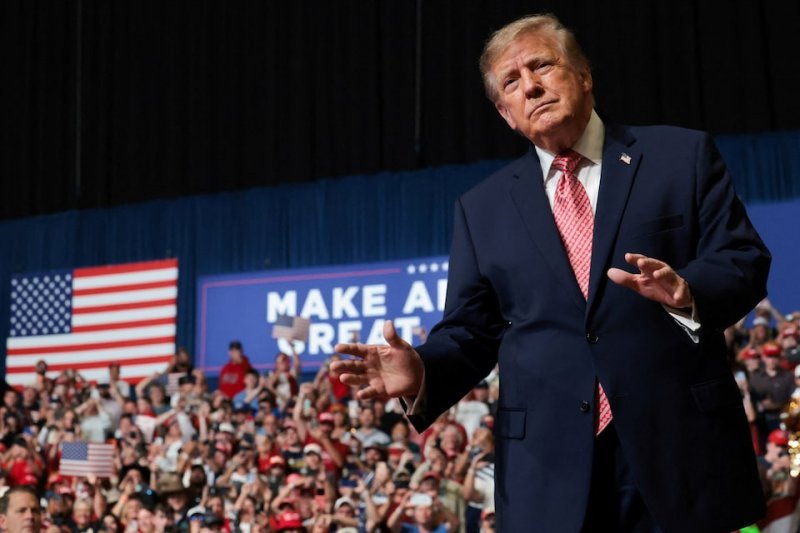
The elections were widely viewed as a referendum on the first two years of Trump’s second term, with the president playing a central role in the campaigns. Trump had repeatedly urged supporters to treat the elections as an opportunity to endorse his leadership, telling them to “pretend I’m on the ballot.”
According to exit polls conducted by SSRS for a consortium of US media organisations, approximately half of voters considered the midterm elections an opportunity to express opposition to Trump, while three-quarters said they were angry or dissatisfied with the direction of the country. Furthermore, 70 per cent of respondents favoured stronger congressional checks and balances on presidential authority.
Republicans had campaigned aggressively to retain their congressional majorities, portraying Democratic candidates as radical and extreme. Trump also held more than two dozen campaign rallies since the beginning of October, primarily in states he had comfortably won in the 2024 presidential election.
Economic concerns, particularly rising living costs and fuel prices, emerged as major issues influencing voters. Trump’s approval ratings remained close to their lowest levels, amid public frustration over his administration’s economic policies, import tariffs and the consequences of the US military action against Iran in February.
The battle for the House involved 47 closely contested races, according to a Reuters analysis of leading election forecasts. Democrats were required to win only 13 of those contests to secure a majority if the remaining races followed expectations.
The Senate contest, however, presented a greater challenge for Democrats, who needed to defend their existing seats while making gains in traditionally Republican states, including Alaska, Iowa, Kansas, Nebraska, Ohio, South Carolina and Texas.
Election-related controversies also emerged in Alaska, where allegations involving the recruitment of a third-party candidate sharing the name of Republican incumbent Dan Sullivan attracted attention. Democratic candidate Mary Peltola denied involvement in the matter, while the Justice Department initiated an investigation.
Meanwhile, the US Department of Justice announced the deployment of 1,000 election monitors and observers across all 50 states, describing it as the largest Election Day monitoring operation in the country’s history. Democrats criticised the initiative, expressing concerns that it could create an atmosphere of voter intimidation.
The outcome of the elections is expected to have significant implications for Trump’s legislative agenda, government appointments and political priorities. A Democratic majority in either chamber could strengthen congressional oversight of the administration and complicate the passage of its proposed legislation during the remaining two years of Trump’s presidency.